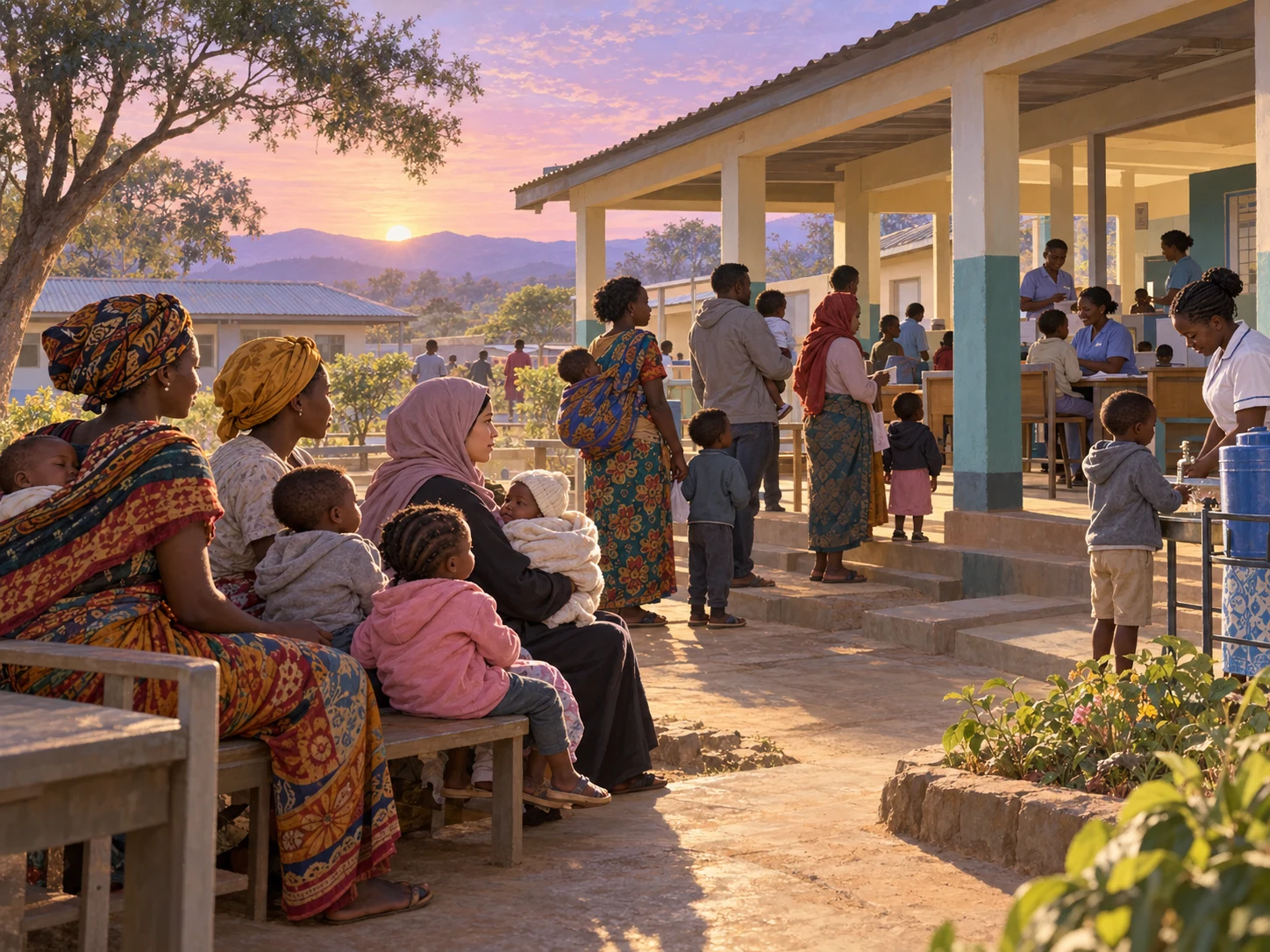
In February 2026, mothers began arriving at dawn at a clinic inside an early-childhood centre in Malawi's Dzaleka Refugee Camp, and a long physical queue formed quickly. They carried infants and toddlers and held worn health-profile books. Several regional languages mingled in the line as mothers soothed children and waited for their turn.
The refugee health centre serves about 16,675 refugees and neighbouring residents. Delayed doses result not only from hesitation but from small businesses, relocation, missing schedule information and transport difficulties for outreach clinics. The dawn queue was where cold-chain vaccines, paper records and follow-up messages were reconnected around each child.