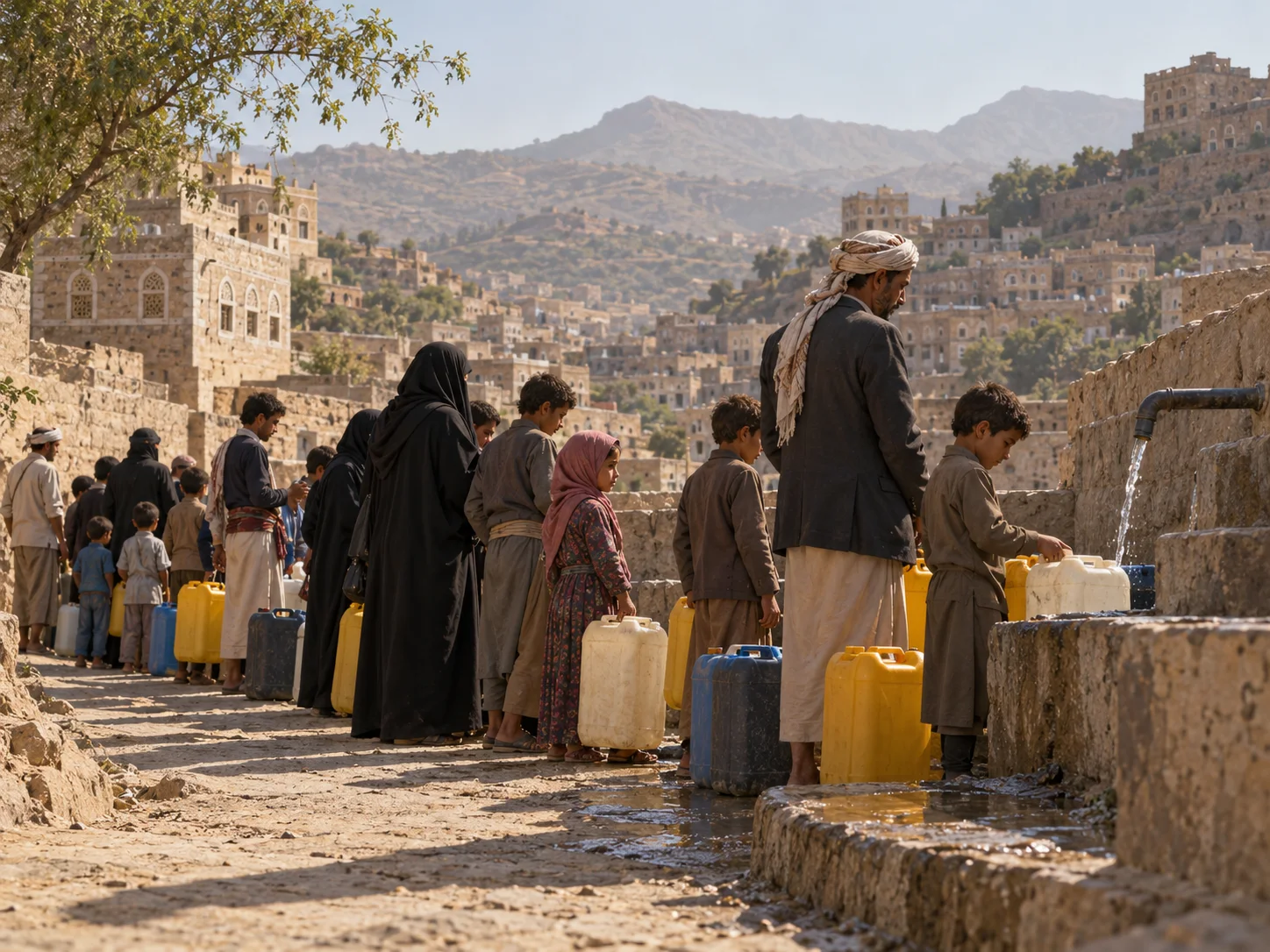
In Yemen's Ibb governorate, displaced resident Saba Al-Raimi told UNICEF that before a solar pump was installed she stood in a queue for six hours to obtain twenty litres of water. Another resident recalled carrying water roughly four kilometres on animals. Replacing diesel-dependent pumping with solar power made water available around the clock.
The improvement was not only a larger supply. Freed from the long wait, Saba could join literacy classes. The water queue had absorbed women's daily time and pushed education further away. The infrastructure's effect could therefore be measured not only in pumping capacity, but in six hours returned to a person's life.