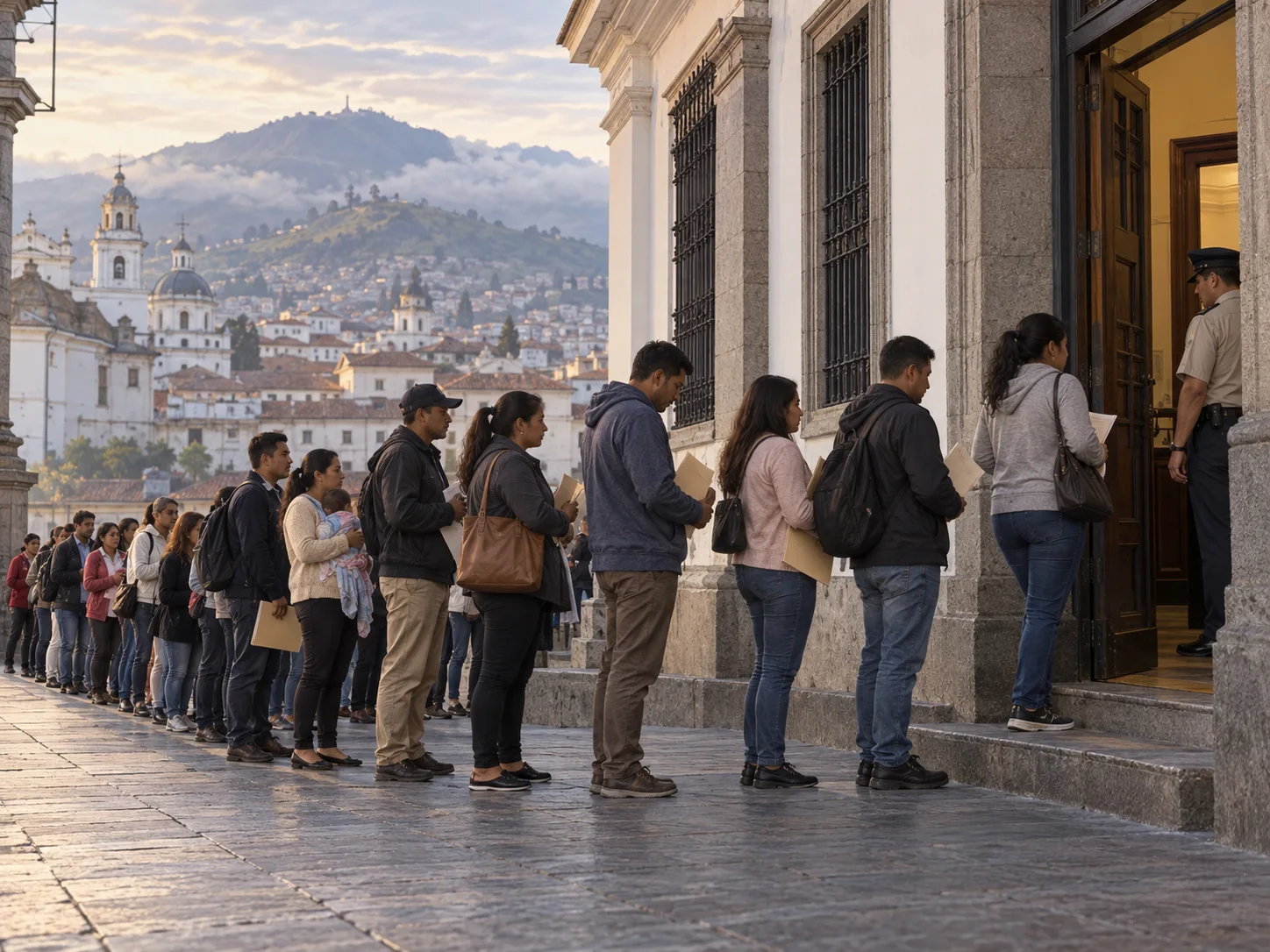
At midnight on 26 August 2019, Ecuador began requiring visas from Venezuelan nationals seeking to enter the country. The foreign ministry traced the rule to Executive Decree 826 of 25 July and reported an increase in arrivals before it took effect. Colombian figures cited by Reuters put the number crossing from Colombia into Ecuador during the preceding month at more than 85,000. A Reuters image records Venezuelan migrants waiting at the Rumichaca border bridge on the day the requirement began. A government could draw a new legal line at midnight; for a person in motion, reaching the physical border before that line changed could reshape plans for work, family and safety.
After the rule took effect, regular entries fell to fewer than 30 a day. A UNHCR situation report recorded about 1,000 people stranded at the northern Rumichaca crossing and around 250 at Huaquillas on the southern border in the days that followed. The queue was therefore not simply a shortage of immigration counters. The documents required to reach those counters had changed overnight. Describing the movement only as a last-minute rush would erase the different circumstances that brought each person there. The line demonstrates a mismatch between legal time and human travel time: when a decree changes faster than people can move, the difference appears on a bridge as hours of waiting.