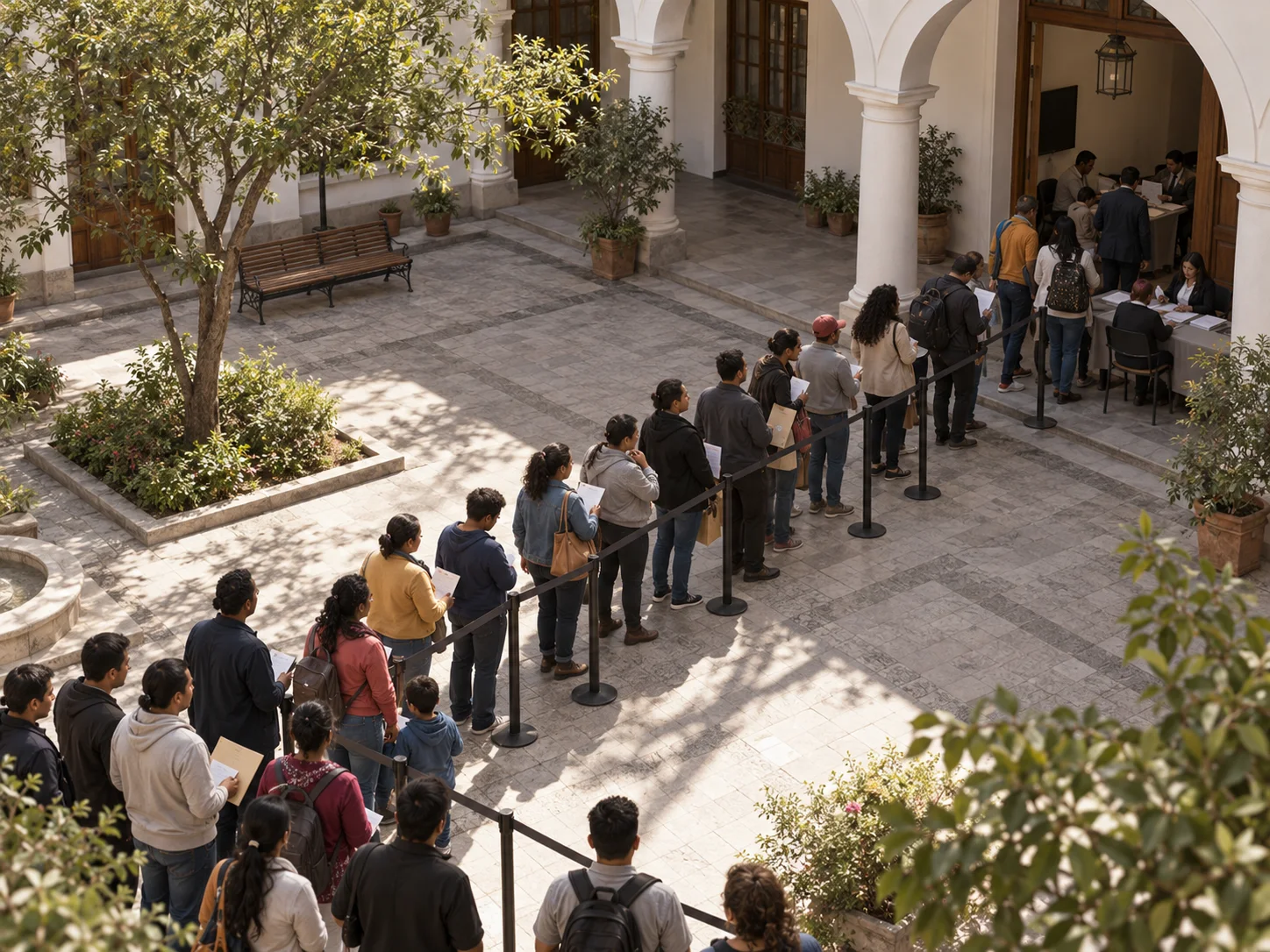
Chile opened an extraordinary migration regularisation process in April 2018. More than 125,000 people registered in the first month, drawing applicants to migration offices and temporary centres across the country. A ninety-day deadline forced lives that had remained administratively uncertain to move suddenly on the same official clock.
Applicants provided identity, entry and criminal-record information, then waited for assessment. Registration did not grant status immediately; it secured a place in the process. For the state, this was an effort to understand a population outside ordinary records. For migrants, it offered a route toward greater stability in work, housing and education.
The lines brought very different stories under one procedure. People who had arrived in different years and formed different kinds of households now faced the same deadline. “Regularisation” sounds like correcting paperwork, but the object being stabilised was a life already under way.
The ninety-day window offered a route out of prolonged uncertainty, but it also pushed applicants onto the same administrative clock. The queues did not mean the immigration problem had suddenly appeared; they showed that the deadline for resolving it had begun for everyone at once.