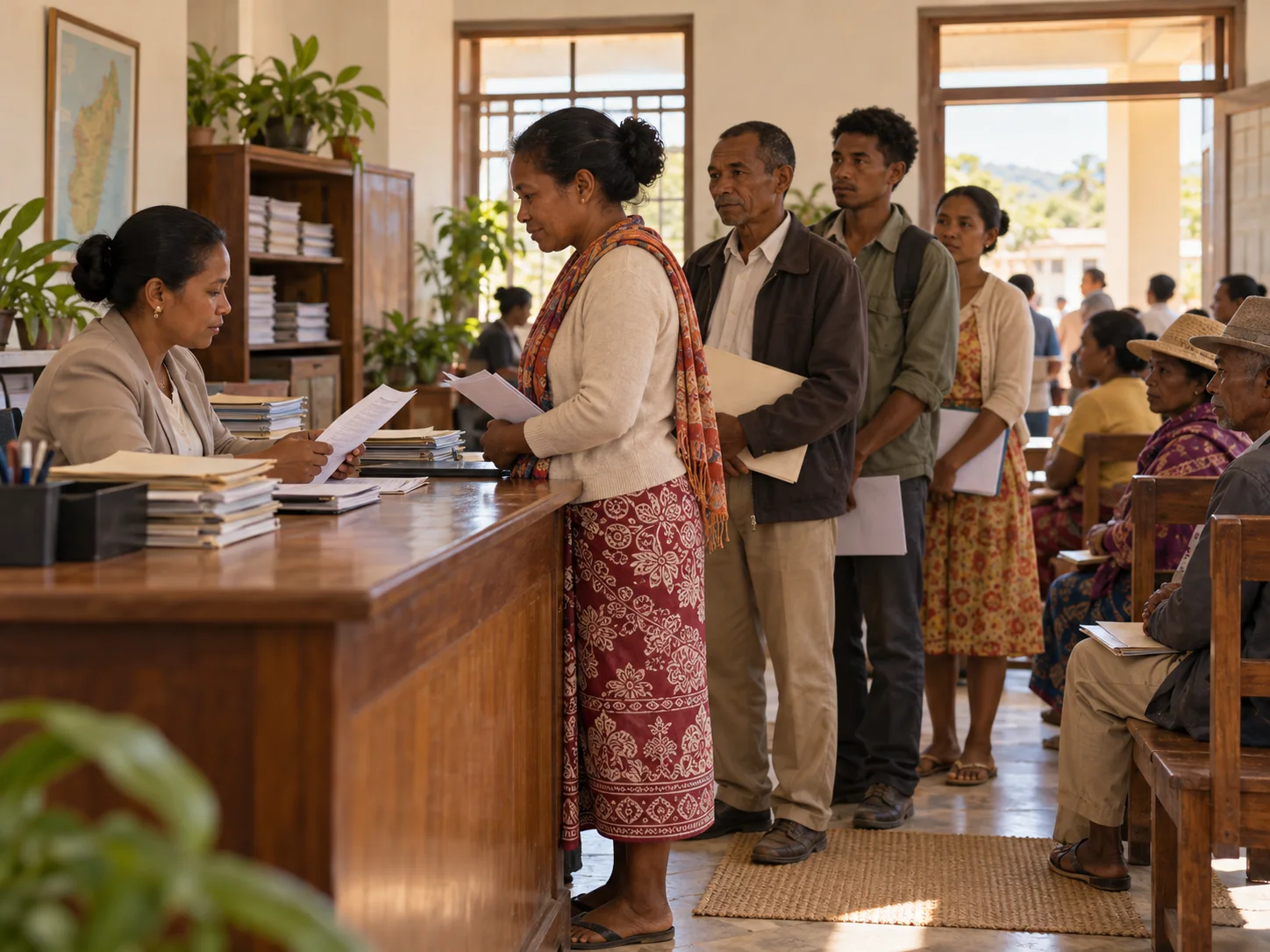
A boundary can look decisive on a map. Turning that line into an official record is rarely so simple. In Madagascar, land certification has been part of efforts to make locally recognized rights more legible to public administration. Cultivating a plot for years and being able to produce a document describing one's claim are not necessarily the same thing.
A certificate may matter during inheritance discussions, boundary disagreements or plans for future use. Obtaining one can involve local verification, consultations and administrative processing. Waiting, in this setting, need not be confined to a bench outside an office. It can also mean waiting for a neighbor's account to be heard, for a claim to be checked, or for a record to be entered. What looks like a simple sheet of paper may depend on a surprisingly social process.
That does not authorize us to describe a long line of applicants without evidence. The existence of a certification program is background, not proof that a particular queue formed. A dated local report, a photograph tied to a specific office or an administrative account of concentrated applications would be needed before this becomes a verified queue story. The land itself stays put. The people trying to document their relationship to it may have to travel and wait. That contrast is the compelling possibility here—and precisely why it deserves evidence rather than a picturesque invented scene.