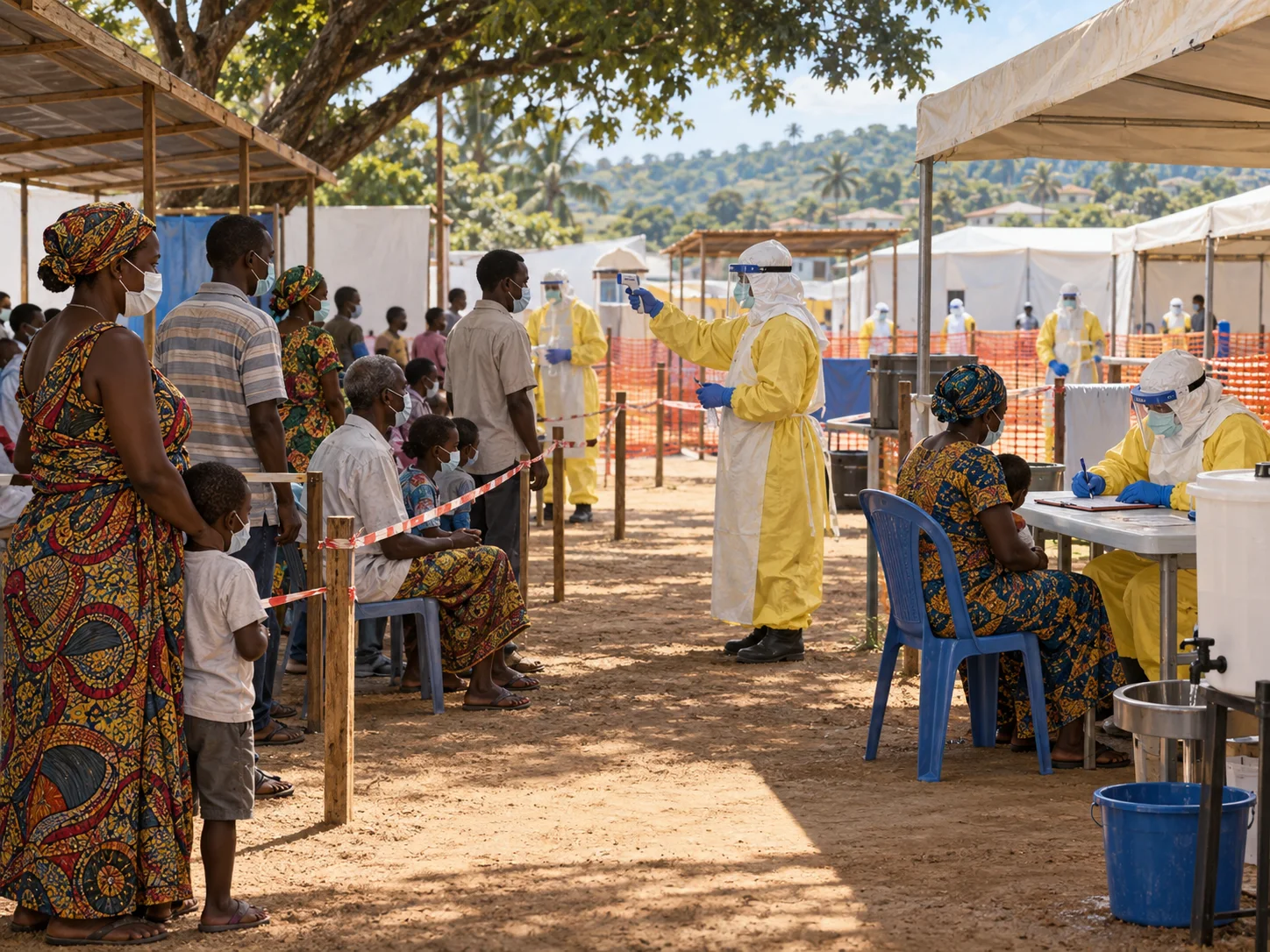
During Sierra Leone's 2014 Ebola outbreak, suspected patients first waited for admission to a holding unit and then waited there for a test result or an available treatment-centre bed. In Freetown, admission could take forty-eight hours, while a stay in a holding unit could last as long as eight days before a confirmed patient was transferred to an available bed.
What distinguishes this wait is that it was not a single counter queue. Order was imposed at successive stages of infection control. Limited testing and bed capacity made the same patient wait twice, and the delay itself carried medical danger. The record is not a celebration of endurance; it shows how emergency capacity created an enforced sequence for care.