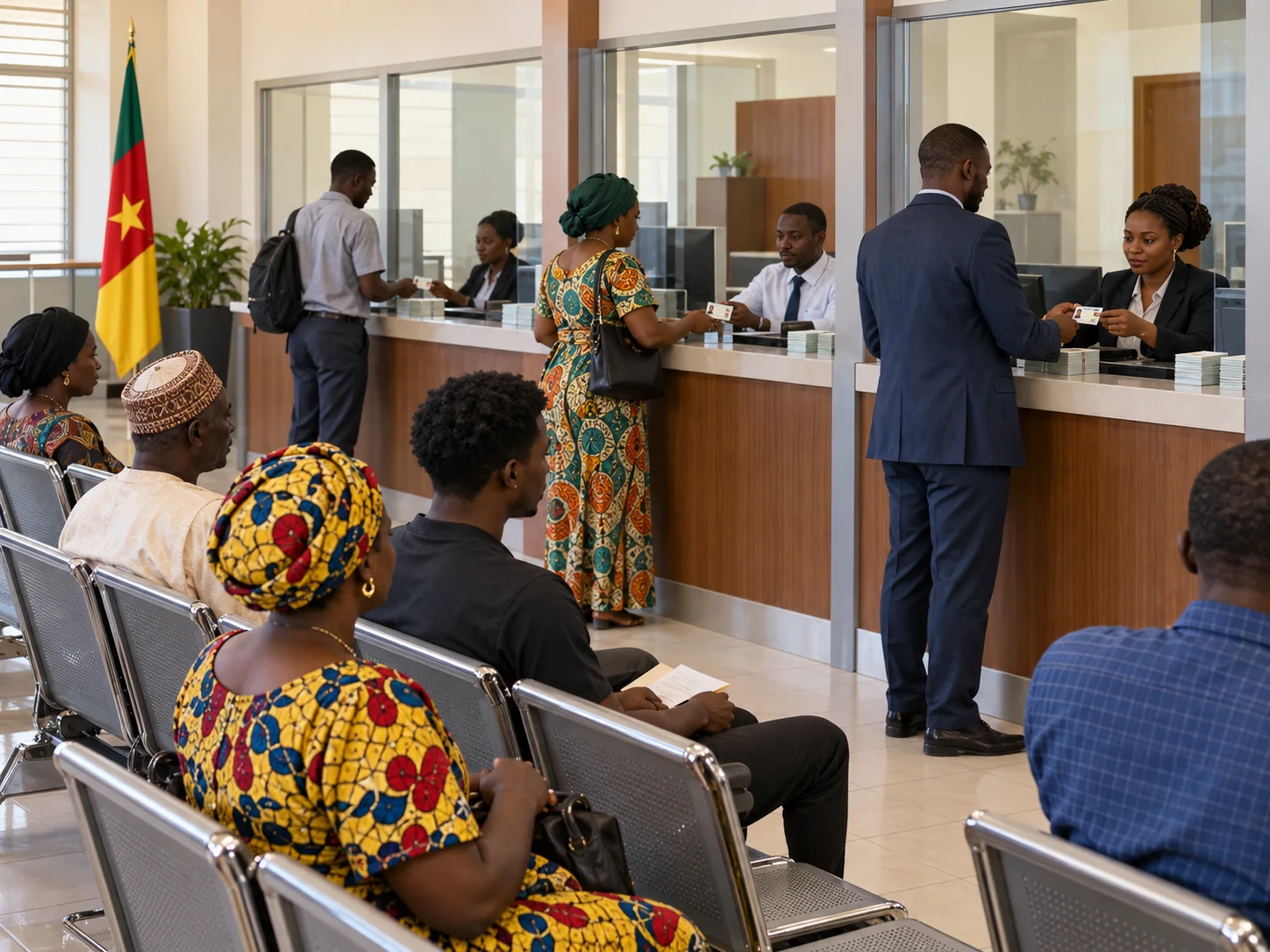
For someone who already has one, an identity card is a small object in a wallet. For someone waiting to receive one, it can determine access to travel, employment and administrative services. In Cameroon's biometric identity-document procedures, submitting personal details and collecting the finished card are separate stages.
Biometric technology uses information such as fingerprints and photographs to support identification. But improving registration equipment does not necessarily eliminate delays in verification, production, delivery or collection. From the applicant's perspective, a process is not complete merely because a record exists in a database. It is complete when the document can be used when needed.
This candidate still needs direct evidence of an actual collection queue at a particular place and time. A documented administrative delay is not, by itself, proof that people stood in line. Even before that verification, the underlying paradox is striking: to demonstrate who you are, you may have to wait for someone else to issue the proof. If the queue is confirmed, the object at its end will be more than plastic. It will be a means of acting in the world.