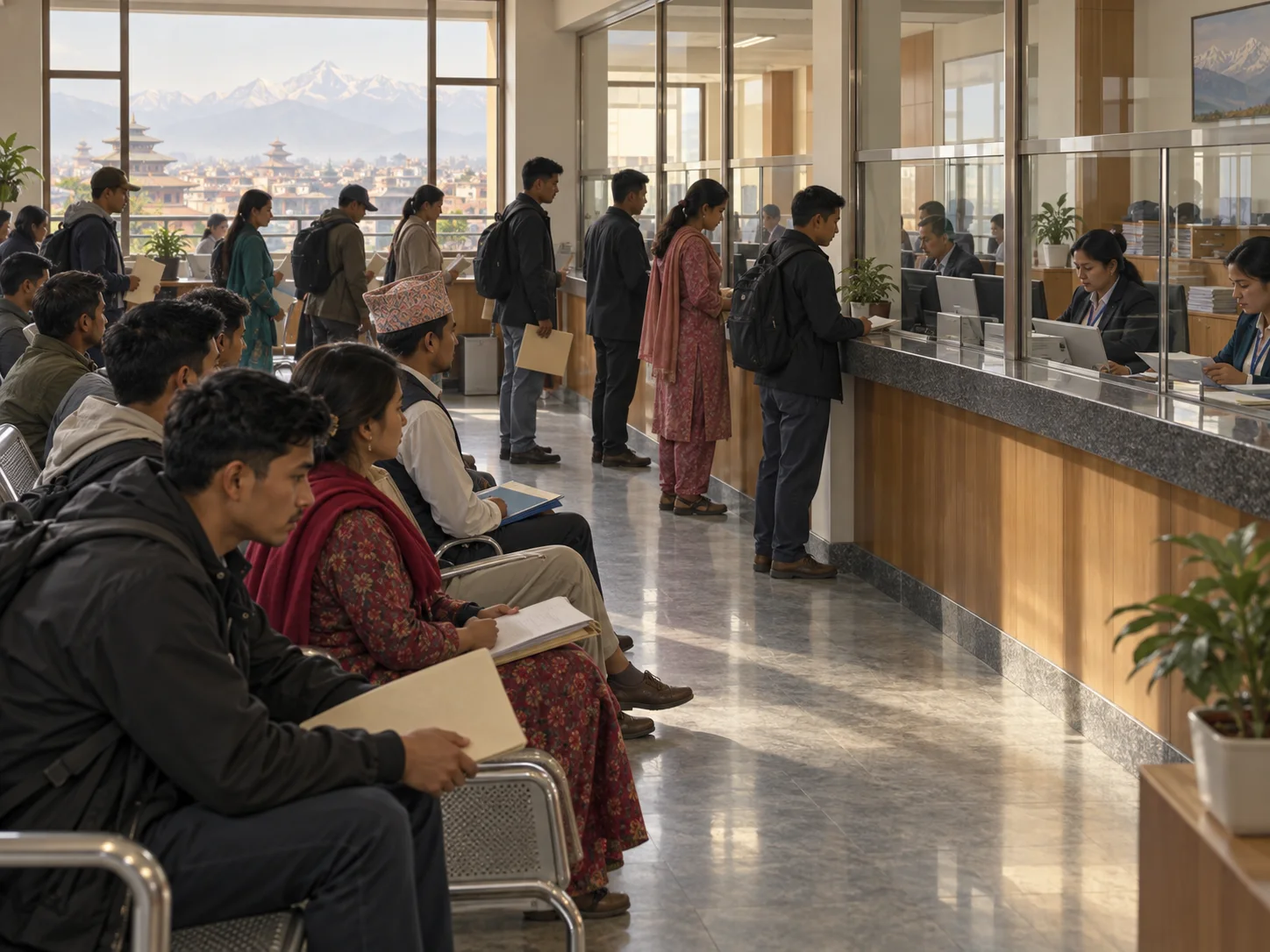
In Nepal, workers preparing to leave for jobs abroad used an online token system to obtain labour permits and wait for their applications to be processed in sequence. In 2026, the government abolished that system and introduced what it described as a queue-free process. The change responded to cases in which workers already holding visas had to postpone flights because their permits were not ready.
This was not only a line stretching outside an office. Even when the token moved onto a screen, the ability to depart still depended on processing order. The system also created room for intermediaries to secure places, prompting closer monitoring and additional staffing.
Overseas employment is not completed by a job offer, visa and air ticket alone. If the final permit is delayed, the journey itself stops. The revealing feature of this case is that a policy to remove the queue provides the clearest record of the queue's existence. Waiting moved from a counter to an online token, and reform made it visible as the central problem of the procedure.