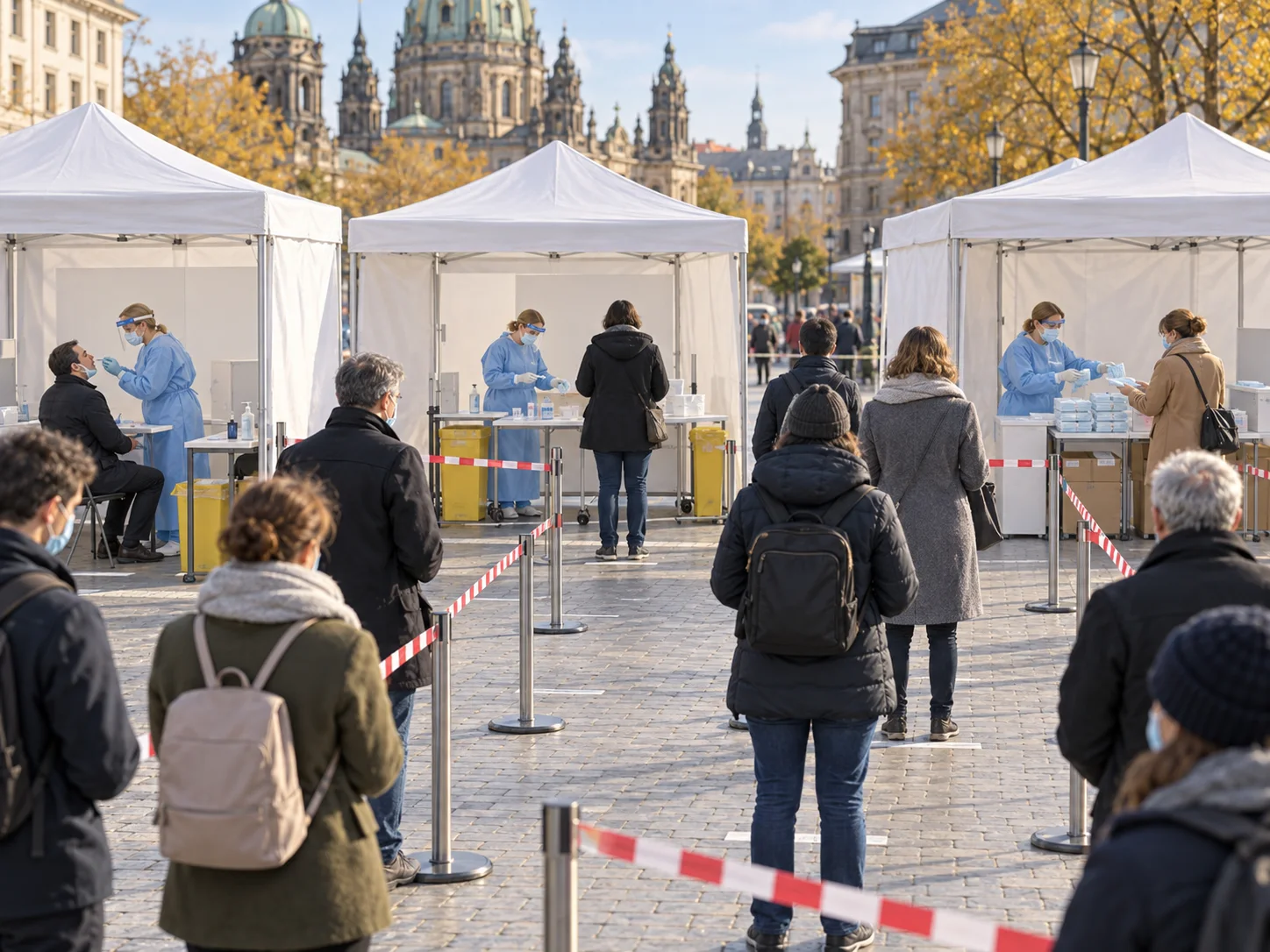
In March 2020, long queues formed outside coronavirus testing centres in several German cities. Demand was rising faster than laboratories could process samples, and results were delayed. People suspected of carrying the same virus waited outside buildings together, exposing a paradox: the entrance to a system designed to detect infection could itself create another point of risk.
By December, waits of several hours were being reported at testing centres in Berlin and Frankfurt. Walk-in sites, including airport facilities, were also created to process travellers at scale. A test was more than a diagnosis. Its result could determine whether someone could resume work, travel or contact with family.
What distinguishes this queue is that its members shared an anxiety while being required to keep apart. Moving people through faster and keeping the queue itself safe became simultaneous public-health problems.