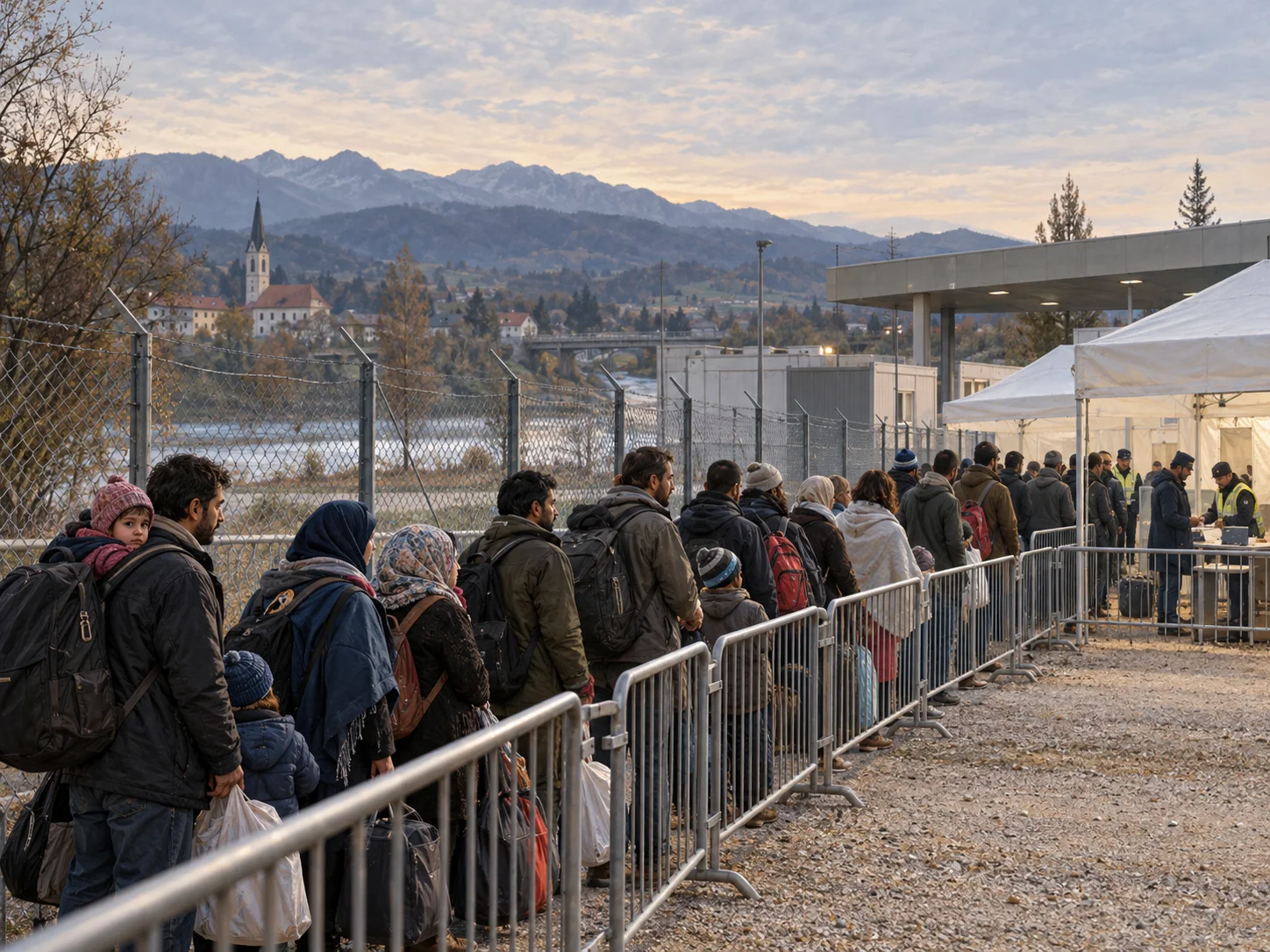
At the end of October 2015, several thousand people trying to cross from Slovenia into Austria waited overnight at the Spielfeld border. Reuters reported that about 4,200 people were behind fences in the morning and that roughly 1,000 more arrived by train. Police and soldiers admitted people in smaller groups, while buses were arranged to carry them onward toward Germany.
This was not a tourist immigration line. People fleeing war and persecution were waiting for permission and transport to continue into the next country. However large the movement, passage was divided into groups by checks, official direction and bus capacity. A border may be a thin line on a map, but here it became a space with a long duration.
The report also describes some people breaking through a fence and police pushing the crowd back. Ordered waiting and dangerous pressure were not separate stories; they existed beside each other where reception capacity failed to match demand. The line should not be romanticized as a humanitarian success. It records both the need to organize passage and the burden imposed by that organization.