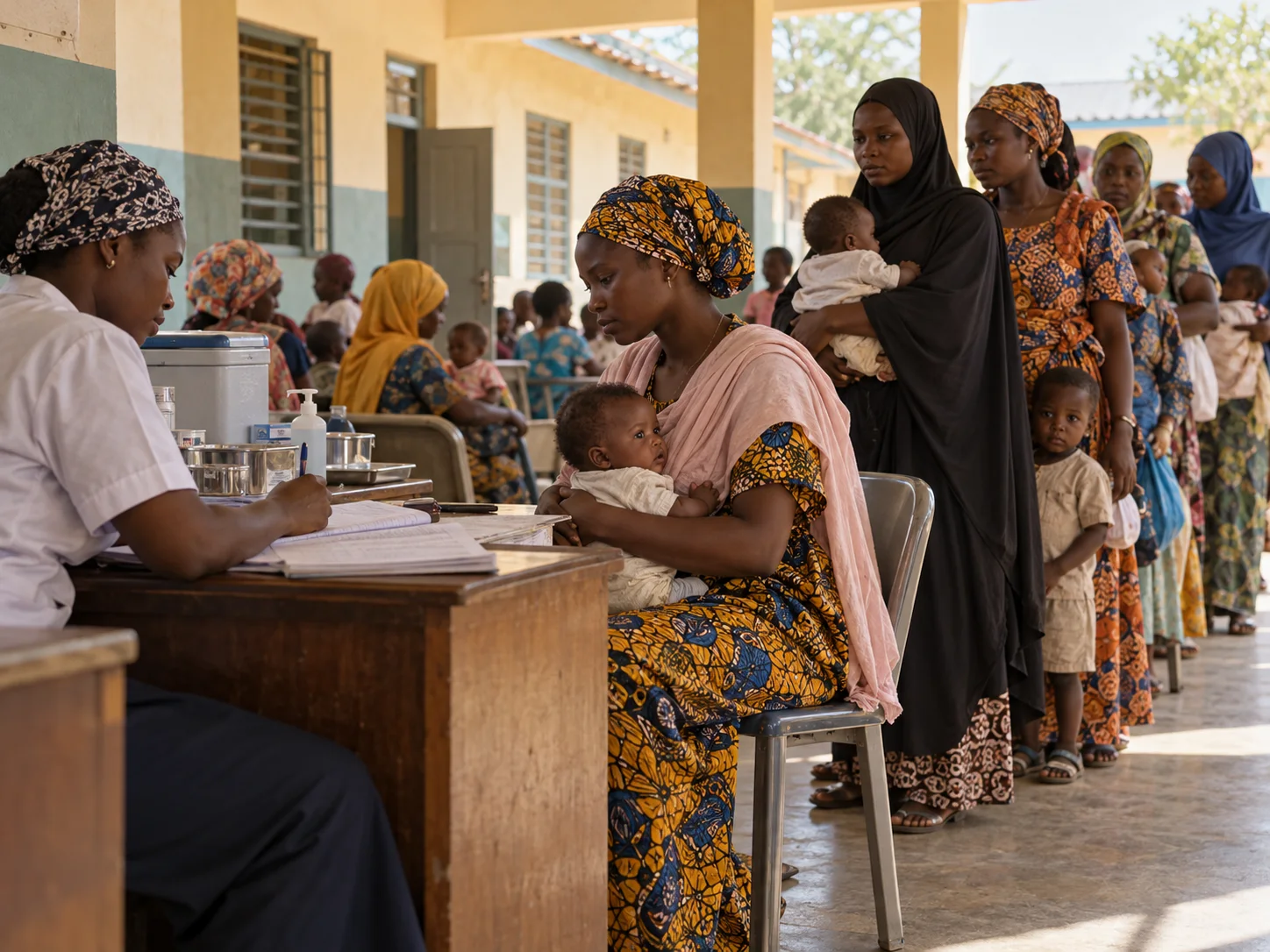
On an immunisation day at the Women and Children's Hospital in Damaturu, northeast Nigeria, dozens of women sat in a queue with their children. Hajara Sally, 27, had brought her twenty-five-month-old daughter Aisha for routine vaccination. At the back of the hall, a birth-registration officer using a tablet approached her; the registration took less than seven minutes.
Aisha had been born at home, and more than two years passed without anyone explaining the importance of registration. Integrating electronic civil registration into immunisation and antenatal services reduced the need for families to locate a separate office. UNICEF and Nigeria's National Population Commission supported the registration of 11.5 million children nationwide in 2023.
The vaccination queue served more than one purpose that day. By placing legal-identity services beside time already spent waiting for health care, the system turned one child's turn for an injection into her first official record of existence.