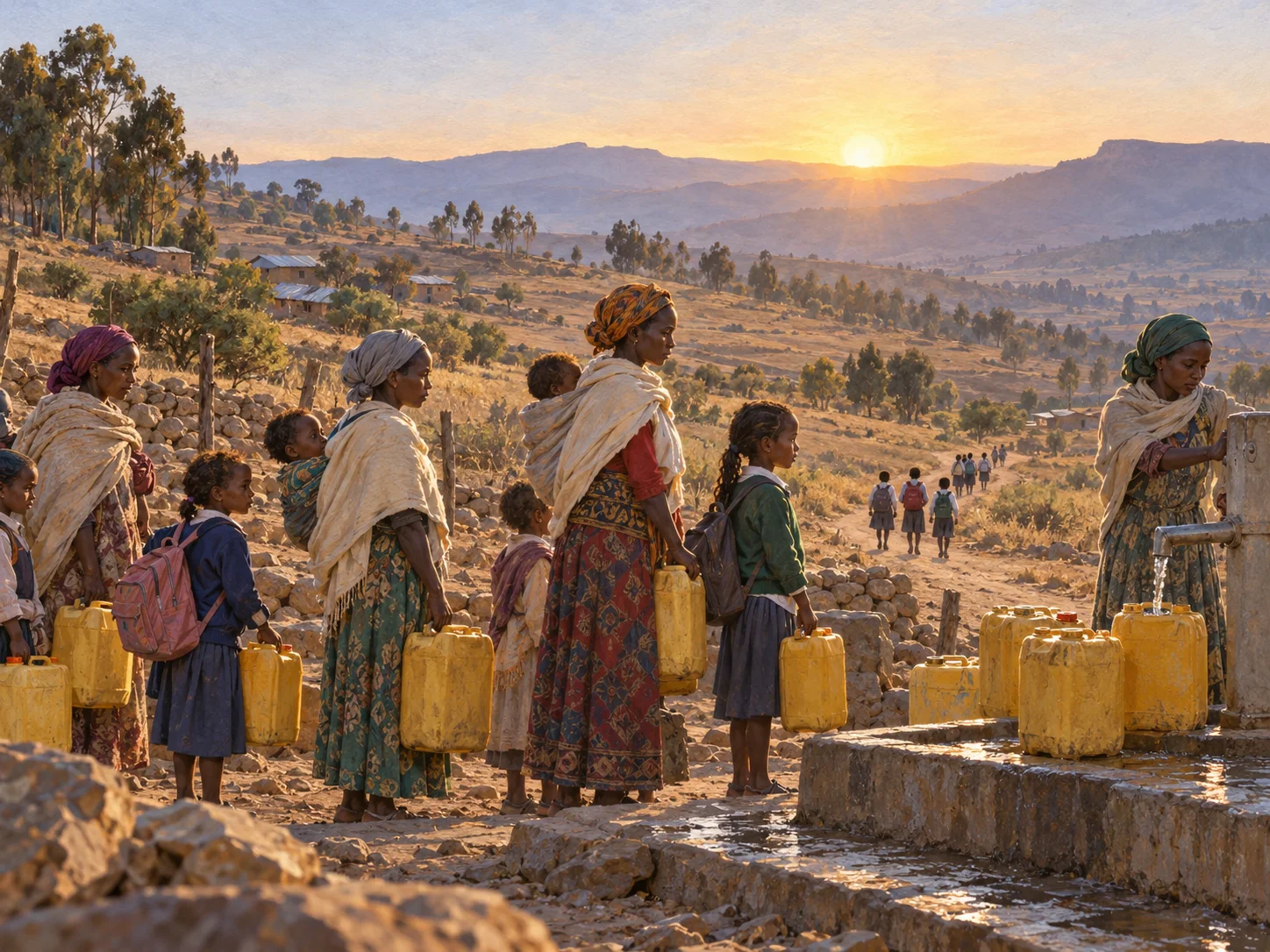
In Siraro district in Ethiopia's Oromia region, Shega Denke used to leave home at 4 a.m. to collect water. A 2026 UNICEF account records an hour-long walk to the source, followed by long queues and, at times, no water at all. Children could miss school as a result. The burden was not only the weight of the container: uncertainty over when the line would move determined whether there was time left for a classroom.
A new solar-powered system pumps groundwater into a reservoir and distributes it through public water points. UNICEF says it serves more than 25,000 residents. For Shega, the new collection point is about a twenty-minute walk from home, reducing the need to organise the day around a pre-dawn journey.
This queue makes clear that water access and education were not separate problems. Before an empty seat appeared in a classroom, a child had already been waiting at a water source. The infrastructure changed more than the distance to a tap. It changed a timetable that had once begun at four in the morning.