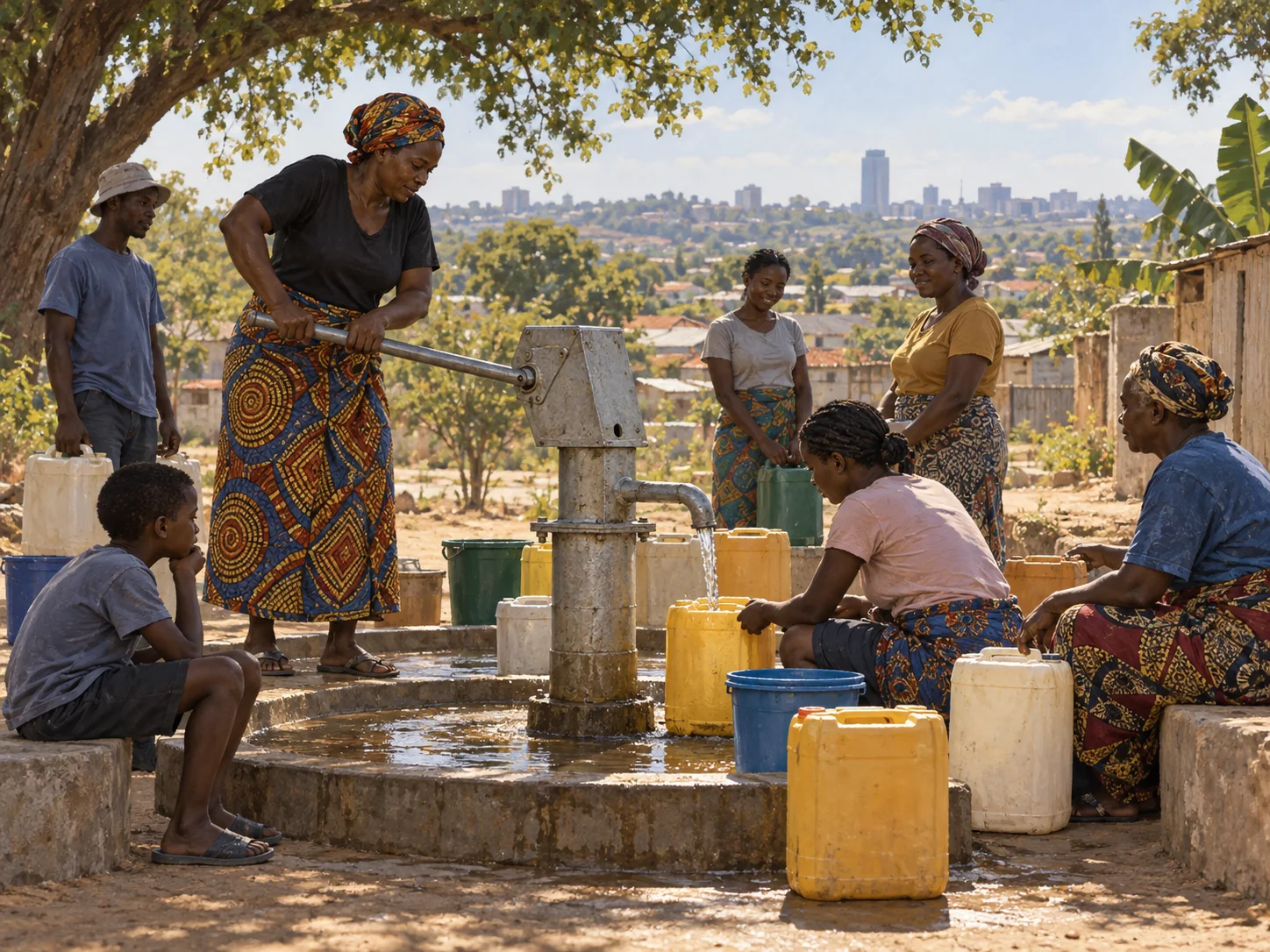
In 2022, Marvelous Shumba sometimes woke at 2 a.m. to join a borehole queue in Mabvuku, east of Harare. UNICEF recorded that municipal water to her home had stopped three years earlier. The few available boreholes served not only nearby households but also a shopping centre, a clinic, and people from neighbouring wards. Residents could wait for hours for safer water, and when demand exceeded the manual pump's capacity, disorder, fights, and bullying occurred.
The queue belonged to a wider supply gap. Estimated demand across the Harare metropolitan area was 800 megalitres a day, while production was about 500. Power cuts, ageing infrastructure, and variable reservoir inflows compounded the shortage. Some households went days or weeks without potable water, and children were often assigned the work of collecting it.
Solar-powered piped schemes supported by UNICEF and partners offered a supply less dependent on the electricity grid. The programme established 61 schemes, rehabilitated 164 boreholes, and added 15 water points, reaching more than 850,000 people. The point of this queue is not to romanticise getting up early. It is that, where a household tap no longer worked, the family's day had to begin with a place in line at a hand pump.