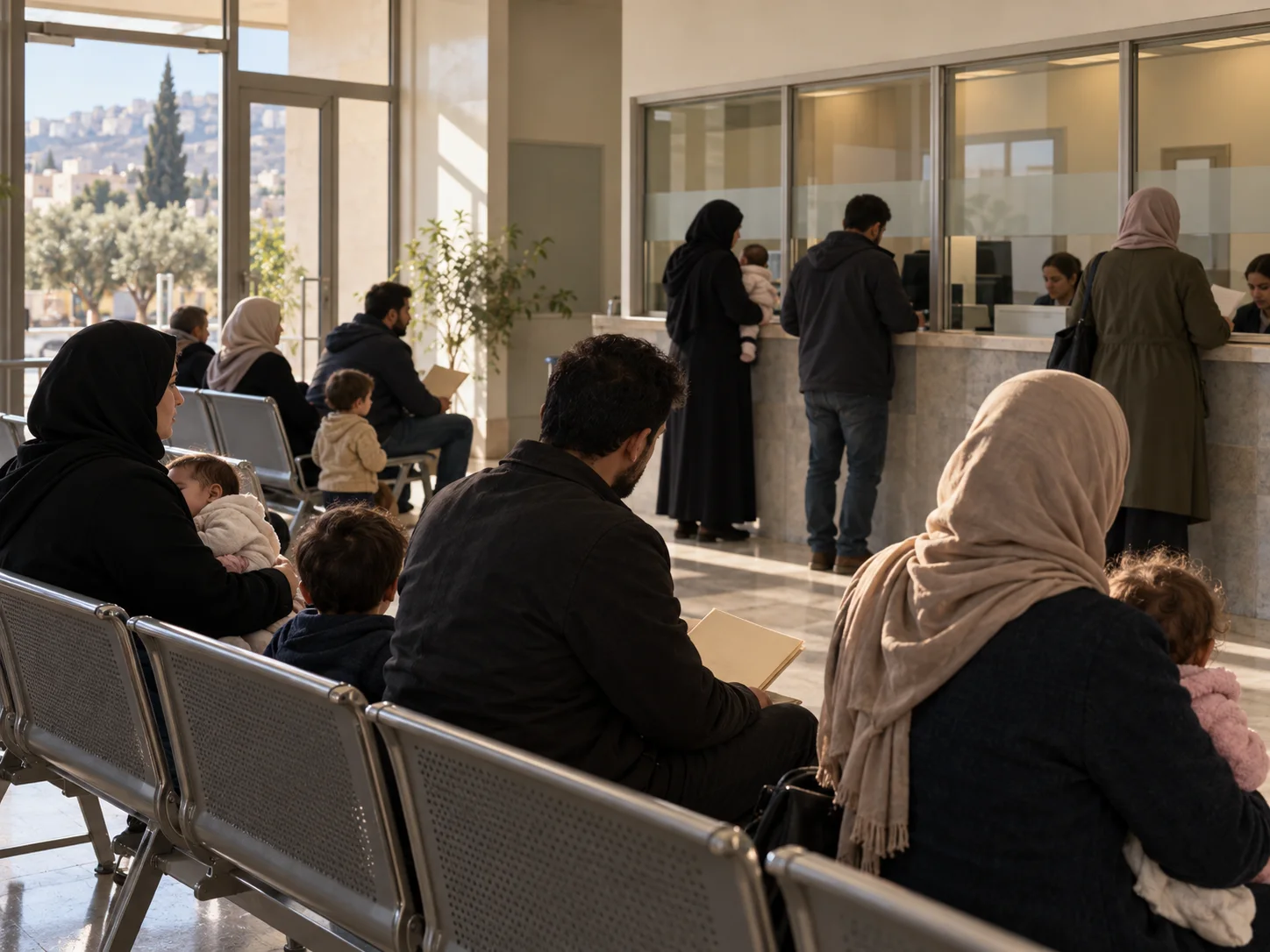
Registering a birth in Lebanon is not completed at a single counter. Parents obtain a notice from the hospital, doctor, or licensed midwife; take supporting documents to a mukhtar for a birth certificate; and then submit the record to the local civil registry and the Foreigners’ Registry. UNHCR’s 2025 Vulnerability Assessment of Syrian Refugees records one experience inside this sequence as a distinct survey response: “I went and waited in queue for a long time and then left / Foreigners Registry asked [me] to come back another time.” The dataset contains respondents for whom that answer was recorded.
Leaving the queue is not merely postponing an errand. UNHCR guidance says births in Lebanon generally must be registered within one year; after the deadline, late registration can require a lengthy, complex, and expensive judicial procedure. Earlier UNHCR reporting found that many children born to Syrian parents lacked birth certificates registered with the Lebanese authorities, prompting information campaigns, counselling, and legal assistance.
What distinguishes this queue is the legal consequence attached to waiting. Transport costs, time away from work and childcare, several layers of paperwork, and instructions to return another day can accumulate at the same administrative threshold. A small survey category about leaving a long line preserves something that the final statistic “unregistered” cannot: the point in the process at which a parent’s available time ran out.