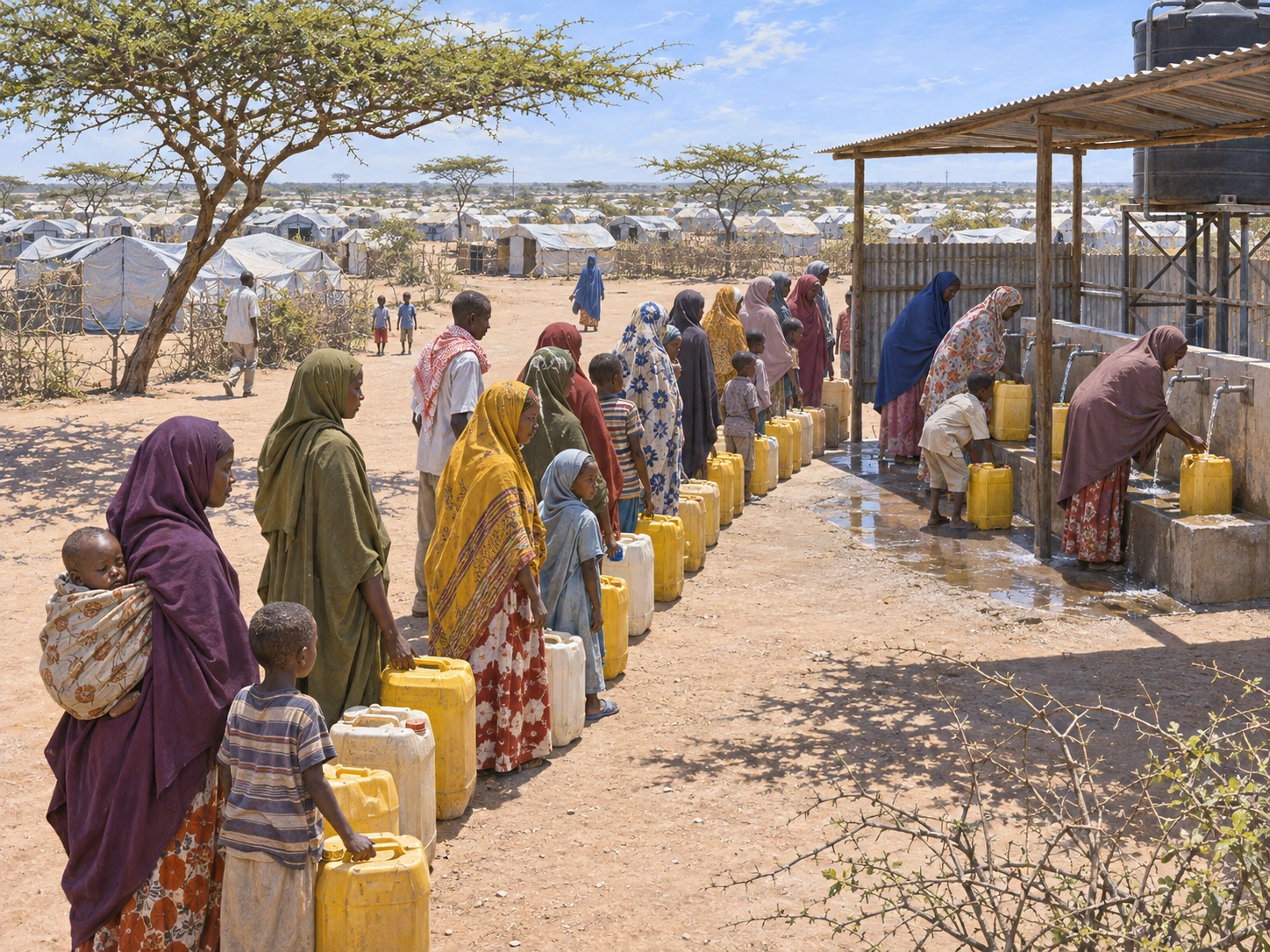
In December 2008, hundreds of newly arrived Somali refugees gathered each morning outside UNHCR registration offices in the Dadaab camp complex in north-eastern Kenya, waiting for staff to arrive. Ifo, Hagadera and Dagahaley together held about 230,000 people, far beyond their original capacity of 90,000. UNHCR enlarged its registration team to meet the demand.
Registration was not the only daily queue. UNHCR also recorded women and children waiting under the sun for water. One tap that had served roughly 200 families was being sought by about twice that number, according to a resident quoted in the agency’s report. The registration line was an entrance to shelter and assistance; the water line was an entrance to the day’s survival. Together they translated an abstract population crisis into the limited pace of staff members and pumps.