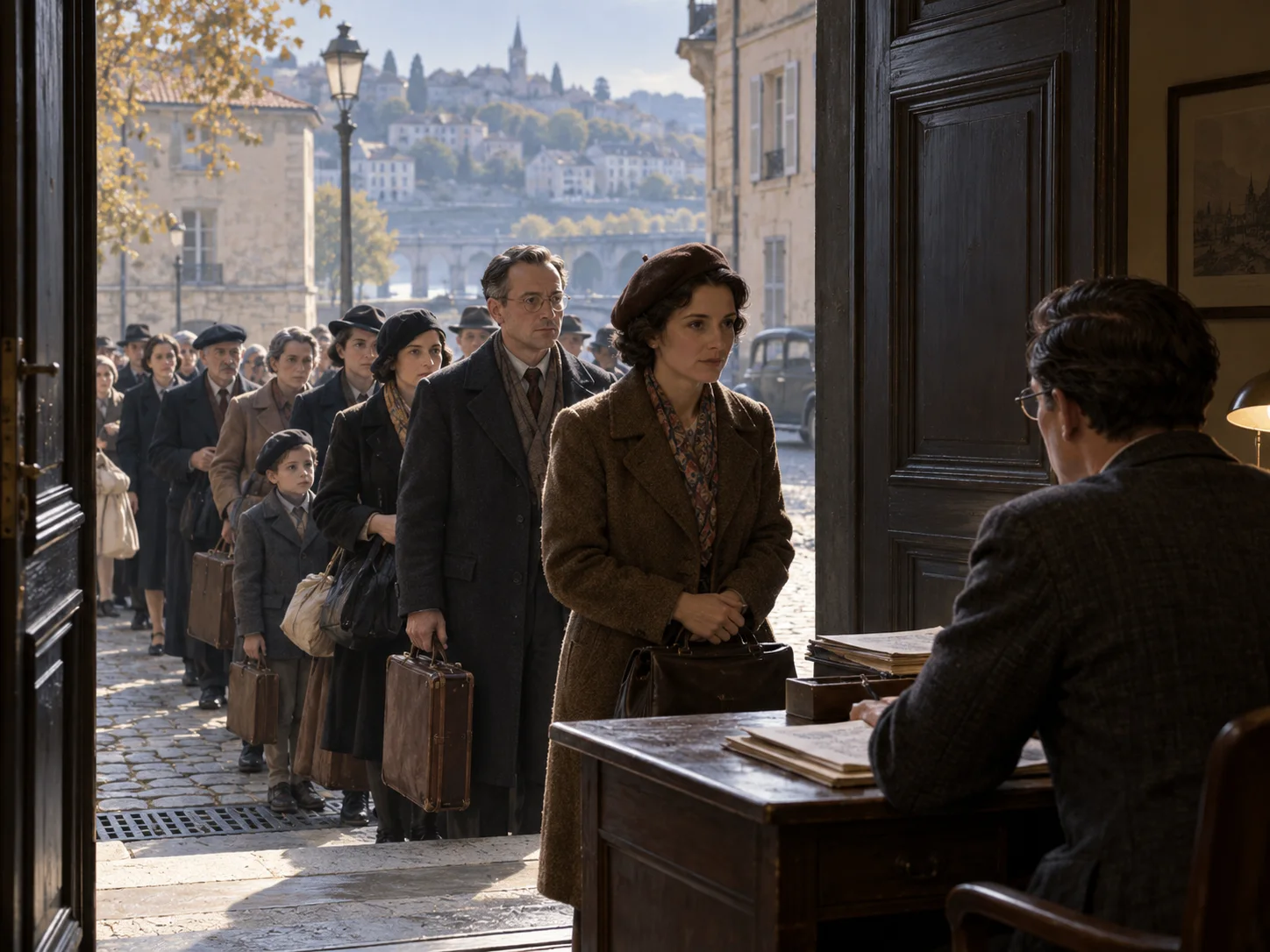
In 1940, refugees fleeing Nazi persecution crowded Marseille. By the time Varian Fry’s relief office opened at eight each morning, a long, winding queue already jammed two corridors and the staircase. A U.S. National Archives account, drawing on Miriam Davenport’s memoir and related records, says staff interviewed as many people as possible until noon; Davenport alone spoke with about forty applicants a day. Publicly named the Centre Américain de Secours, the office distributed aid and helped people negotiate visas and escape routes. Demand overwhelmed its capacity. Fry reported sixty applicants a day but said only forty could be questioned, even with nine employees. Decisions about whom to assist could carry life-or-death consequences, especially because money, visas and staff time were limited. The line was thus both an ordering device and a boundary. It showed, in the physical dimensions of corridors and stairs, how narrow the available routes out of wartime Europe had become.
France · 1940
The Refugee Queue That Filled Two Corridors and a Staircase