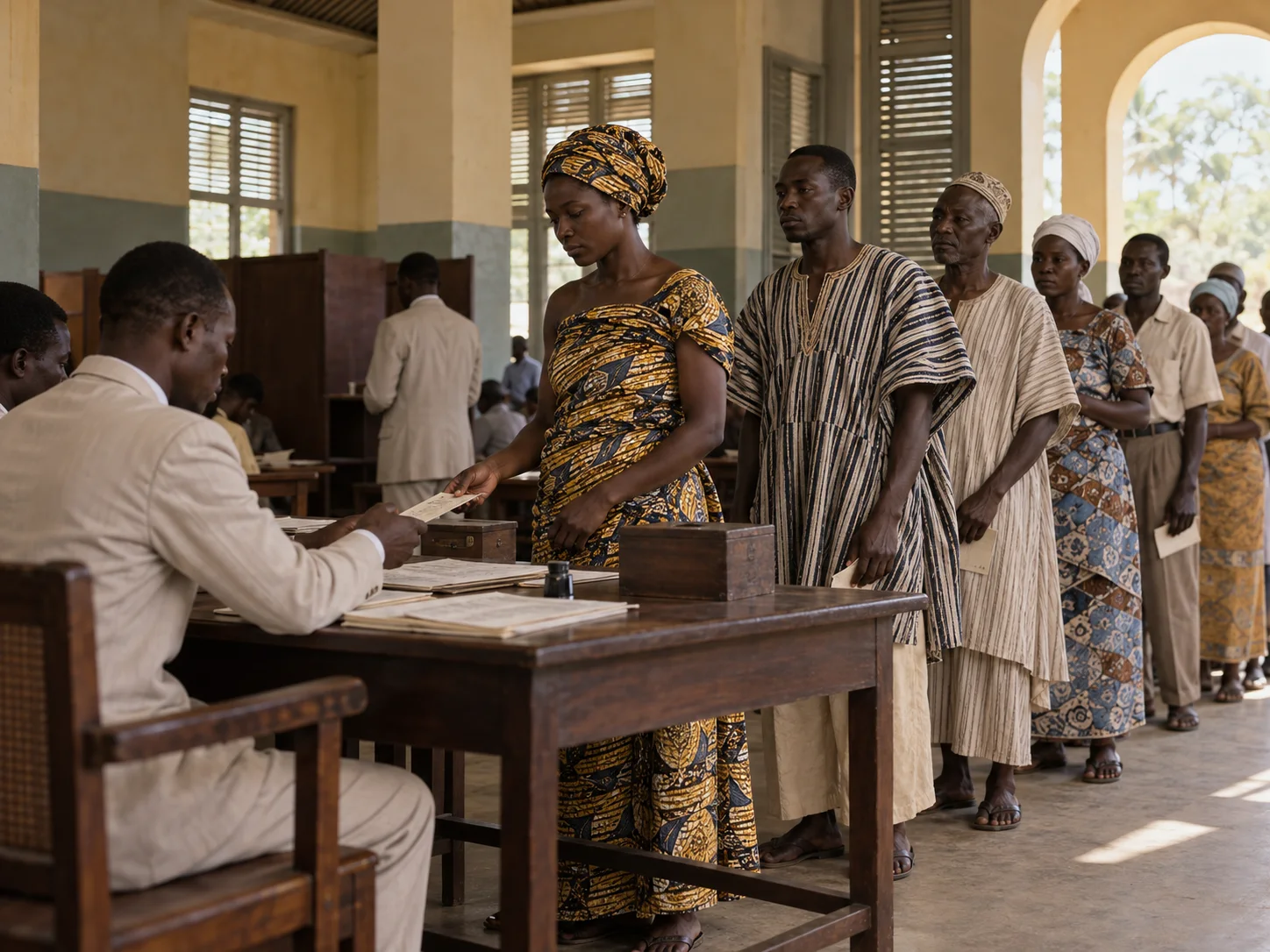
In the colonial Gold Coast, now Ghana, the 1951 election became an entry point to arguments about self-government. Historical research records chiefs beating gongs to summon people to register, while activists associated with Kwame Nkrumah encouraged registration and explained voting. At polling stations, people queued under police observation, had names checked against registers and fingers marked with ink. Adult suffrage and the secret ballot carried different meanings: British officials saw orderly transfer, nationalists claimed equality and maturity, and voters could treat the ballot as a contract for future prosperity. The procedure placed people in one line without making their political purposes identical. A mechanism of colonial administration also became a route through which its subjects pressed toward independence.
Ghana · 1950 (period details in article)
Ghana’s Queue into Electoral Citizenship