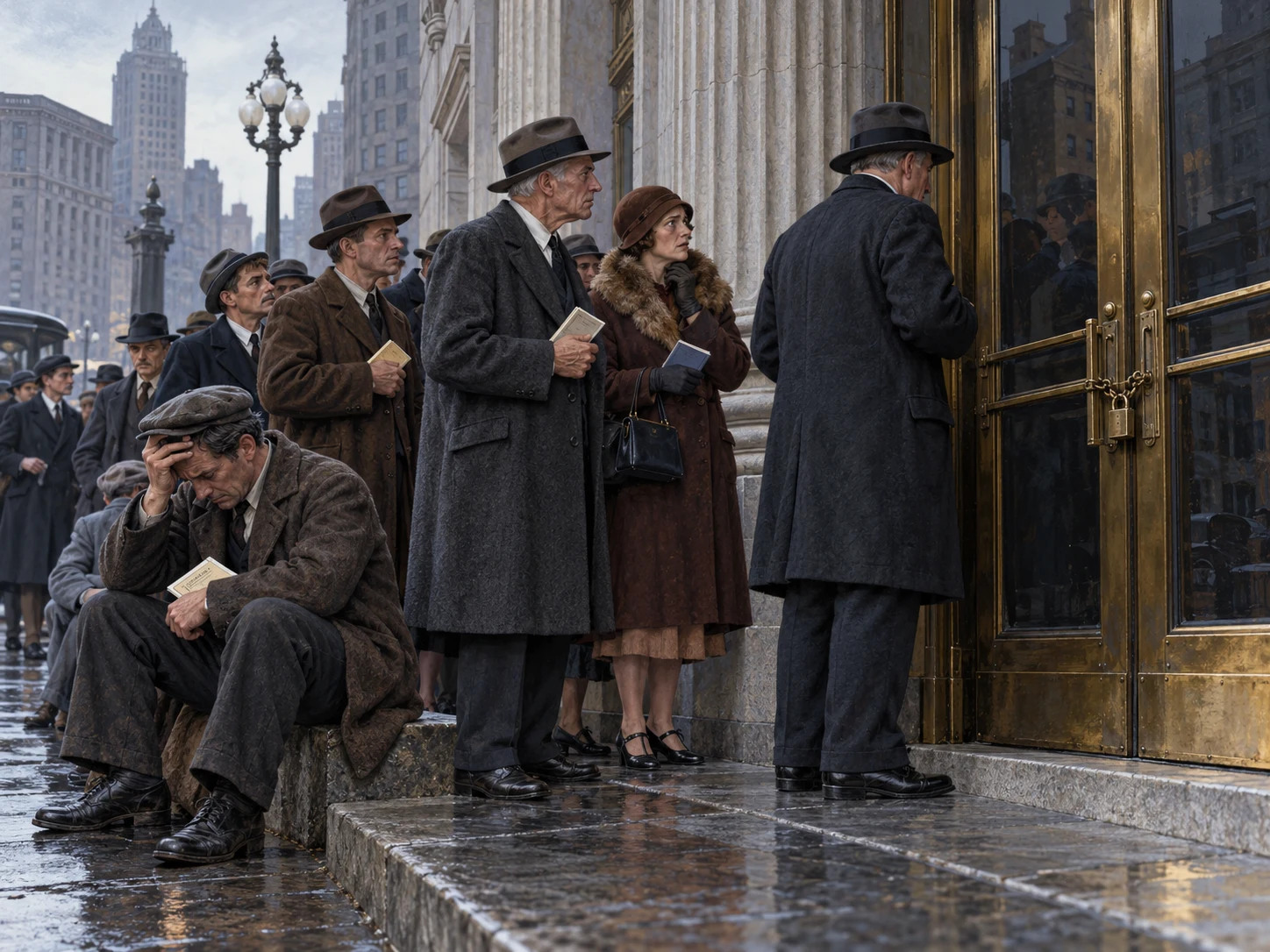
After the Bank of United States failed in New York in 1931, depositors gathered outside in the rain. The Library of Congress catalogues the photograph as a Great Depression bank-run scene. In January 1933, an archival caption from the University of Memphis records nervous depositors forming a line for their savings during a run on the Bank of Commerce.
A bank-run queue works in the opposite direction from a line waiting for goods to arrive. Every person who receives cash can make those behind fear that the bank will run out. Separate attempts to protect household savings can therefore accelerate the crisis threatening the bank as a whole.
In March 1933, the Roosevelt administration temporarily closed the nation's banks and allowed only solvent institutions to reopen. These lines were more than congestion. They were the last physical test of whether numbers printed in a passbook could still be converted into money in hand.