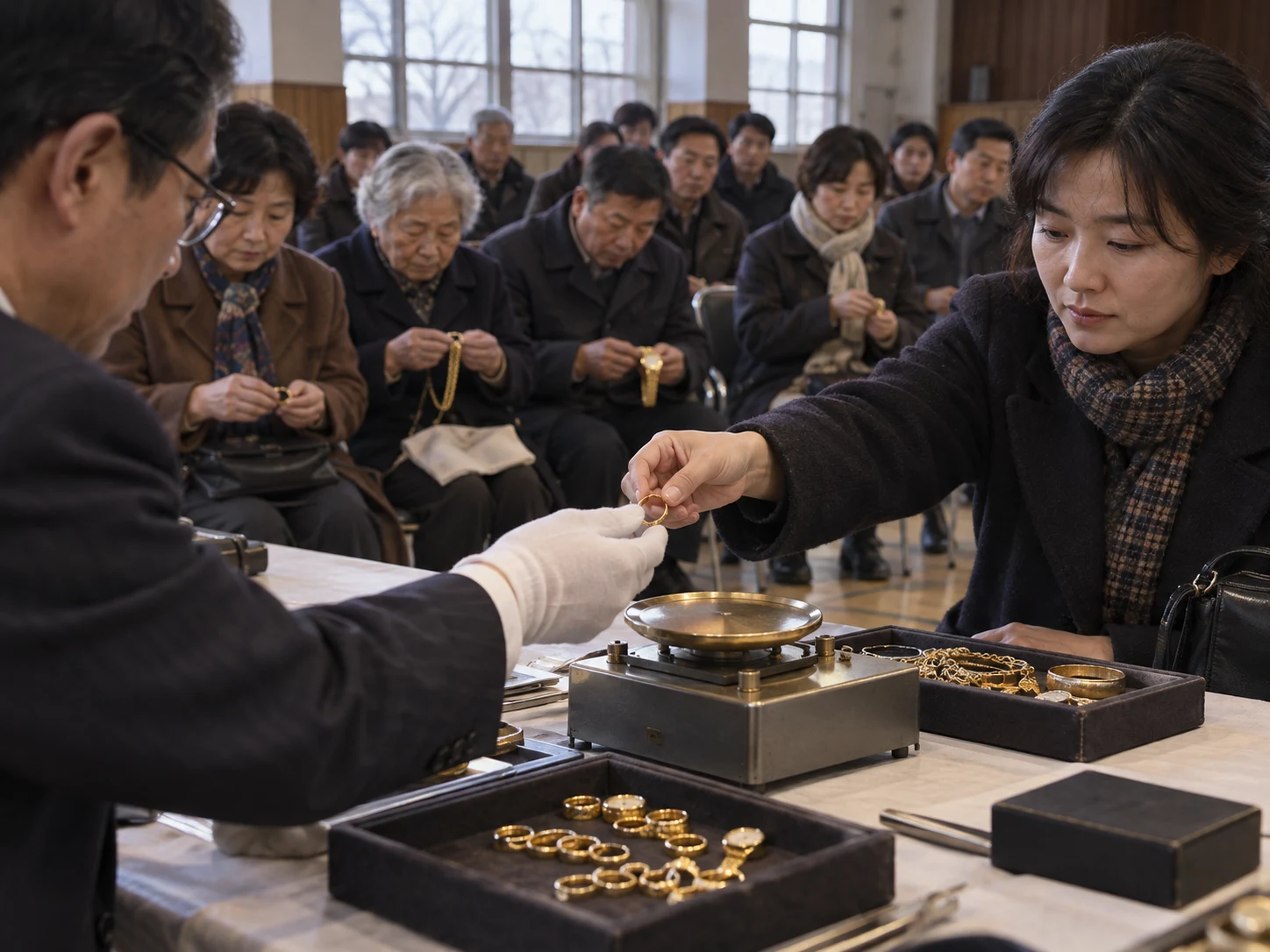
South Korea's currency crisis deepened in 1997. On 5 January 1998, a nationwide gold-collection campaign began, and people lined up at banks carrying rings, necklaces and commemorative objects. On the first Monday alone, 44,748 consignments containing 3,314 kilograms of gold were received. By mid-March, the campaign had gathered 226 tonnes valued at about $2.2 billion.
This line connects the crisis of 1997 with the public response of 1998. Gold stored in households was weighed and tested at counters, then converted into an exportable asset capable of earning foreign currency. Citizens encountered a vast monetary crisis through the small procedure of presenting one personal object at a time.
Financial anxiety usually produces a line pointing out of a bank, as depositors try to withdraw value. Here the direction was reversed: valuable objects moved in. Participants need not be assigned a single motive for the record to show that a national crisis became a concrete sequence linking household possessions to bank counters.