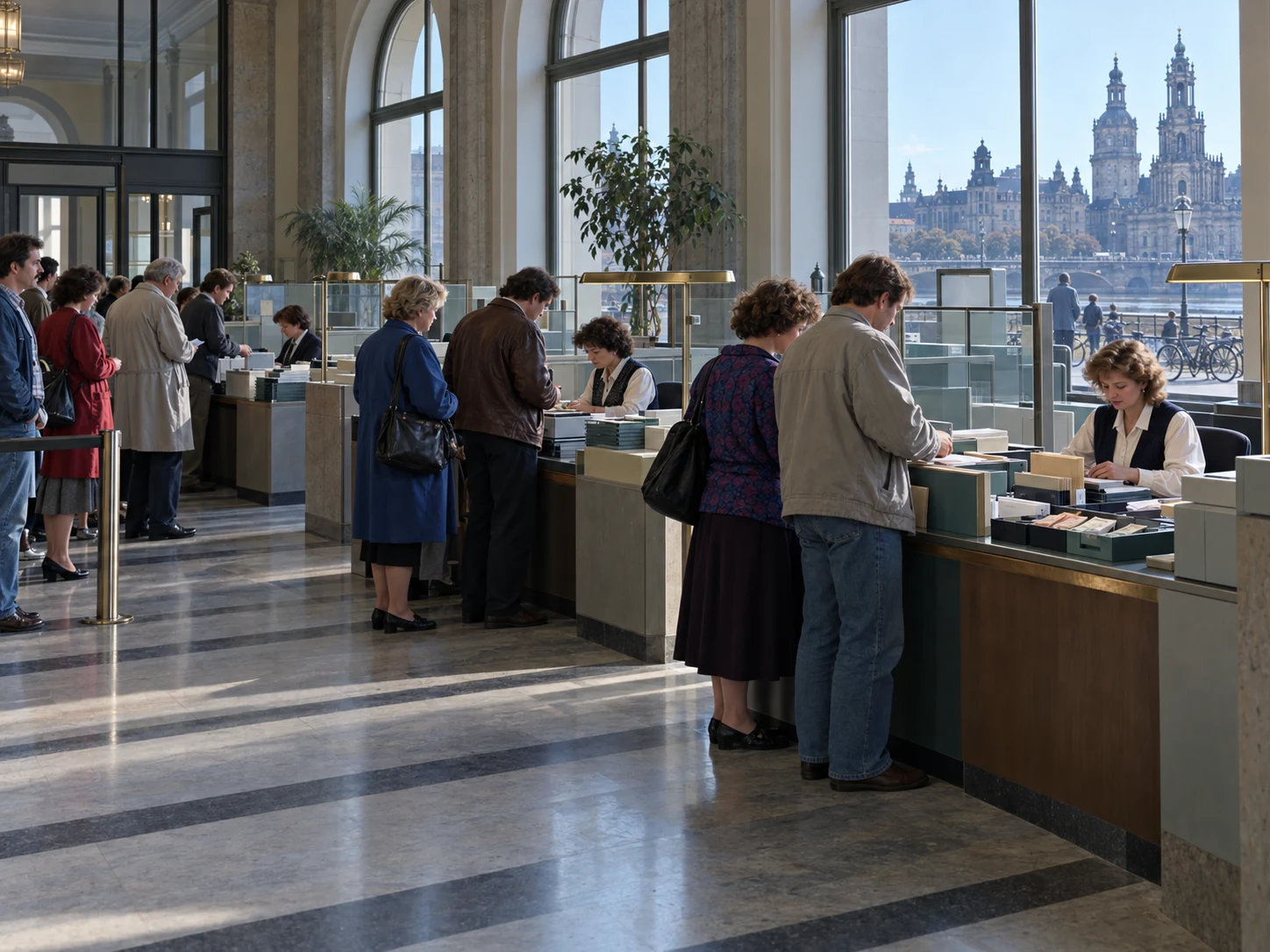
On 1 July 1990, the German monetary, economic and social union took effect, making the Deutsche Mark East Germany's sole currency. Outside a savings bank in Wanzleben, Saxony-Anhalt, people queued to exchange money on the first day.
The union was designed through treaties and conversion rates, but citizens obtained the new currency at bank counters. More than 180 billion marks were prepared for one of history's largest currency exchanges, yet the last step still required individual verification and handover. At the bank door, a national transformation became the everyday act of waiting one's turn.