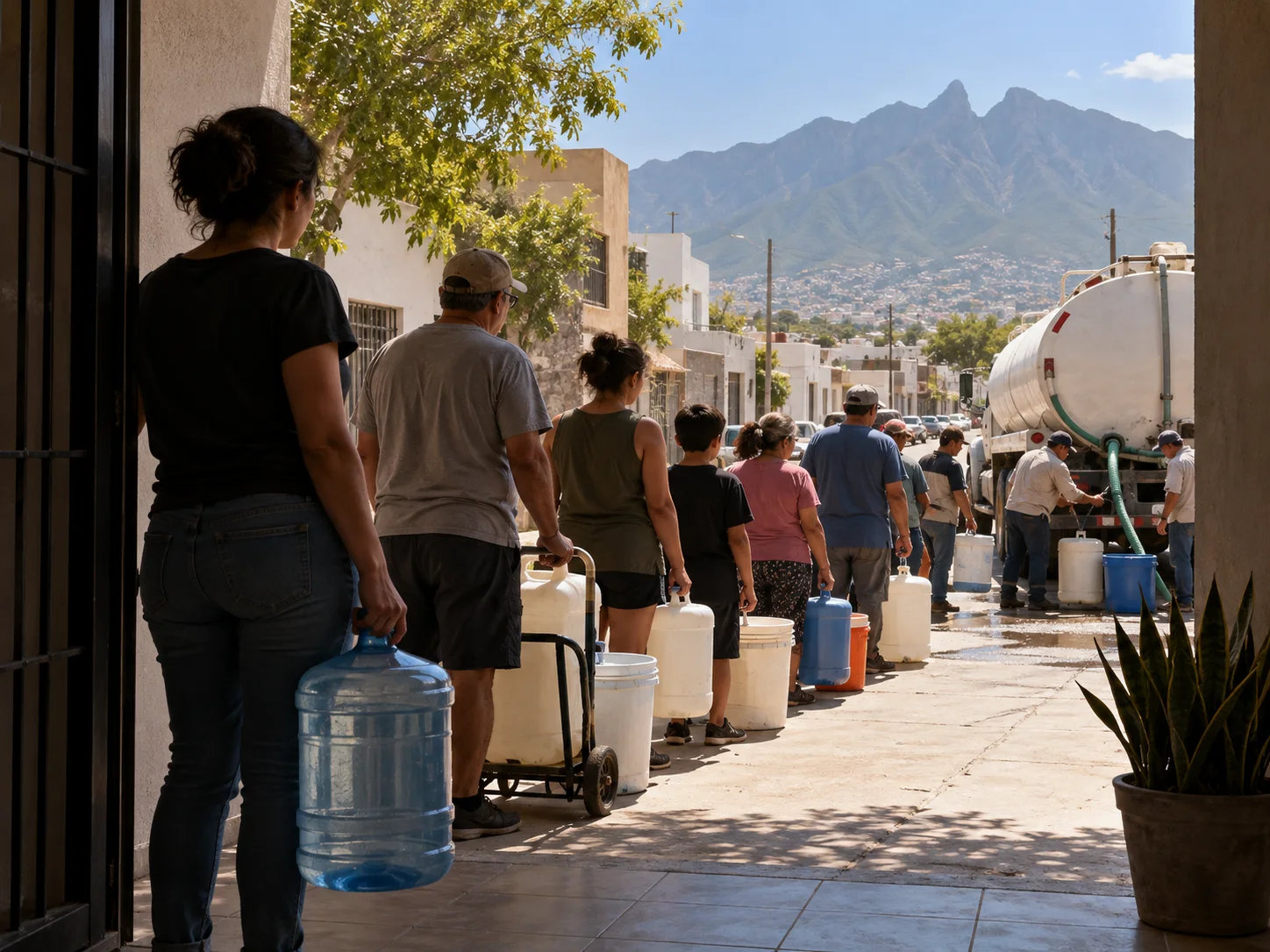
On 20 June 2022, residents carrying containers waited at a public water collection point in Monterrey, northern Mexico. The Associated Press documented weeks of disrupted supply in an industrial metropolis of almost five million people, leaving neighborhoods dependent on tanker deliveries and public collection sites. A Los Angeles Times photograph also showed residents, including a young girl, lining up for a water truck in García on the metropolitan area's northwestern edge.
The surprising feature of this queue is that a basic-service failure halted daily life not in an isolated settlement but in one of Mexico's major industrial centers. When taps stopped working, water ceased to be a service delivered to the home and became a ration collected with containers, time and physical effort. Households needed different amounts, yet the tanker's capacity and arrival time began setting the rhythm of the neighborhood.
A water line changes the value of an ordinary litre. Once the usually invisible pipe network failed, the city's prosperity mattered less than how many containers a family could carry and where it stood in the order of collection.