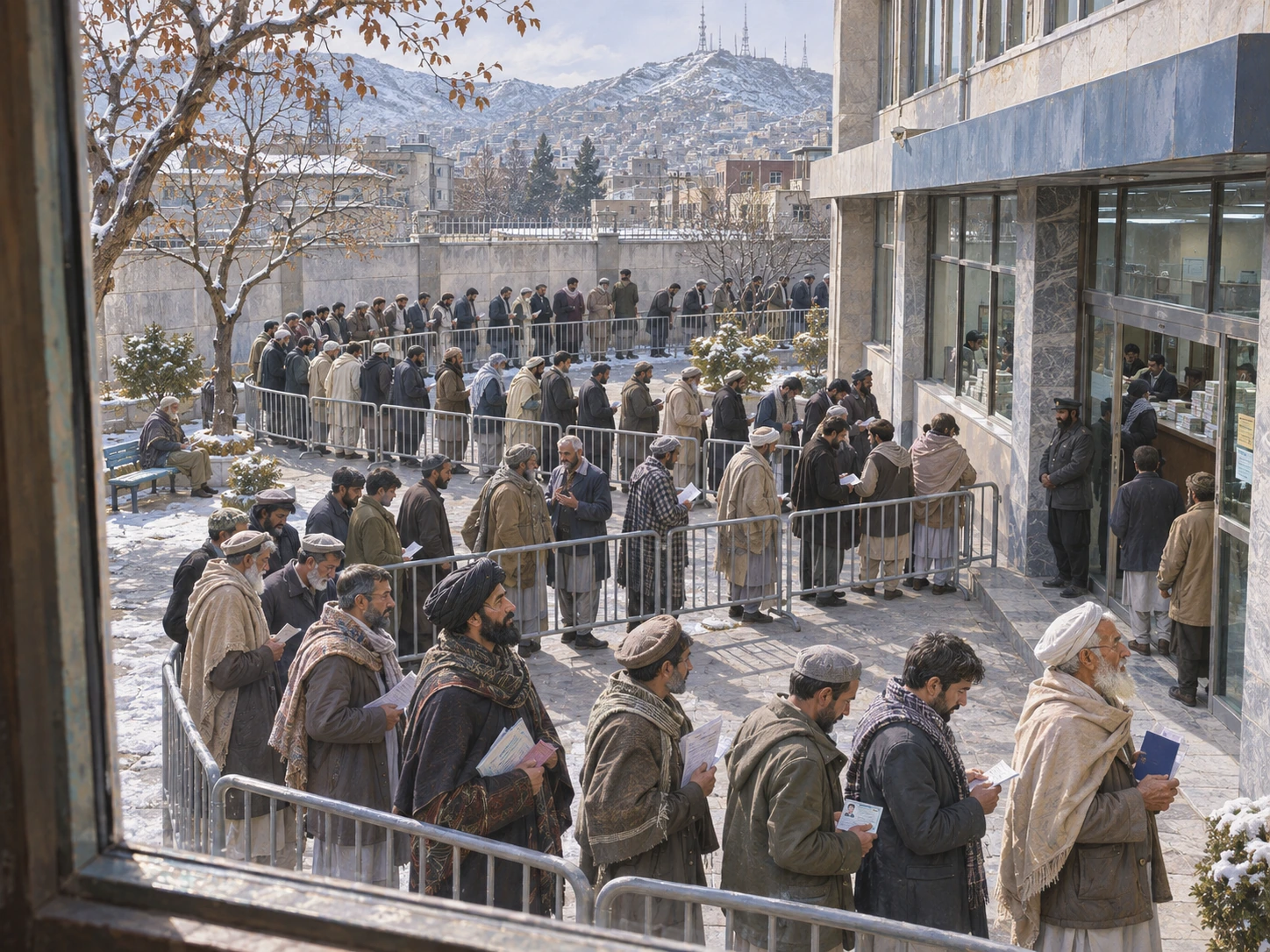
In August 2021, after the Taliban took control of Kabul, banks that had been closed for more than a week began reopening to crowds of people seeking cash. Al Jazeera published a photograph of Afghans standing in a queue for their turn at an ATM and reported that one customer waited four hours to withdraw money from his own account.
The line did not exist because people lacked deposits. It existed because they could not reach them. Cash shortages and withdrawal limits continued after the doors reopened. In an economy where everyday purchases depended heavily on cash, a bank entrance and hours of waiting stood between an account balance and household spending.
Unlike a queue for a new product or a relief handout, this was a line for money that already belonged to those waiting. Even reaching the front did not guarantee that cash would remain. A financial crisis became a physical experience measured in bodies outside an ATM and hours spent trying to recover one's savings.