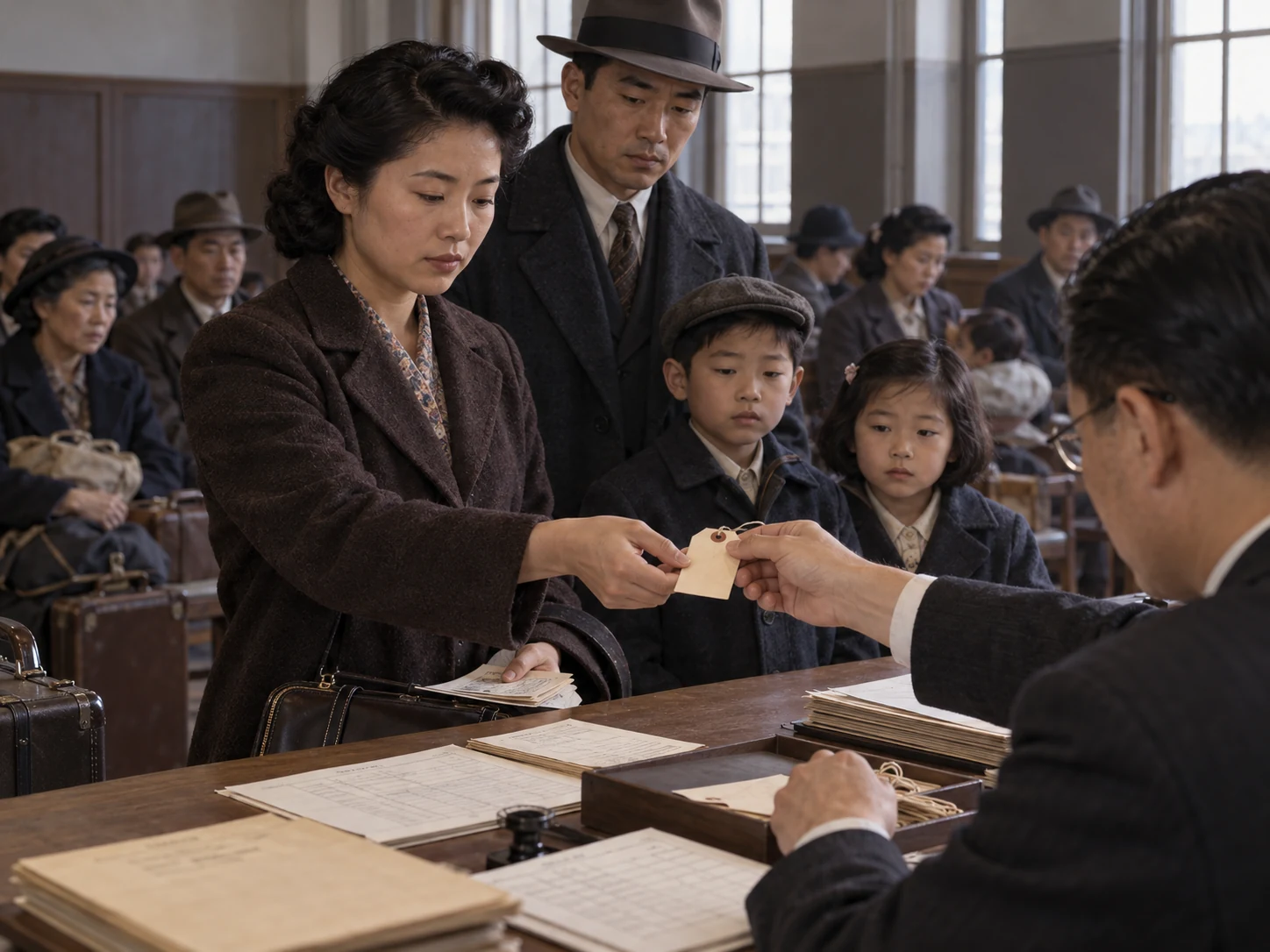
On 25 April 1942, a young Japanese American woman stood in a line in San Francisco. She was waiting for an appointment to receive a family registration number. Five days later she would be removed to the Tanforan Assembly Center. War Relocation Authority photographer Dorothea Lange recorded the scene, but the woman’s name remained absent from the public record for decades.
Research published by the Library of Congress in 2021 identified her as Shizuko Ina. The number was not a convenient ticket for a service she had chosen. It belonged to the machinery used to remove people of Japanese ancestry from their homes and send them into wartime incarceration. The queue imposed an administrative sequence on families whose movement was being compelled by the government.
Ina’s daughter, Satsuki, later explained that her mother had not known the photograph was being taken and rarely discussed the experience. The image cannot license invented thoughts or feelings. Yet learning the woman’s name changes how the line is read. A catalogue description once presented anonymous residents waiting for registration. The later investigation restored one person to a scene in which the state had reduced families to numbers.