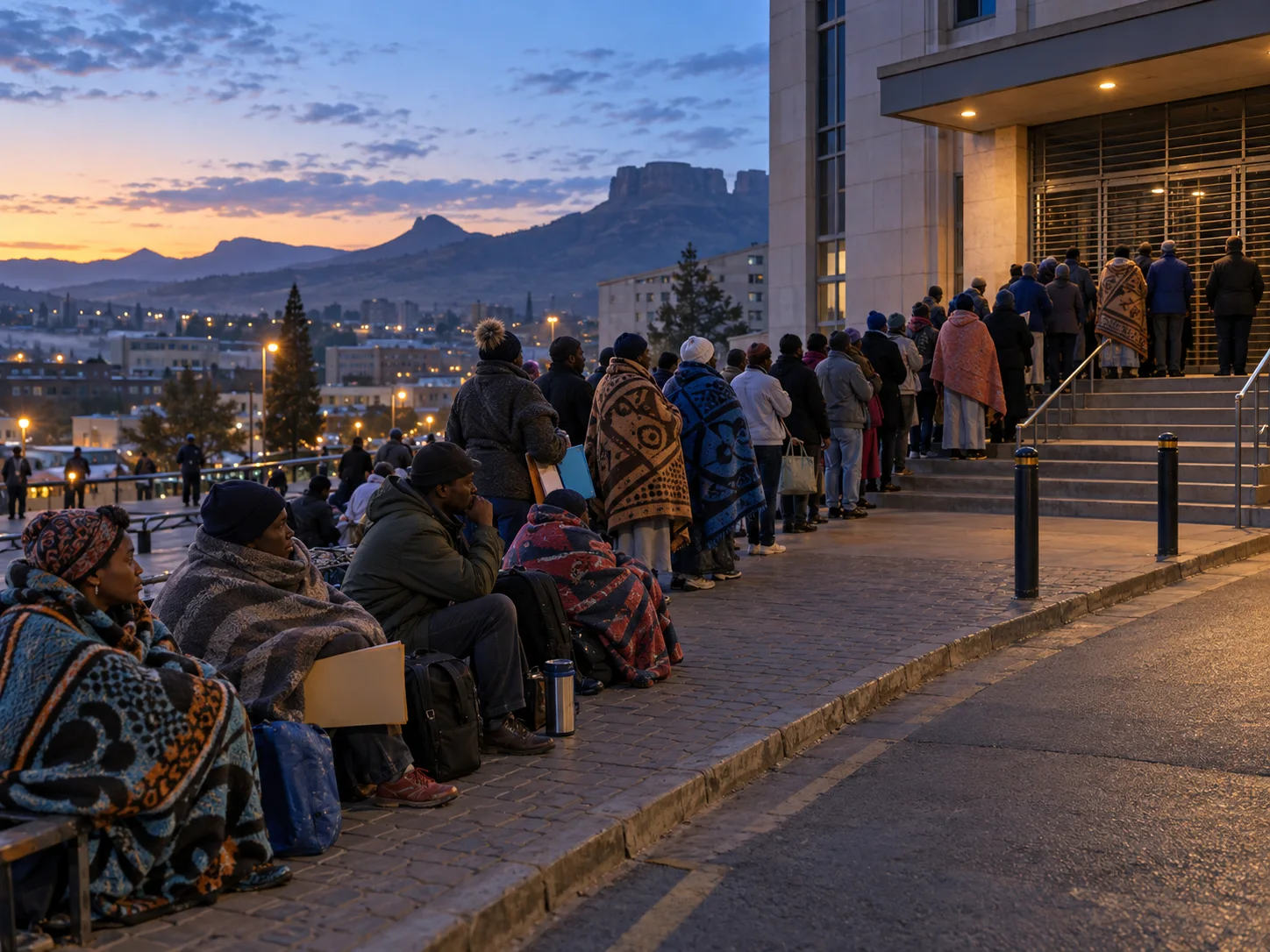
In April 2026, people in Maseru, Lesotho, queued before dawn at the passport office even after services had officially been suspended. GroundUp reported that the yard was full by mid-morning. Some applicants hoped to submit new forms; others carried receipts for passports requested months earlier. Officials admitted people in groups of ten, but movement was slow and some visitors completed only one step before being told to return. A backlog of 50,000 applications sat behind the scene. Old printing machines overheated after producing about 200 to 300 passports, and Maseru’s daily output had been limited to 100. The line included mine and domestic workers employed in South Africa, for whom a valid passport could determine whether they kept a job or crossed the border legally. They were not simply waiting for a functioning counter. They were waiting for a possible opening in a suspended system because employment deadlines were more urgent than the ministry’s notice.
Lesotho · 2026
Queuing Before Dawn for a Service Officially Suspended