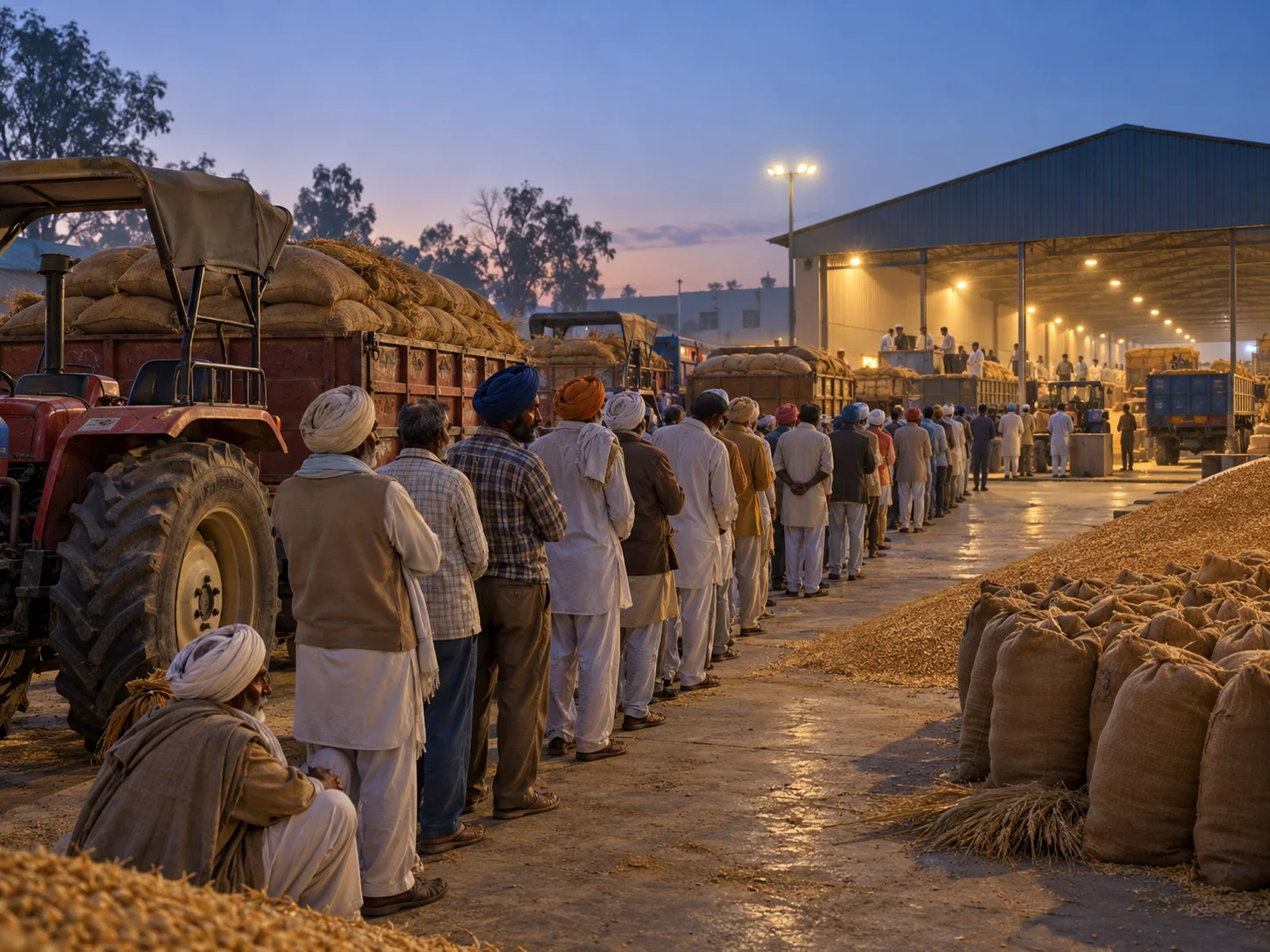
In May 2018, farmer Abdul Sattar waited for two days beside a tractor-trolley carrying five tonnes of wheat at a government purchase centre in Amethi district, Uttar Pradesh. His family had been issued a slip for 2 May, but a shortage of gunny sacks and farmers already ahead in the queue delayed weighing and purchase. He spent the nights outdoors guarding the crop and was found dead on Friday morning. His family and officials differed over the cause, and the district administration ordered an inquiry.
This queue should not be reduced to a neat moral about endurance. Even at a centre offering a government price, one missing component—sacks, scales or purchasing capacity—could stop a crop from becoming income. The objects waiting in order were not only people but tractor-loads carrying a household’s season of work.