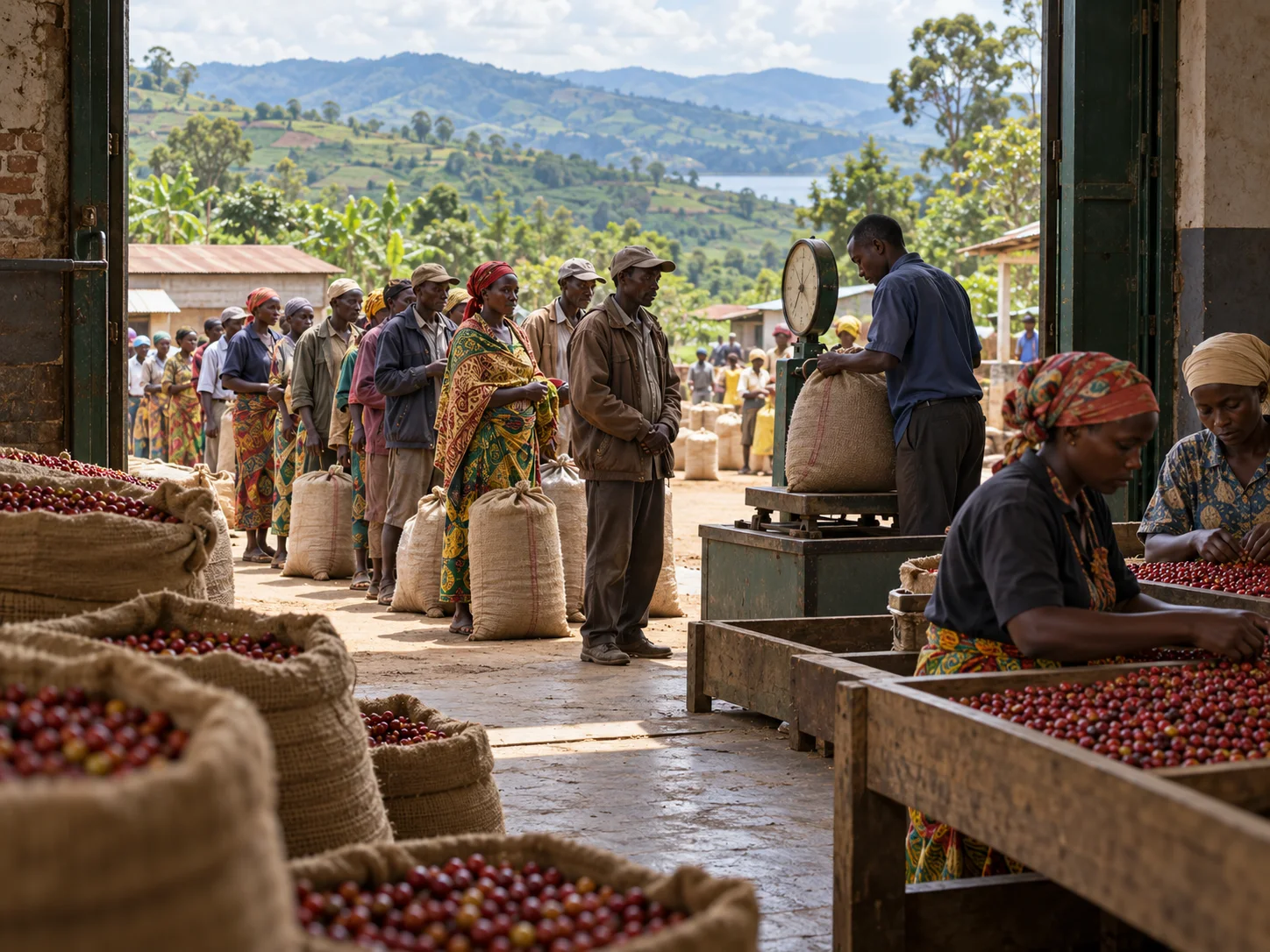
At Gakenke washing station in Burundi, coffee cherries delivered by farmers do not pass through a single line. Royal Coffee's account describes several queues, each serving a different stage. A lot is first floated in water to test density and ripeness. If even one cherry floats, the entire lot goes to the back of the first line.
Only a lot whose cherries all sink advances to the visual-selection queue. Defective fruit is removed there; the coffee is then weighed and the farmer receives a receipt. The waiting unit is not merely a person but a separately identified farm lot. Arrival order alone does not determine progress, because failure at the first quality gate sends the lot backward. Export quality is managed from the entrance through a queue that deliberately includes the possibility of repeating a stage.