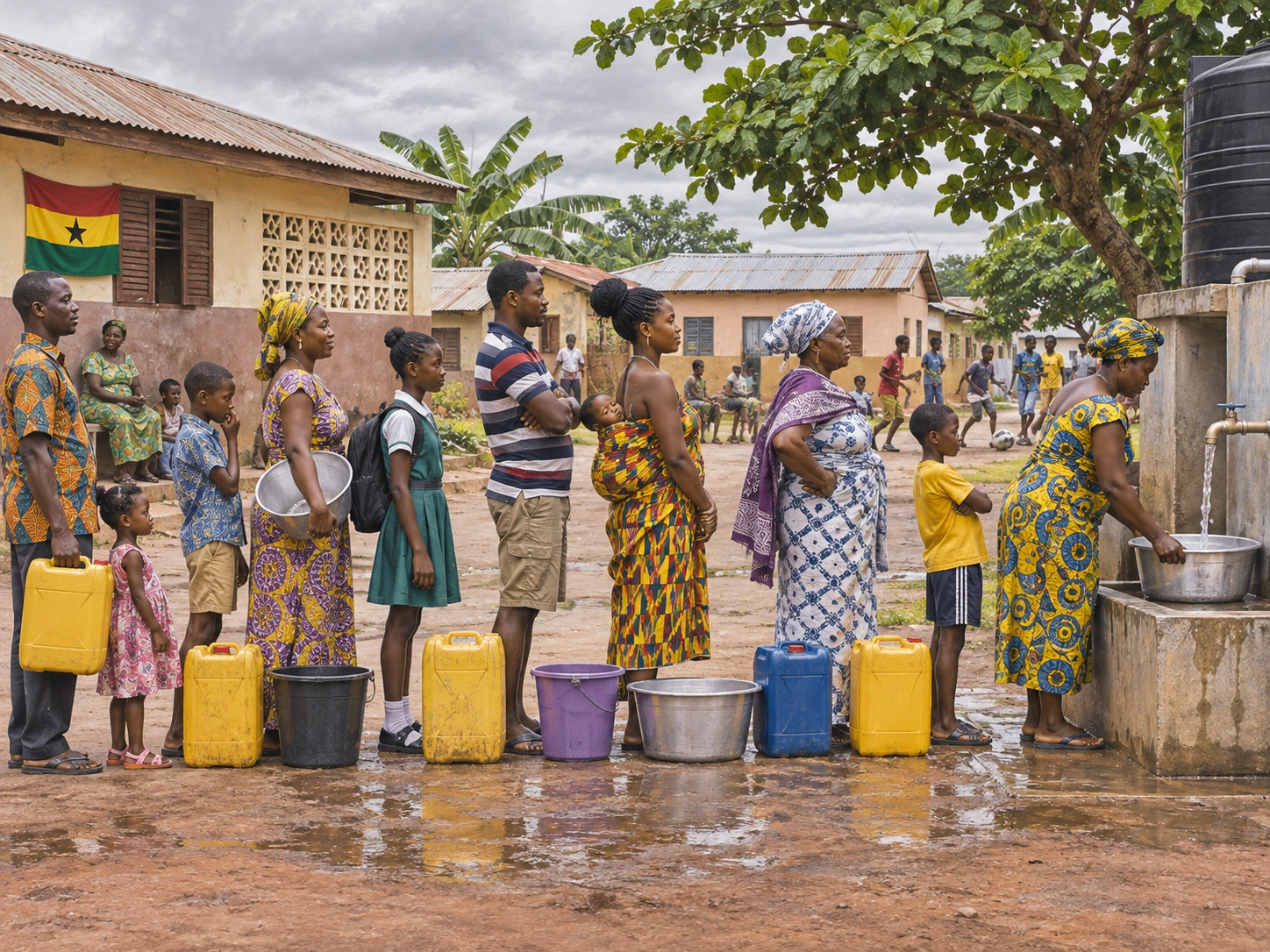
When urban water supplies fail in Ghana, household water may be obtained not from a tap but through time spent waiting at a distribution point. Reporting on Accra documented residents spending nights on the street while waiting in line for water. When a free-water programme was introduced in 2020, the Community Water and Sanitation Agency issued operating guidance requiring customers at water points to be served in a queue and limiting the number of containers one person could bring. The container limit was not incidental. Where supply is scarce, it helps prevent one customer from taking a disproportionate share and turns fairness into a visible rule of the line. Jerrycans and buckets are therefore more than carrying tools: they show how much each household expects to receive and become units through which order and allocation are managed. The water queue translates an infrastructure shortage into nights spent outside and rows of containers at a communal point. It is an urgent physical queue in which access to an essential resource is negotiated through sequence, quantity and shared restraint.
Ghana · Present day
Ghana | Nights of Waiting and Container Queues for Water