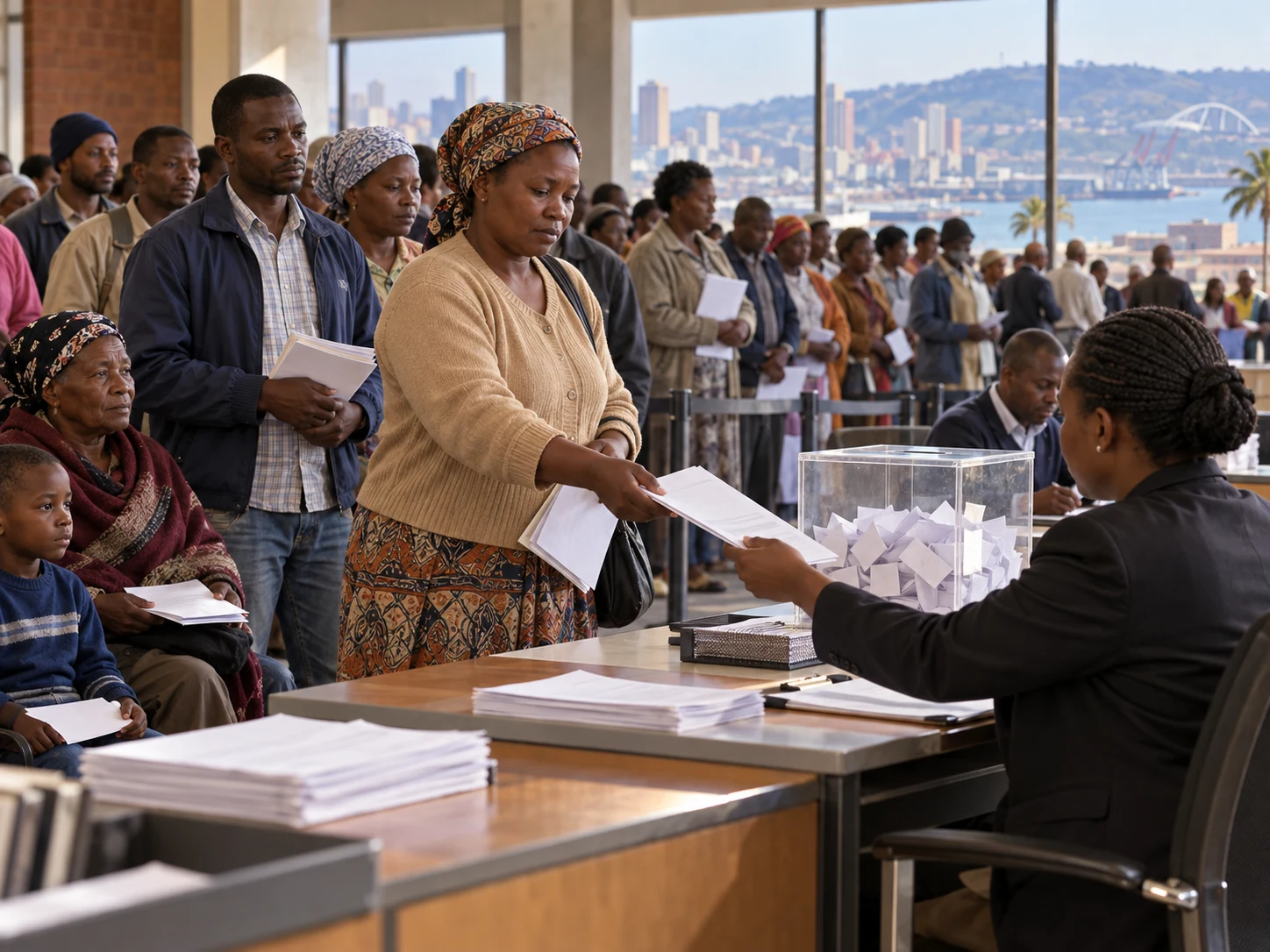
A 2013 study of subsidized housing allocation in South Africa records a distinctive procedure used in eThekwini. When a housing project became available, people were invited to apply and thousands queued to complete the necessary forms. Their physical order, however, did not become the order in which homes were awarded. Applications that passed an initial eligibility screening were placed in a box, and numbers were drawn at random before the selected applications were sent to the Department of Human Settlements for approval. The municipality adopted this approach partly because existing housing waiting lists had been racially structured and were regarded as unfair and unreliable. Random selection was itself criticized for failing to account for applicants' geographical and social ties, but the municipality considered it more equitable and efficient than a chaotic system that could be influenced by politics. What makes this queue unusual is the deliberate separation of bodily arrival order from allocation order. Thousands still had to stand in line to reach the application process. Yet being early in that line did not move anyone closer to a house. To escape the inherited unfairness of an older sequence, the system created a queue and then erased its order inside a box.
South Africa · 2002–2013 (period details in article)
South Africa | A Housing Queue Reordered by Lottery