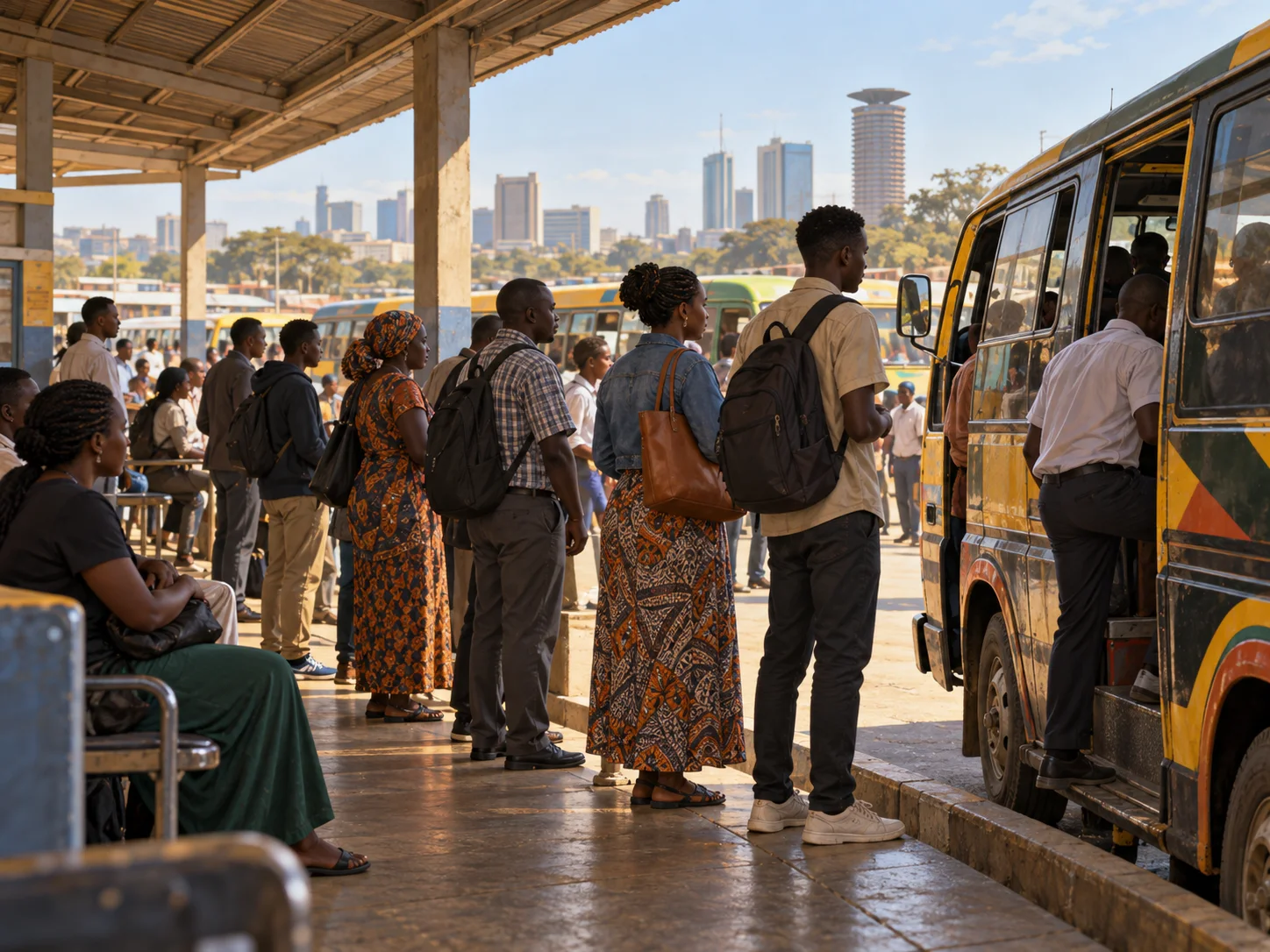
On some of Kenya's shared minibuses and buses, known as matatus, a full vehicle rather than a timetable can trigger departure. In a 2014 first-person account, a Kenya-based staff member of the microfinance organisation Kiva described boarding in Nairobi and waiting until every seat was occupied before the vehicle was ready to leave. The bus was present and a seat was secured, yet the journey could not begin until the last passenger arrived.
This form of waiting places the passenger's calculation and the operator's calculation inside the same vehicle. Early boarders gain a seat but accept the time required to fill the empty ones. For the driver and conductor, each departure must make sense against fares and fuel costs. Riders watch the remaining seats rather than the clock to guess when movement will begin.
Not every matatu follows the same practice; routes and operators differ. The documented mechanism here is nevertheless clear. Passengers do not merely stand in a line: they occupy the sequence seat by seat. When the final rider boards, separate periods of waiting become a shared departure.