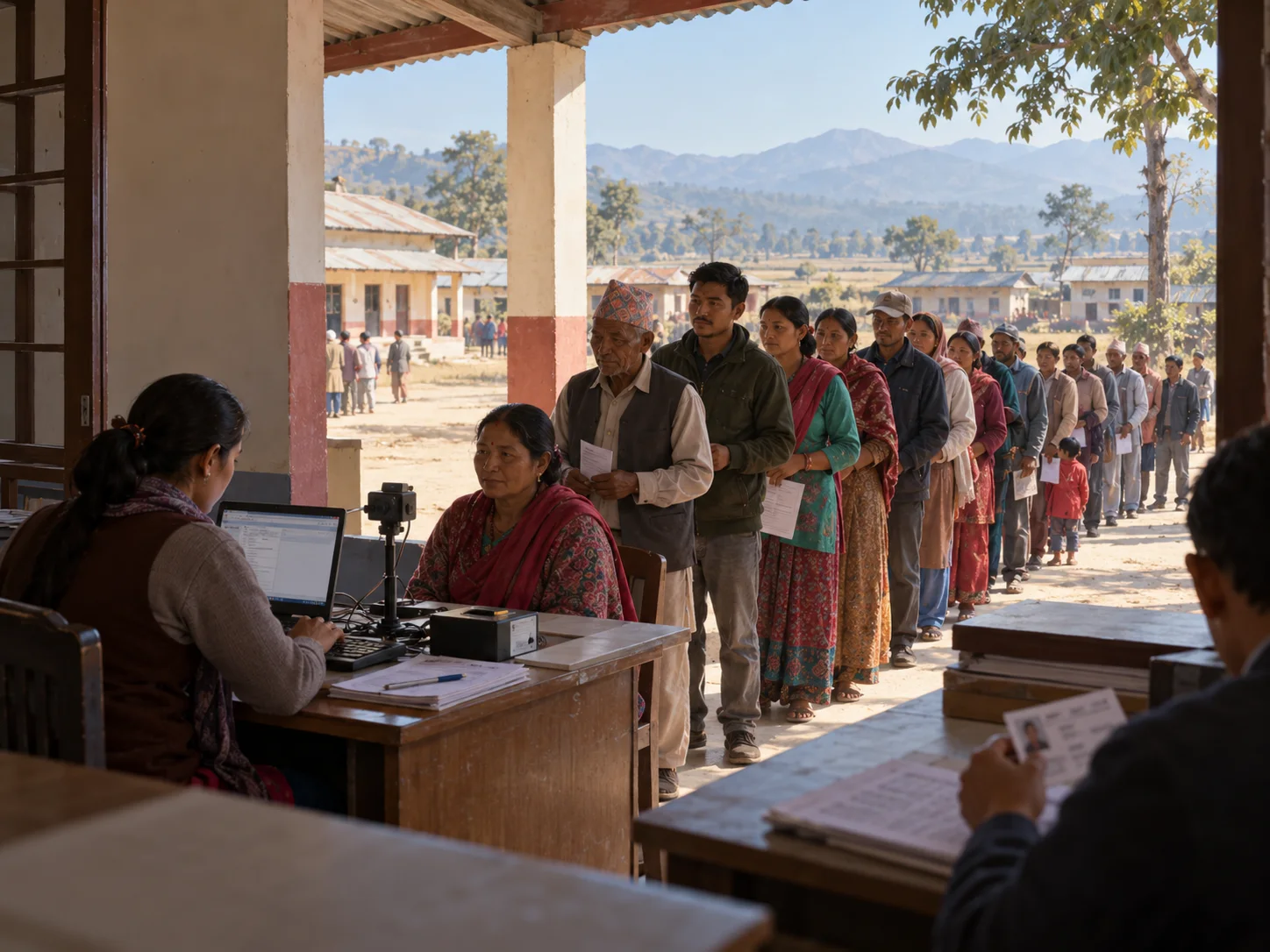
In July 2024, reporting on Nepal’s decision to postpone mandatory National Identity Cards for social-security allowances included a direct record of service seekers physically queueing at the Shuklaphanta Municipality office to apply for the cards. The federal ID contains a photograph, personal information, and fingerprints, and had been due to become compulsory for groups including older people, people with disabilities, and single women receiving allowances.
The government cited the difficulty of obtaining cards during rain, floods, and landslides. The queue was therefore more than interest in a new document: it marked the entrance to a procedure that might determine continued access to support. For people with limited mobility, reaching the office and waiting in turn was itself a substantial condition of participation. The line made the gap between policy and practical preparation visible.