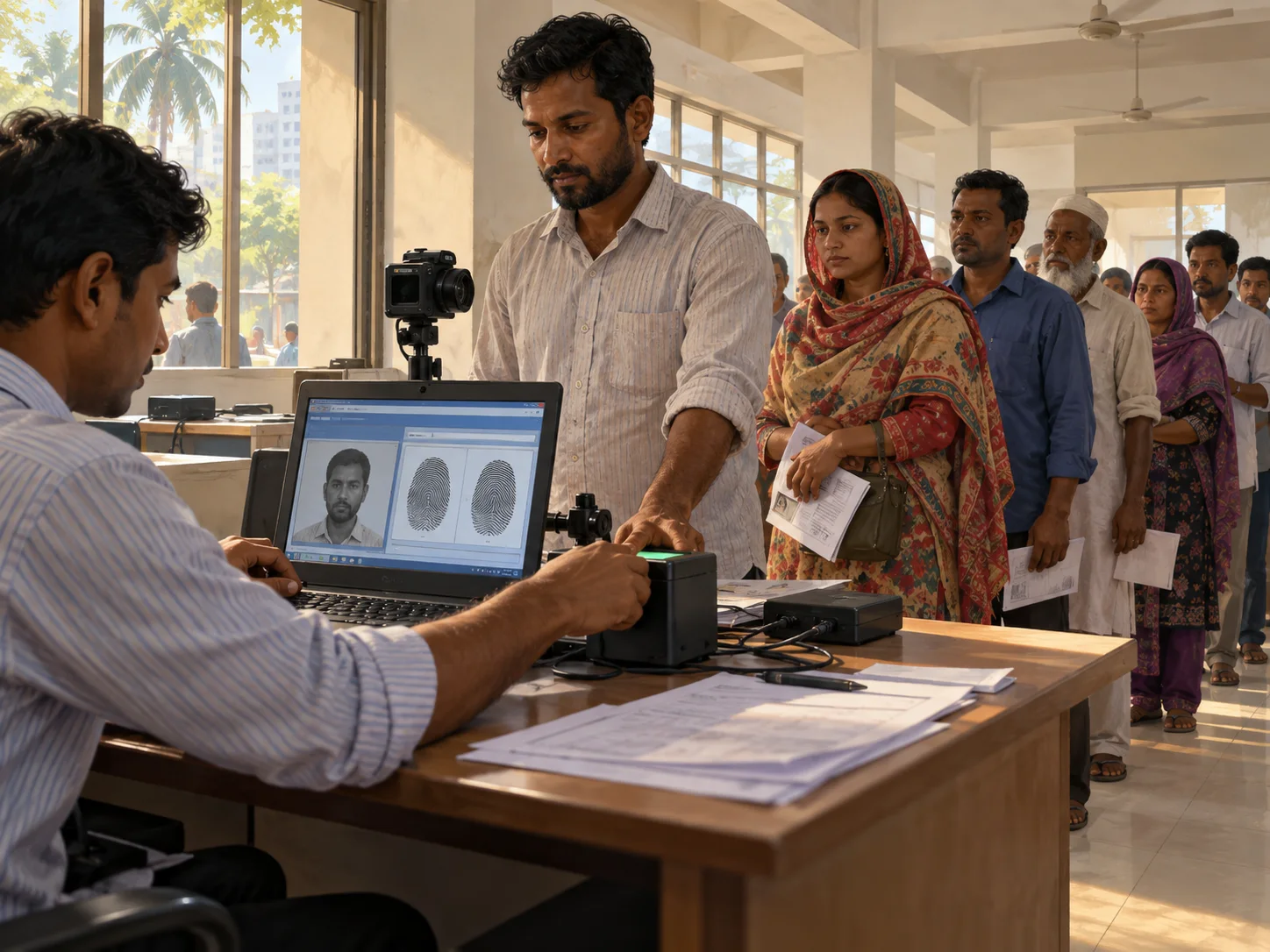
In April 2016, Bangladesh was re-registering mobile-phone SIM cards with biometric identification. The state minister responsible for telecommunications, Tarana Halim, stood in line for about twenty minutes at a post office to register her own SIM. The procedure matched a national identity number and required a finger to be placed on a scanner. The government was also preparing roughly 9,000 post offices across the country to accept registrations.
People in this line were not waiting to buy a new phone. They were proving that they could continue using a number they already possessed by linking it to their bodies. The policy was intended to prevent falsely registered SIMs from being used in crime. As the deadline approached, 54.5 million of roughly 131 million active connections had completed biometric registration.
A SIM card is tiny and easily moved between devices. The identity procedure around it was comparatively heavy: fingerprint, identity record, service counter and a place in line. What distinguishes this queue is the way a system for governing digital communication ultimately returned people to physical waiting.