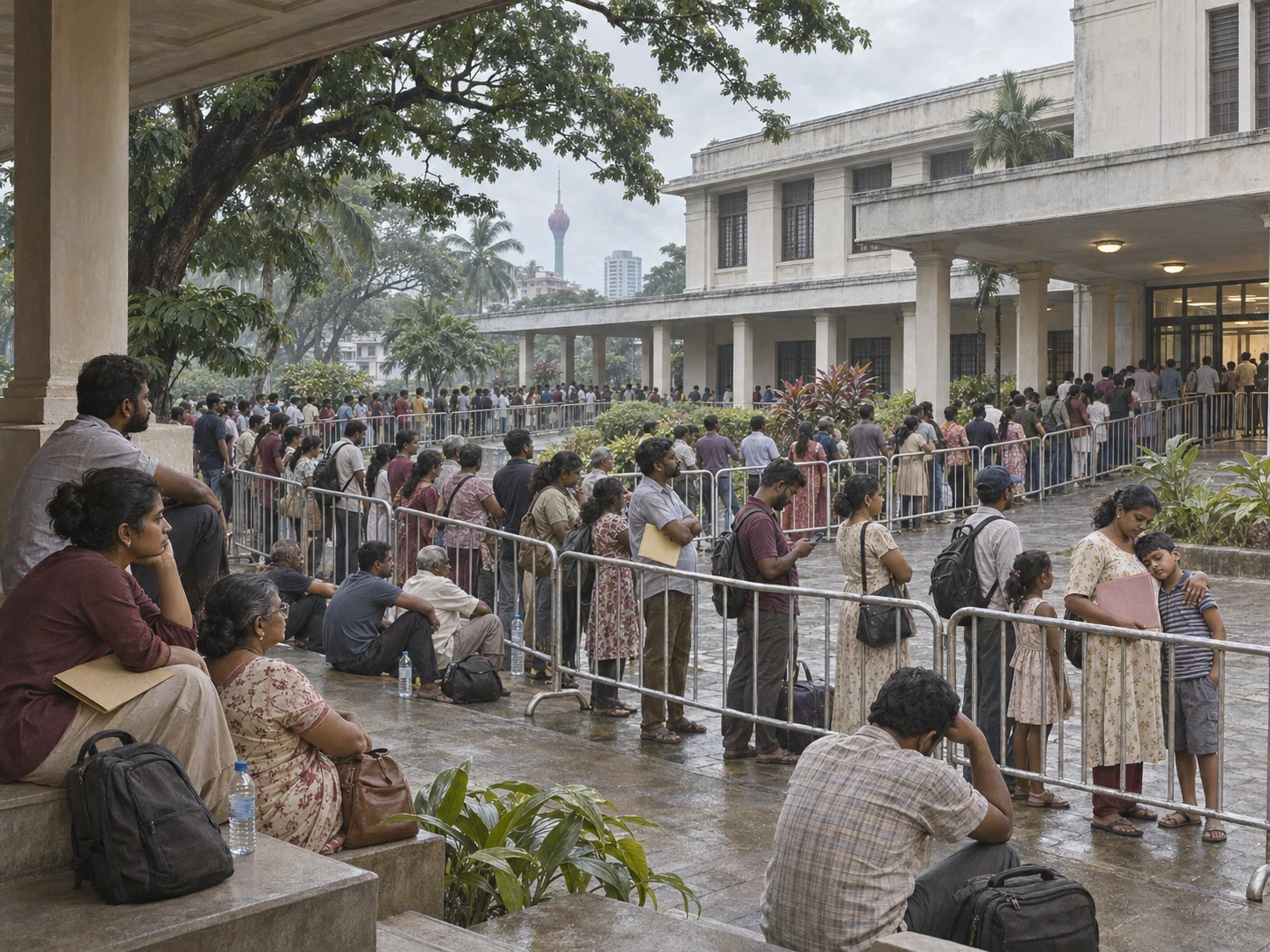
In June 2022, as Sri Lanka's economic crisis deepened, R.M.R. Lenora waited for two days in a snaking line outside the Immigration and Emigration Department headquarters in Colombo. Reuters reported that the passport represented a chance to seek work and a viable life abroad. Other contemporary reporting described one-day-service applicants waiting as long as three days amid the surge.
What distinguishes this queue is that obtaining a document was directly tied to the possibility of leaving the country. During shortages of food, fuel and stable income, a place in the passport line meant more than an administrative appointment. Each advance toward the counter made one person's option to move elsewhere more concrete.