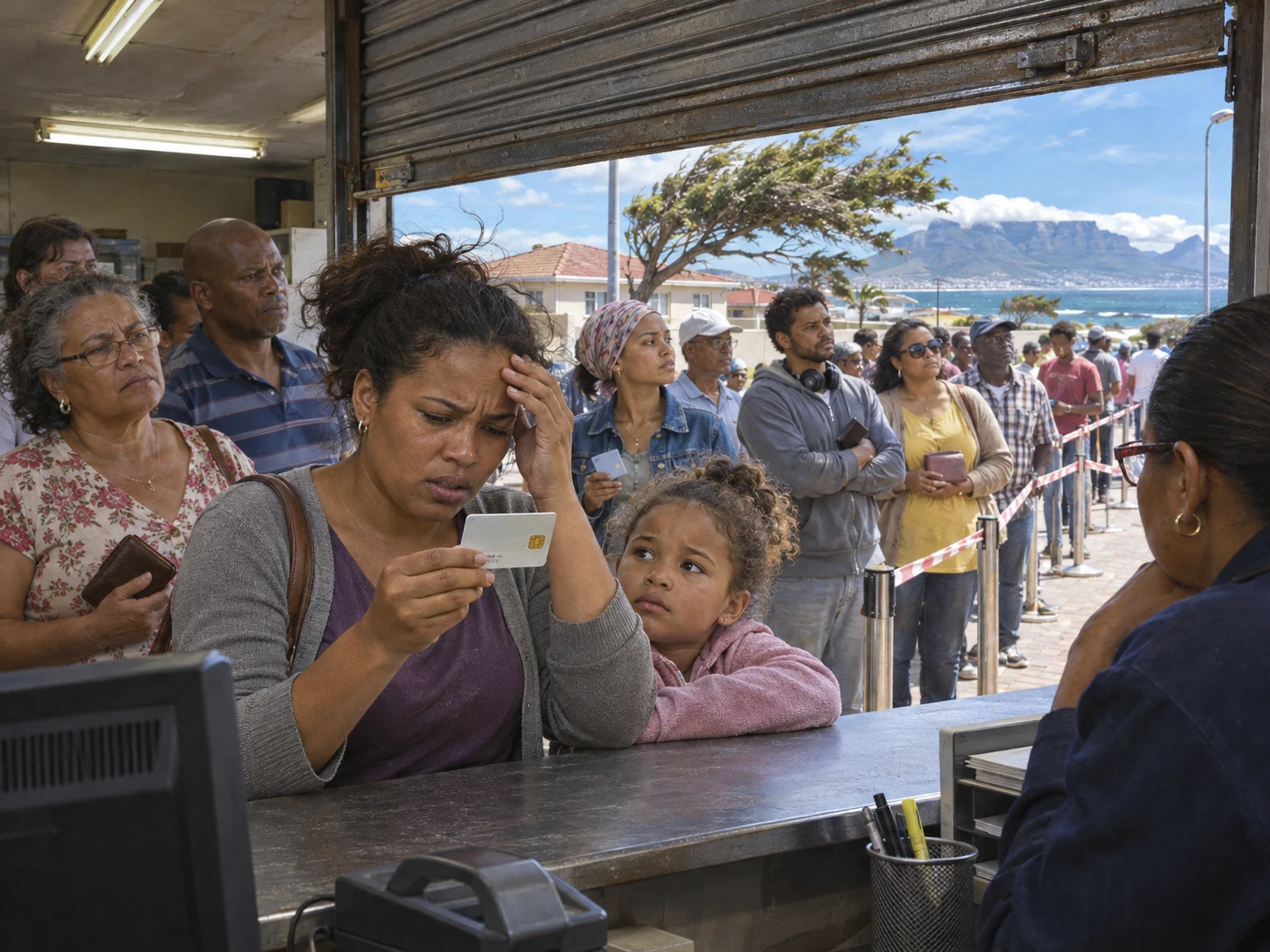
In February 2012, a failure in the prepaid-electricity vending system in South Africa’s Western Cape sent customers to the outlets that could still sell power tokens. A contemporary news photograph directly recorded people queueing outside an Eskom vendor. Electricity might still be connected to a home, but without a purchased code to enter into the meter, the household could not use it. The object of the wait was a single transaction that restored an essential service.
Under prepaid metering, customers pay first and enter the issued number into the meter. Normally, numerous vending channels distribute demand. When the system failed, customers converged on the remaining point of sale. For each person, the speed of the line was tied to the credit left at home. It resembled a retail queue, yet what changed hands was a number representing access to electricity.
The inherited year 2008 fits South Africa’s broader electricity crisis, but the candidate-specific physical line is directly documented in the Western Cape in 2012. The country and waiting target—buying prepaid electricity—remain unchanged, while the date and location have been corrected to the traceable record.