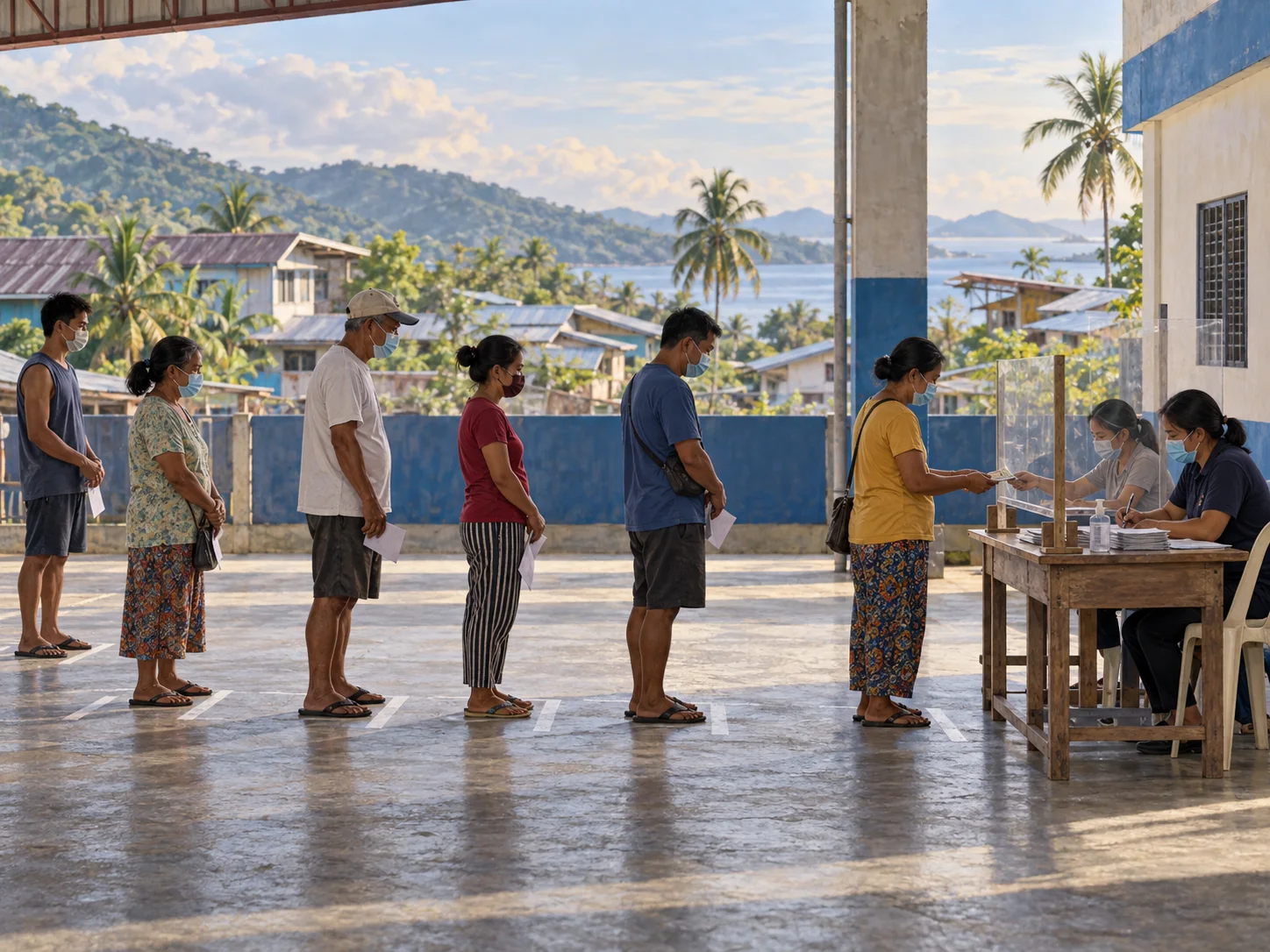
In 2020, the Philippines' Social Amelioration Program provided 5,000 to 8,000 pesos to low-income households during pandemic restrictions. Existing welfare recipients could receive electronic top-ups, but new beneficiaries had to submit paper forms through local government and collect the transfer in person. The World Bank records that this delivery method produced long queues, crowding and delays.
What distinguishes these lines is that one benefit programme contained two very different experiences: money arriving digitally for some households and a public counter queue for others. Whether the state already held a person's account details determined whether they had to go out and wait during an epidemic.