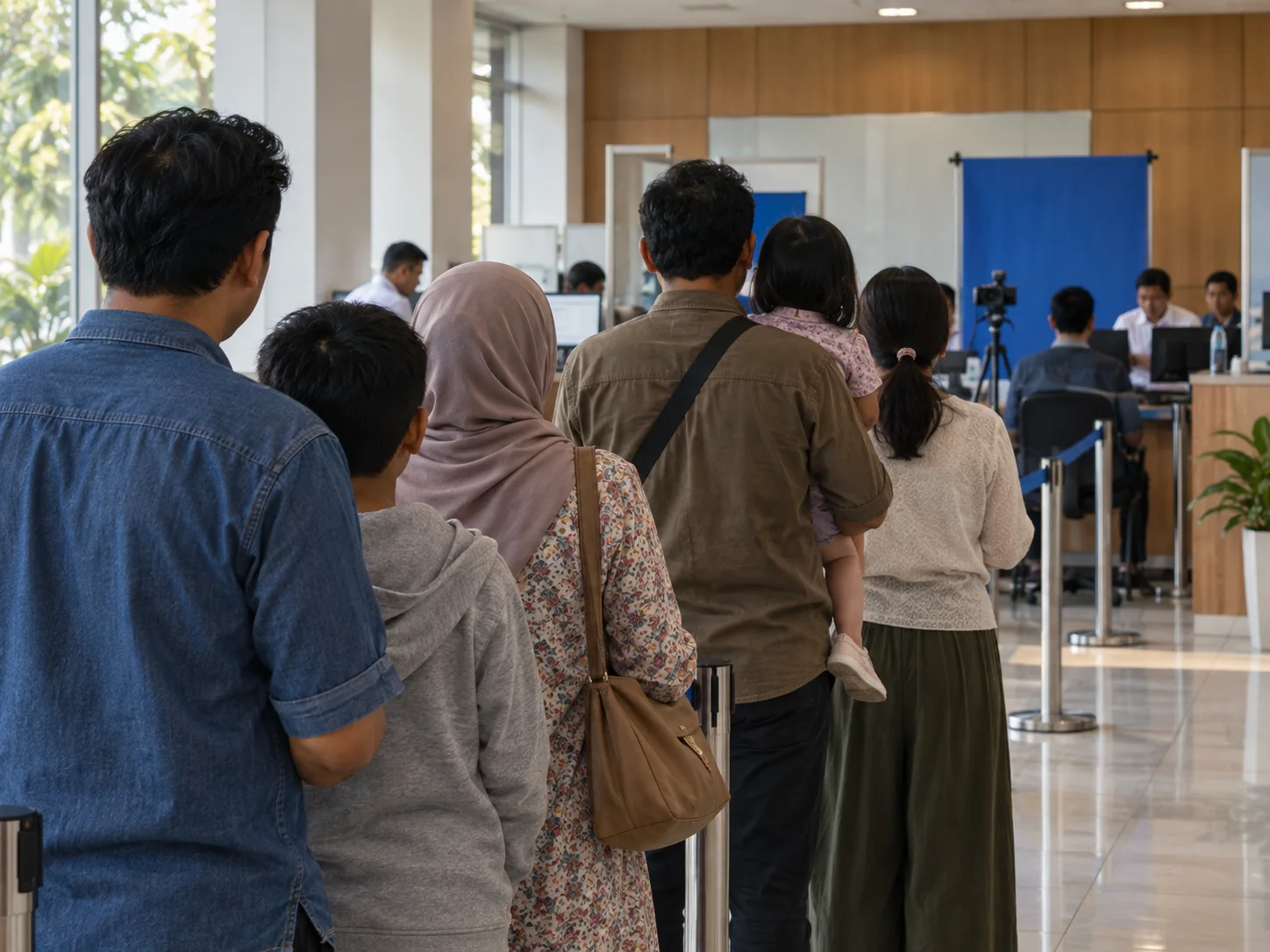
On 25 June 2018, a queue for recording and printing Indonesia's electronic identity card, the e-KTP, stretched through a public-service centre in Surabaya. Regional elections were two days away, and voters needed an e-KTP or substitute document. Residents gathered from the morning, including young people who had just turned 17. By 3 p.m. roughly 600 people had been processed; one father who arrived at 1 p.m. received queue number 421.
The city extended weekday service until 9 p.m., opened at weekends and deployed mobile service vehicles. Even so, the ground floor filled with applicants. Here the identity card was both proof of a person in the administrative system and a key to entering the polling process.
What distinguishes this queue is the way adulthood, civil registration and the right to vote converged at one counter. A numbered ticket was not merely a service number. For a new voter, it counted down the chance to be documented in time for election day.