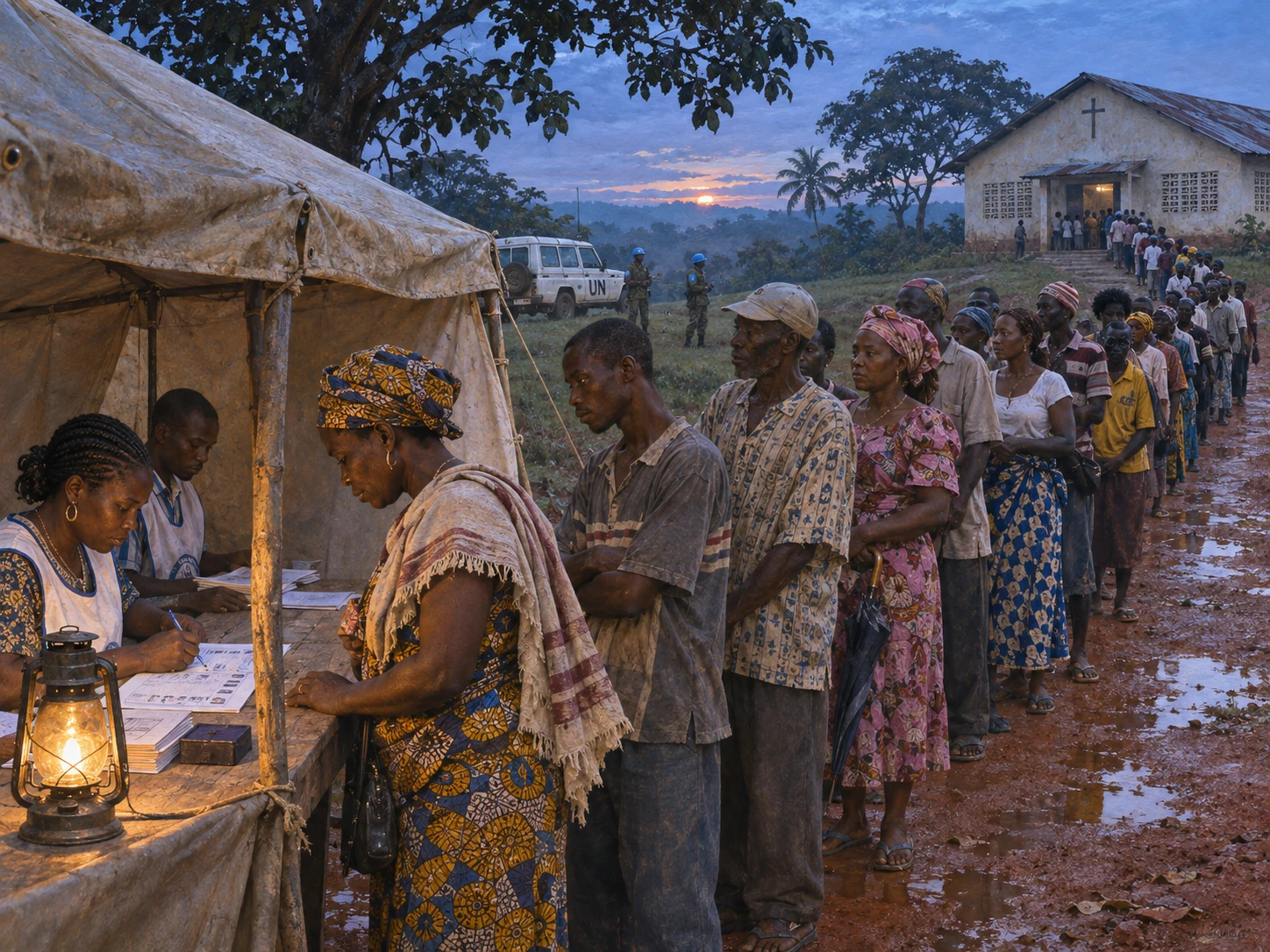
Liberians began queuing hours before polls opened on 11 October 2005 for the country’s first post-war presidential and legislative elections. A United Nations year-in-review records voters lining up as early as 2 a.m., with queues spilling into the streets. The polling infrastructure itself reflected a country rebuilding: schools and churches were used alongside tents in towns and huts in rural areas. About 1.35 million people were registered to vote at 3,070 polling places. A UN briefing added that voters already in line at the official 6 p.m. closing time were still permitted to cast their ballots.
Calling the scene merely a symbol of hope would hide the machinery people were actually waiting to enter. Each person had to be checked against a register, receive a ballot and complete a secret vote. Roughly 3,500 Liberian observers and 421 international observers monitored the election, while peacekeepers supported security at polling and counting centres. Ellen Johnson Sirleaf would ultimately win the runoff and become Africa’s first elected woman head of state, but that result was unknowable to the people gathering before dawn on 11 October. What they could see was more immediate: a nationwide civic procedure, impossible during the war, had opened, and its order was visible in the streets.