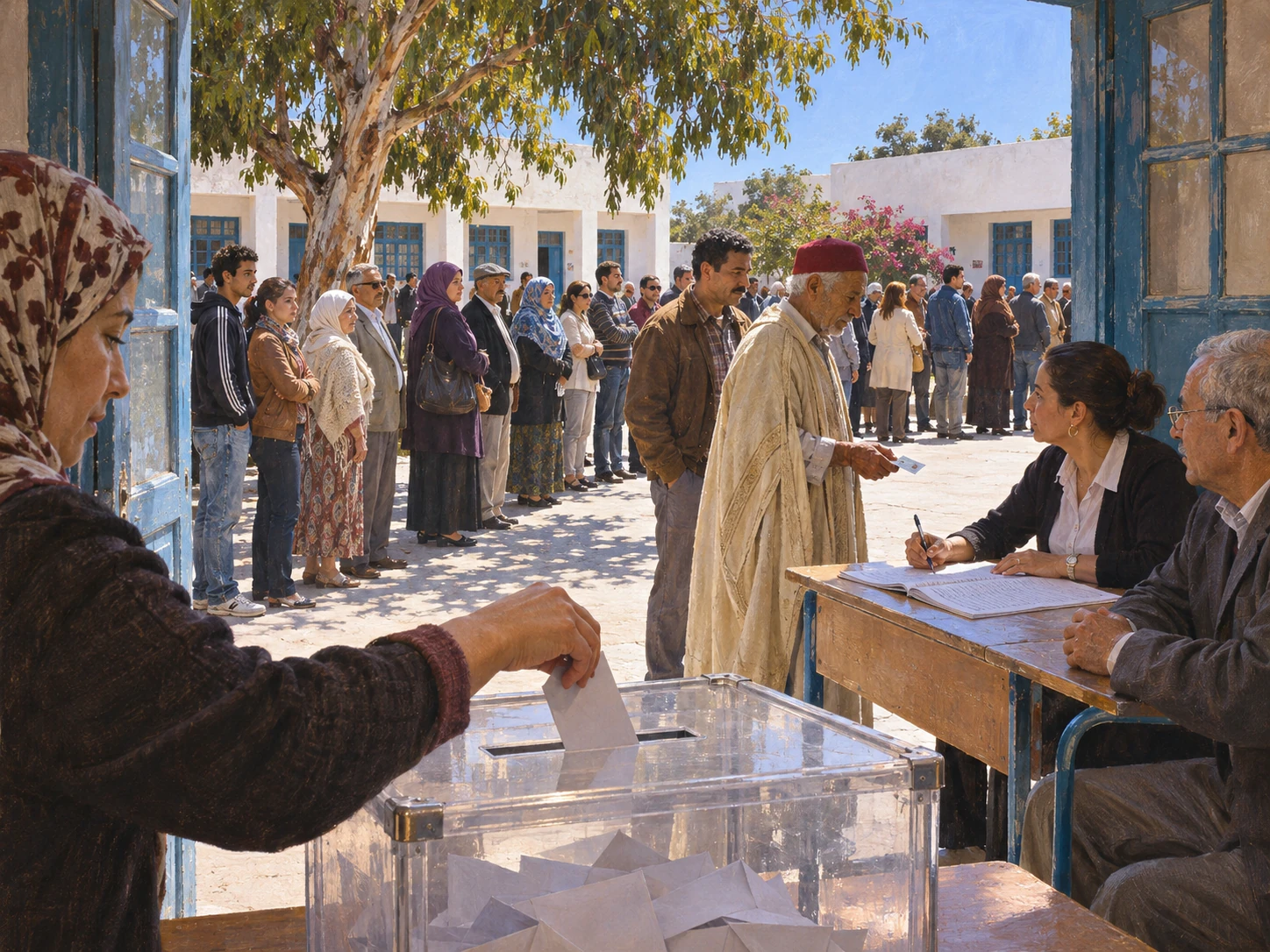
On 23 October 2011, long lines formed from opening time at polling stations across Tunisia. An International Republican Institute observer report recorded the early queues, while the National Democratic Institute said citizens waited for hours to elect a constituent assembly. The 217 members would help form an interim government and write a new constitution, so the process reached beyond an ordinary change of officeholders.
Nine months earlier, mass protest had removed a long-standing president. In the revolution, people raised their voices together in the street. At the election, participation was divided into individual steps: register check, ballot issue, private marking and deposit. Some actively registered voters still found their names missing from rolls, showing that enthusiasm did not erase administrative obstacles.
The same queue could contain people celebrating the revolution, supporting different parties or worrying about what came next. Orderly waiting did not signify political agreement. It tested whether citizens with conflicting views could share an entrance and a set of rules in the first election after the uprising.