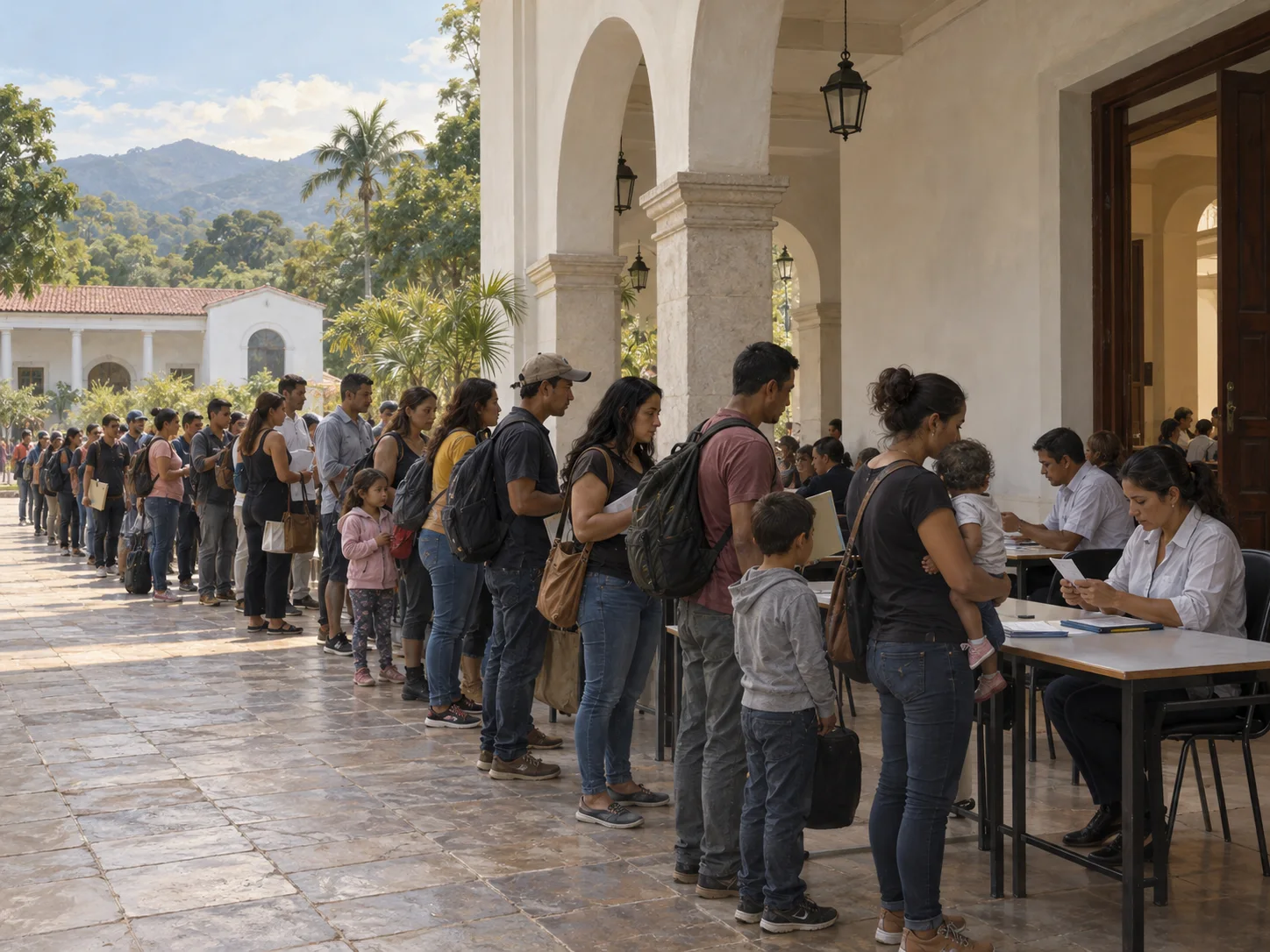
In 2018, Colombia created the Administrative Registry of Venezuelan Migrants, known as RAMV, to understand who had already settled in the country. The government opened 524 registration points and allowed people without passports to take part. These were not lines for crossing a border, but for becoming visible to the administration after the crossing had already happened.
Officials said the exercise was not designed for deportation. It would inform health care, education, humanitarian assistance and later residency policy. Household composition, address and employment had to be recorded person by person. A continental movement of people was reduced at each desk to forms, names and fingerprints.
Registration did not instantly grant secure legal status. It did, however, move someone from being uncounted to being legible to a public system. Turning people into statistics can appear impersonal, yet without those numbers governments cannot plan classrooms, clinics or assistance. The queue was a threshold between presence and recognition.
The 524 registration points reveal both the scale of the operation and how widely people who remained administratively invisible were already living. What waited at the end was not permission to cross a border, but a record connecting an existing life to the state.