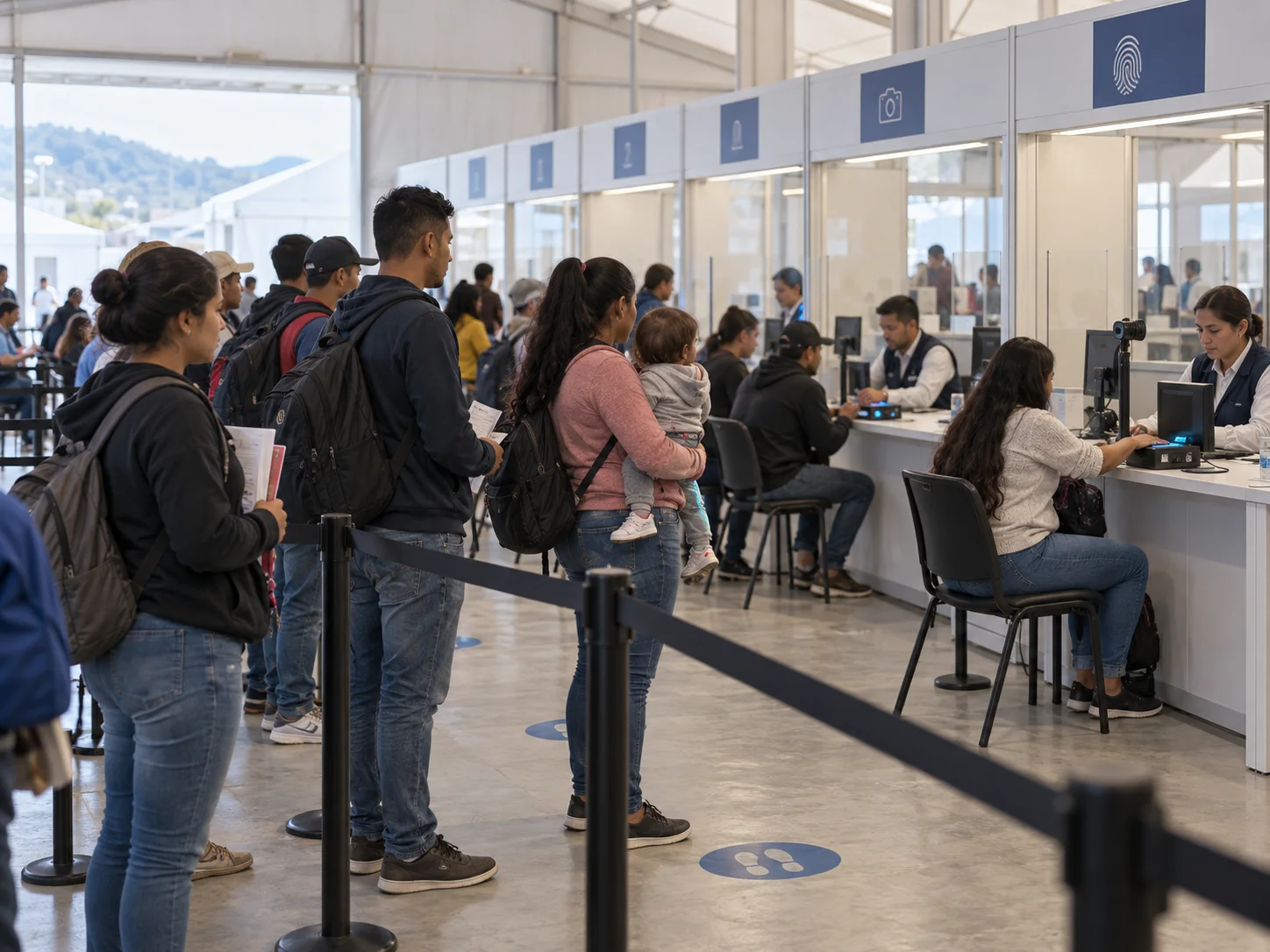
In 2021, Colombia launched a large temporary-protection programme for Venezuelan refugees and migrants. After online pre-registration, applicants moved to a second stage in which photographs, fingerprints and other biometric data were recorded. The programme began in 2021 and its registration work continued into the following year.
A UNHCR photo story published in July 2022 follows an applicant named Yohana at a migration assistance point in Barranquilla. One photograph explicitly shows her waiting in line to have her fingerprints taken. The line led not merely to a counter, but toward a Temporary Protection Permit that could support access to work, education and healthcare.
Official programme material separates pre-registration, biometric enrolment and permit issuance. The people at the assistance point were therefore not waiting for an abstract policy to take effect. They had arrived for a specific step and waited their turn while personal biometric information was recorded one applicant at a time.
The original catalogue gives 2021, while the direct queue photograph dates from 2022. The raw record is preserved; the editorial period is stated as 2021–2022 because the image documents the same continuing protection programme and the same biometric stage. Waiting here was part of turning a cross-border life into a recognised legal record.