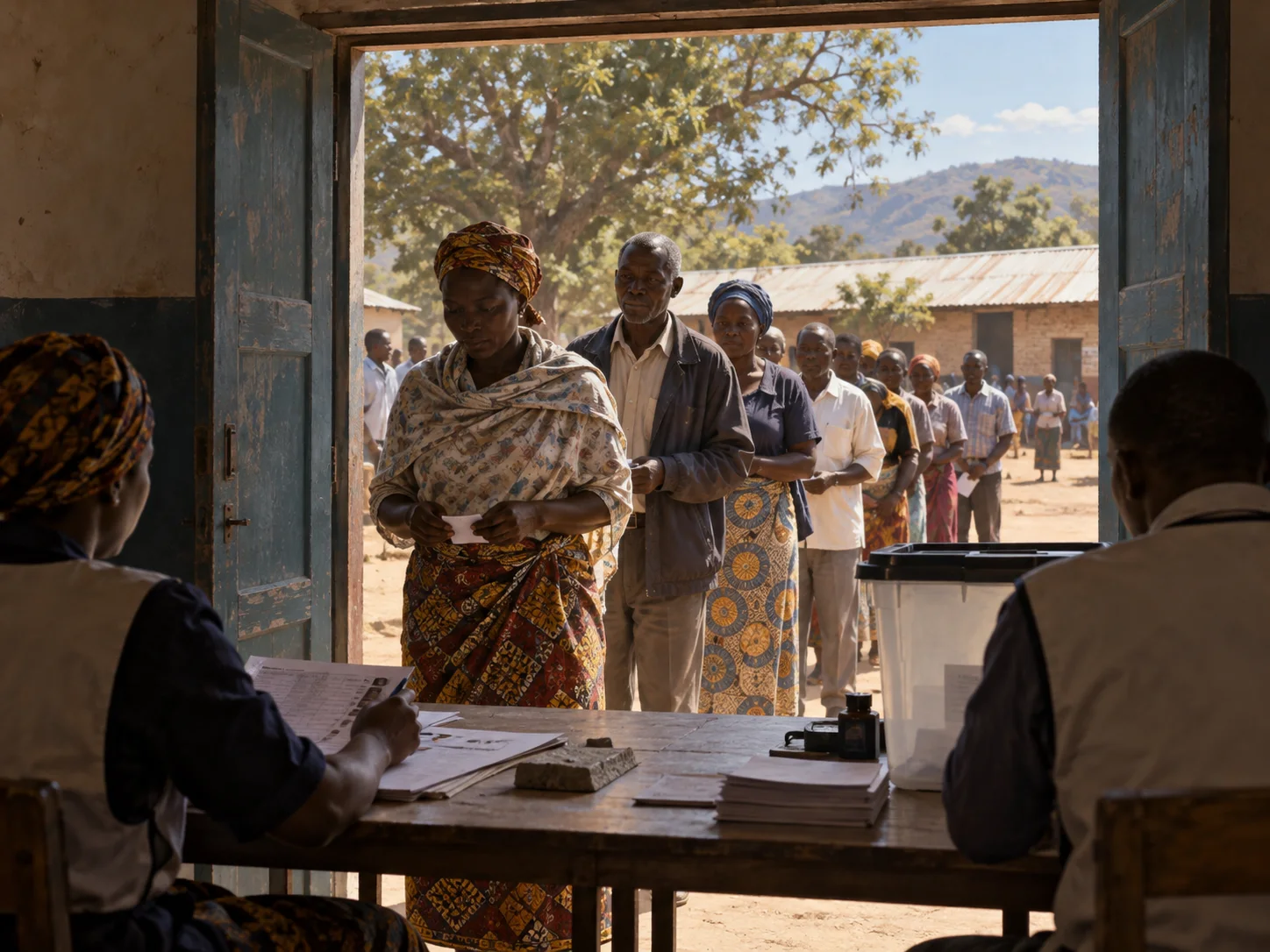
On 23 June 2020, voters queued in Thyolo, southern Malawi, for a fresh presidential election. Reuters video records people waiting, names checked, fingers marked with indelible ink and ballots placed in the box. The previous year’s result had been annulled for “systematic and grave” irregularities, and the Supreme Court upheld that decision. The destination at the front was therefore not simply a second ballot, but an electoral process reopened by a court.
The same register was used, leaving about 6.86 million people eligible. Voting also took place during the COVID-19 pandemic, adding hand sanitising to familiar procedures. It would be easy to reduce the scene to an uplifting phrase, but its importance lies in the institutional history. Voters disputed an earlier result, judges ordered a rerun, and citizens returned. The queue was the measured time required to build the election again from identification onward, one voter after another.