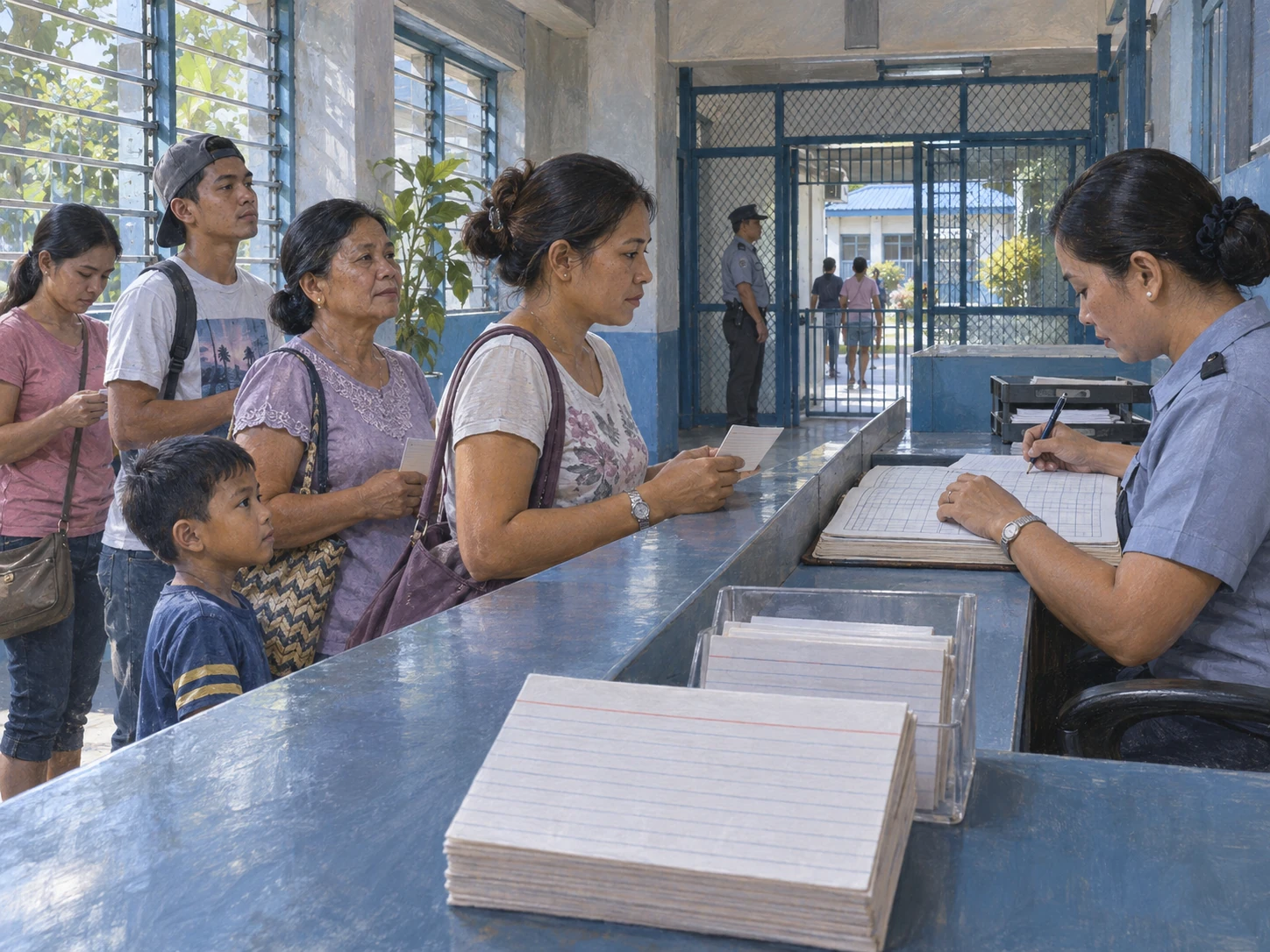
In January 2015, Bulacan Provincial Jail in the Philippines introduced a computerized system for recording visitors. The provincial government led its announcement with a practical change: people arriving to see relatives would no longer have to queue. According to the jail warden, visitors had previously lined up and used index cards before they could meet family members inside.
The line reveals how the institution's timetable extended beyond prisoners to their families. Visitors supplied their age, address, relationship to the person detained, and the intended duration of the visit before proceeding. The computers were meant not only to speed reception but also to organize visitor records and strengthen checks against prohibited activity. An official notice celebrating the disappearance of the queue therefore preserves unusually direct evidence of the older scene: relatives waiting their turn with paper cards at a prison gate.