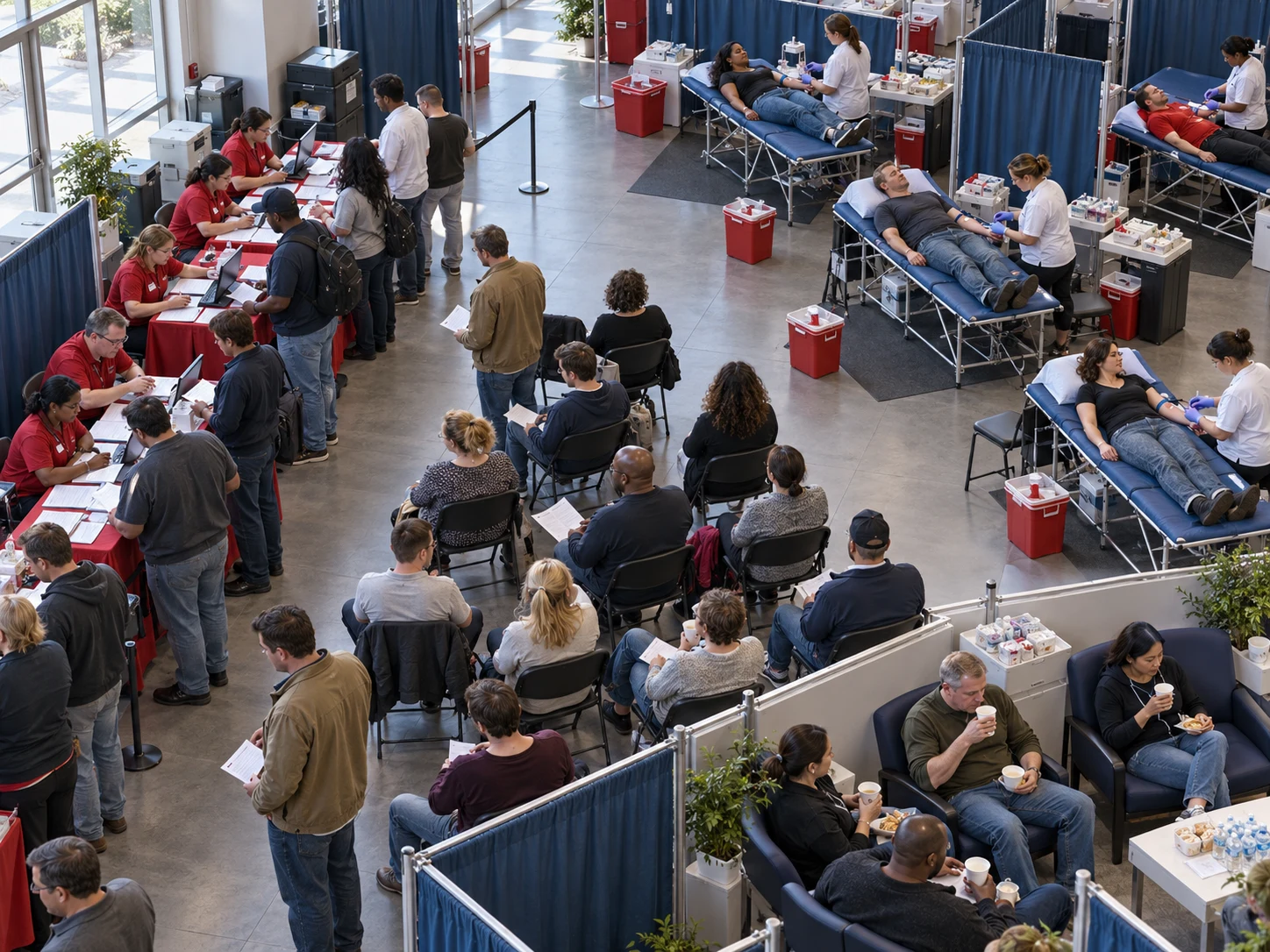
After the attacks of 11 September 2001, not every line in New York was formed by people seeking help. An American Red Cross remembrance describes lines inside its Greater New York headquarters: people were waiting to volunteer, give blood or donate money. When thousands feel an urgent need to act at once, generosity meets the same constraint as any emergency system—intake capacity. Blood donation requires interviews, eligibility screening, collection, testing and storage. Offering an arm does not mean a unit of blood moves directly to a survivor.
The distinctive fact here is the reversal of the usual relief queue: the people waiting had come to give. Red Cross accounts document a surge of time, blood and financial support after the attacks, but the number of people in line cannot be treated as the number of lives saved. Blood supply has to be matched to medical need and shelf life, while volunteers must be assigned to work the organisation can safely support. Even with those cautions, the indoor lines are a concrete record of action. People did not stop at watching the news. They travelled to a headquarters, entered an intake system and adjusted their urgency to the pace at which staff could process one offer at a time. Waiting was not itself rescue; it was the threshold at which private willingness could become organised assistance.