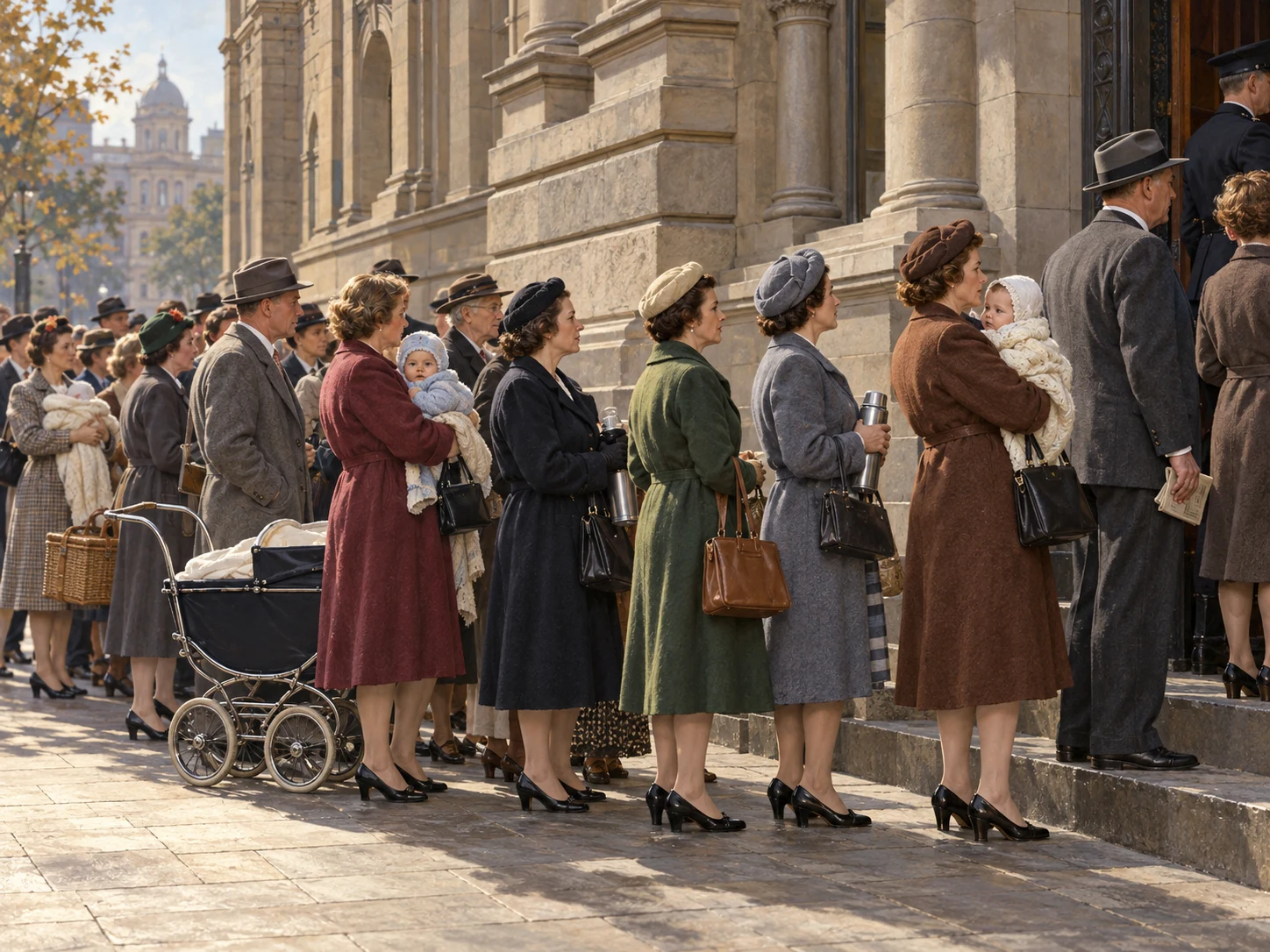
In 1954, hundreds queued outside Sydney's Darlinghurst courthouse for the trial of twenty-two-year-old model Shirley Beiger, accused of shooting her boyfriend. Many spectators were women and came equipped with sandwiches, Thermos flasks and even babies while hoping for a seat. Supporters called encouragement as Beiger arrived.
The line was a practical order for a limited public gallery, but also a place where citizens joined a media-created story about a young female defendant. Seventy years later, a theatrical reconstruction was staged in the same courthouse, selling seats in both the gallery and jury box. The original free-for-all for access had itself become part of the cultural memory of the case.