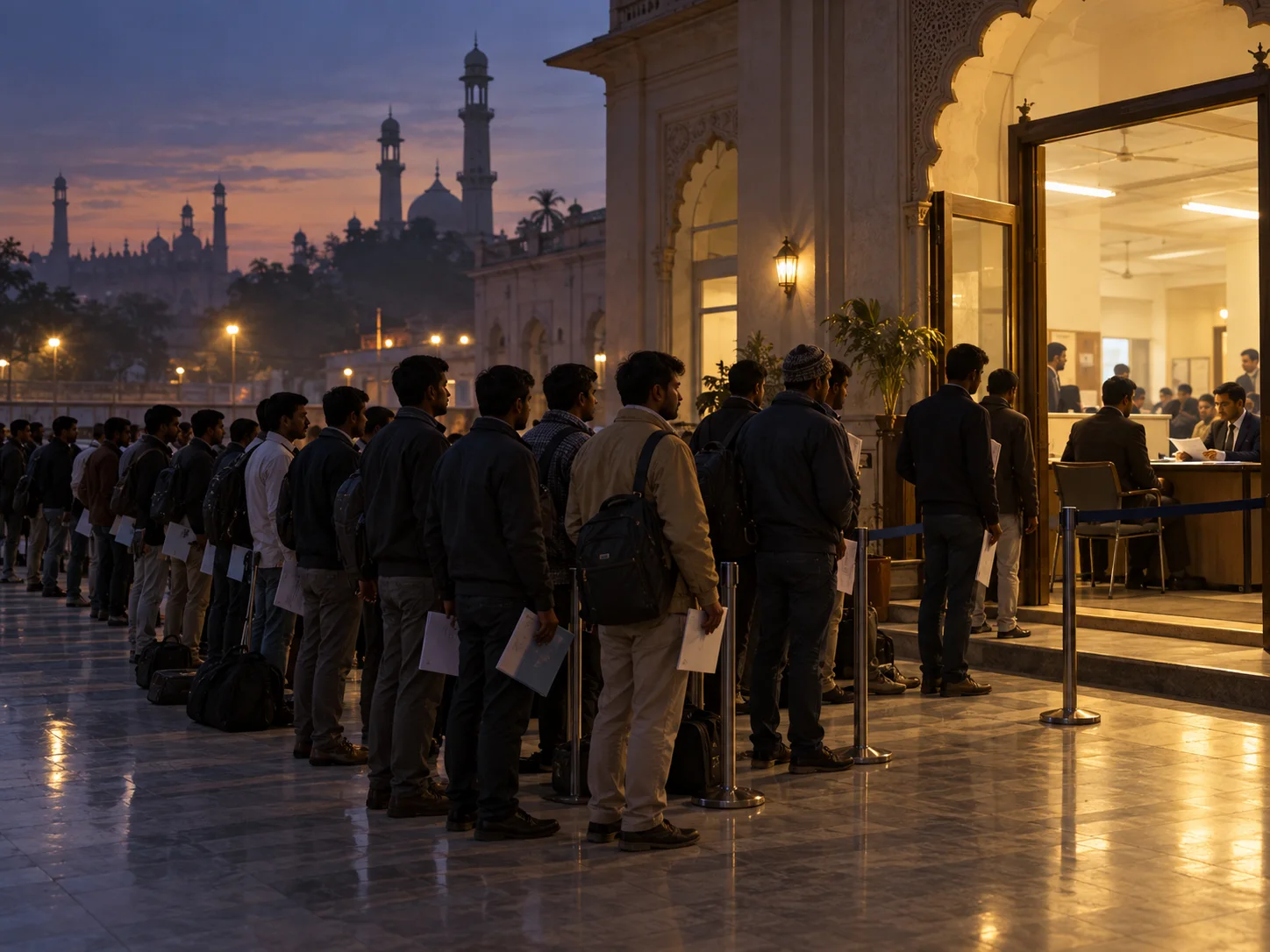
On 25 January 2024, men lined up at a recruitment centre in Lucknow, northern India, hoping to secure construction jobs in Israel. They were not simply handing in applications. Masons, carpenters and other skilled workers were navigating document checks, interviews and practical assessments. Some had travelled considerable distances for the opportunity. A queue outside an employment centre had become the first stage of a journey to another country.
The destination made this recruitment drive unusual. After the attacks of 7 October 2023 and the war that followed, Israel barred many Palestinian workers from entering, leaving employers in construction facing a severe labour shortage. Recruitment in India was part of an effort to fill that gap. For applicants, the prospect of earning far more than they could at home had to be weighed against the possibility of working in a country at war. These were not abstract economic choices: they concerned families' incomes, safety and time spent apart.