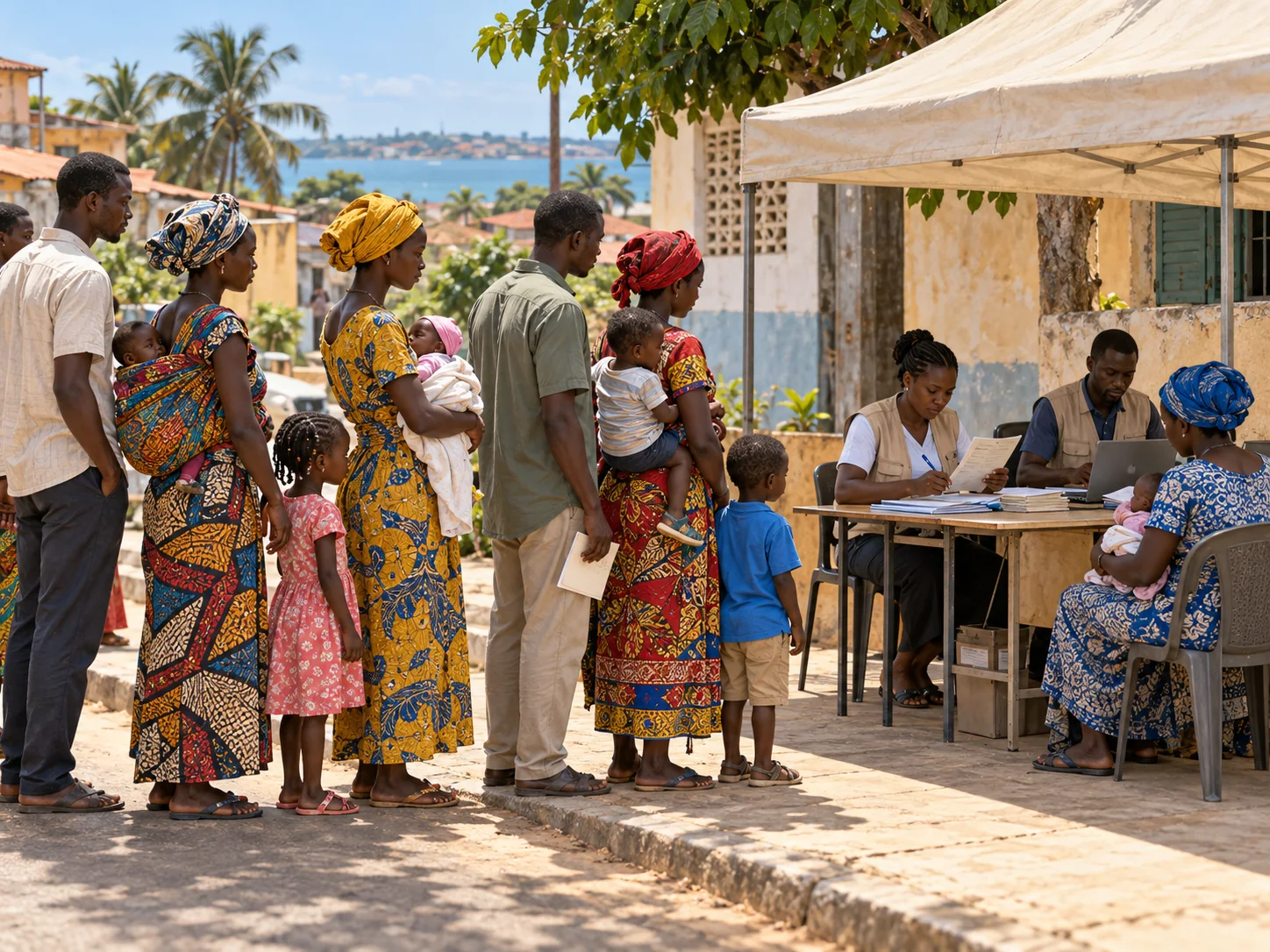
In Guinea-Bissau, a mobile birth-registration programme brought the process into schools, where a teacher called attendance and helped organise parents and children into a registration queue. UNICEF's field report describes a young couple in the long line discussing the name they would register for their one-year-old child. Registration is free for children up to age seven, yet distance and associated costs have delayed the procedure in remote communities.
A school-based campaign gathers eligible families in one place instead of requiring each household to travel separately to a civil registry office. The class list becomes more than an educational record: it helps identify children who still lack legal documentation and turns registration into an ordered process.
The queue was waiting for a certificate, but that document reaches into schooling, health care and later dealings with the state. Its most distinctive feature was that the route into legal identity began not at a government office but in a classroom.