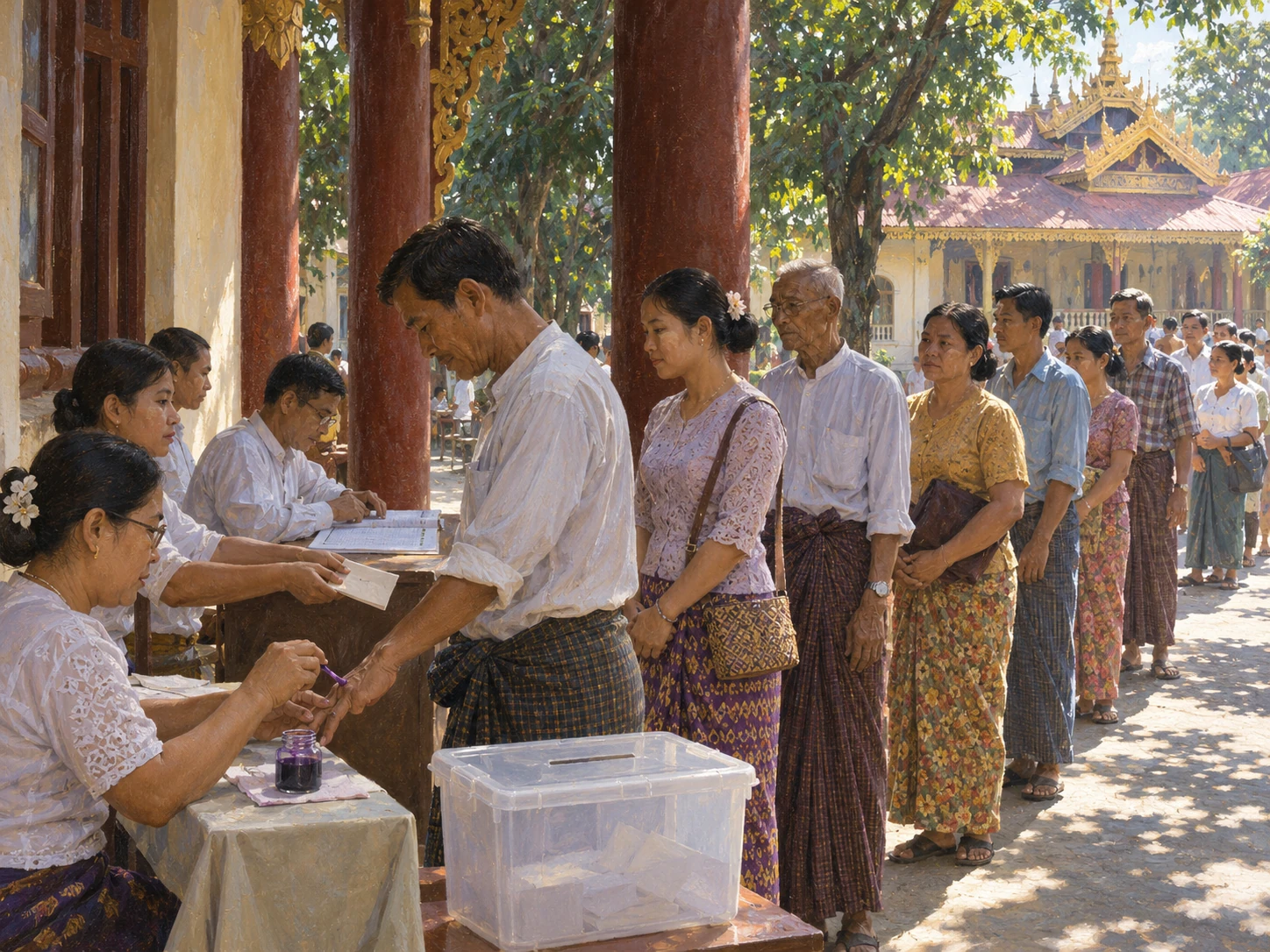
Before polling stations opened on 8 November 2015, voters were already lining up outside schools and monasteries across Myanmar. The Guardian recorded queues at polling places in Yangon, including one still extending down an alley at about 11 a.m. Human Rights Watch’s field notes describe a voter in Mandalay who joined a line at 6 a.m. and waited roughly an hour. The object of the wait was not simply a sheet of paper. Each voter had to move through registration checks, indelible ink and the private act of marking a ballot.
The election was Myanmar’s most broadly competitive national vote in twenty-five years, and the National League for Democracy led by Aung San Suu Kyi won decisively. Yet the visible lines cannot stand for the whole electorate. Many Rohingya and other residents had been disenfranchised, while restrictions also shaped who could appear on the ballot. A long queue demonstrated participation among those admitted to the process; it did not prove that access to the process was equal.
That distinction is what makes the election line historically revealing. Inside it, people with different political choices shared the same sequence of administrative steps. Outside it were people whom the system did not allow to take a turn at all. The polling-place queues made anticipation for change visible, but they also marked the boundary of that change. To read them responsibly is to notice both the patience at the entrance and the exclusions that the entrance could not display.