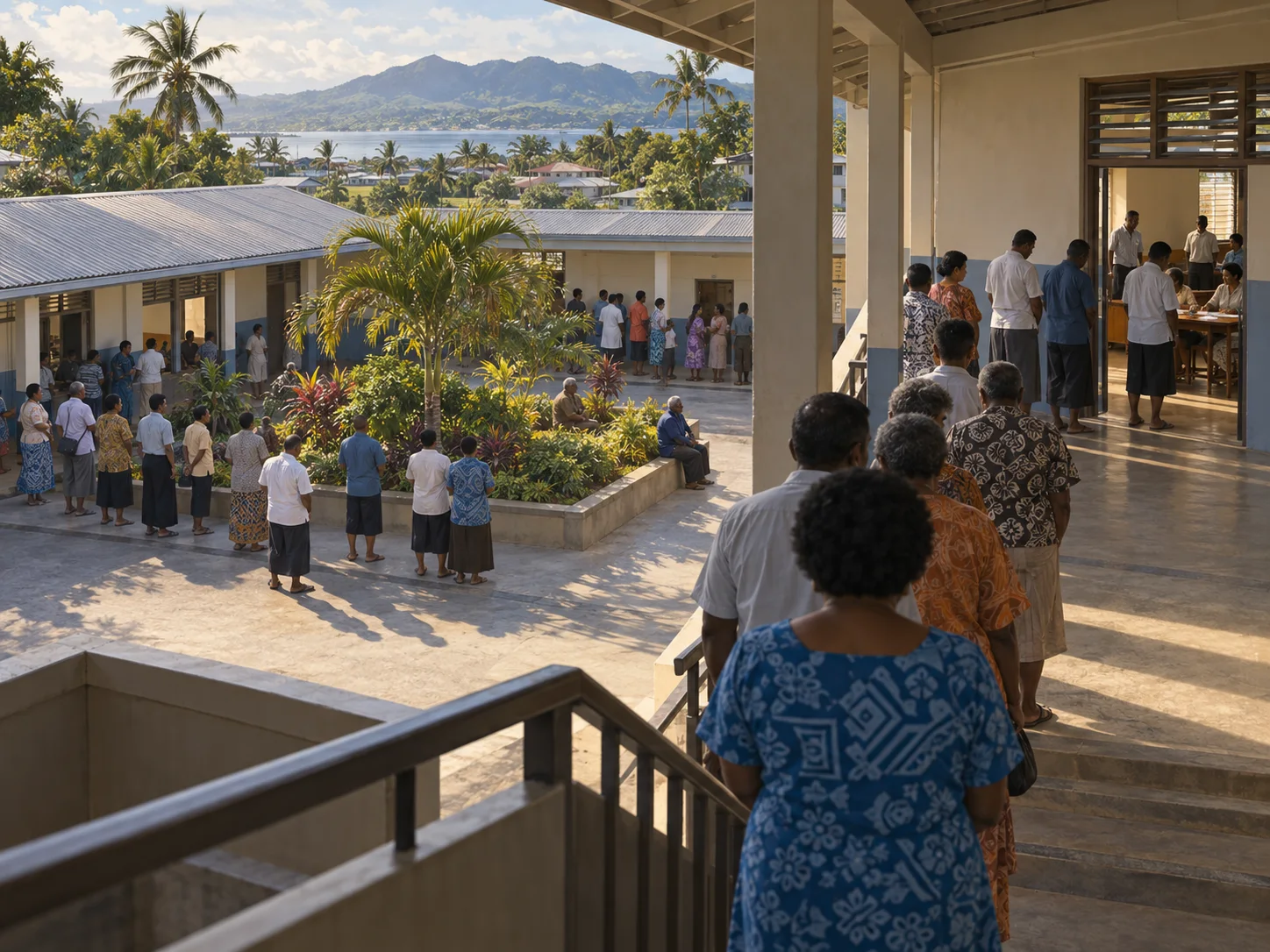
On 17 September 2014, Fijian voters began lining up an hour before polling stations opened. ABC's on-the-ground report described queues several hundred metres long and hundreds of people gathered at Vatuwaqa Public School outside Suva. This was Fiji's first general election in almost eight years, following the 2006 military coup.
The return of electoral politics was therefore visible not only in institutions and campaign promises, but at school gates where voters waited to receive a ballot. One voter interviewed by ABC, Irivi Draundalo, spoke of her happiness at being able to vote. The election also introduced a new national constituency and a numbered-candidate ballot, so a major constitutional change had to be carried out through millions of small, individual procedures. Before any result could be announced, each person still had to reach the front of the line. In Fiji that morning, the physical length of the queues gave a precise public shape to an eight-year interruption in national elections.