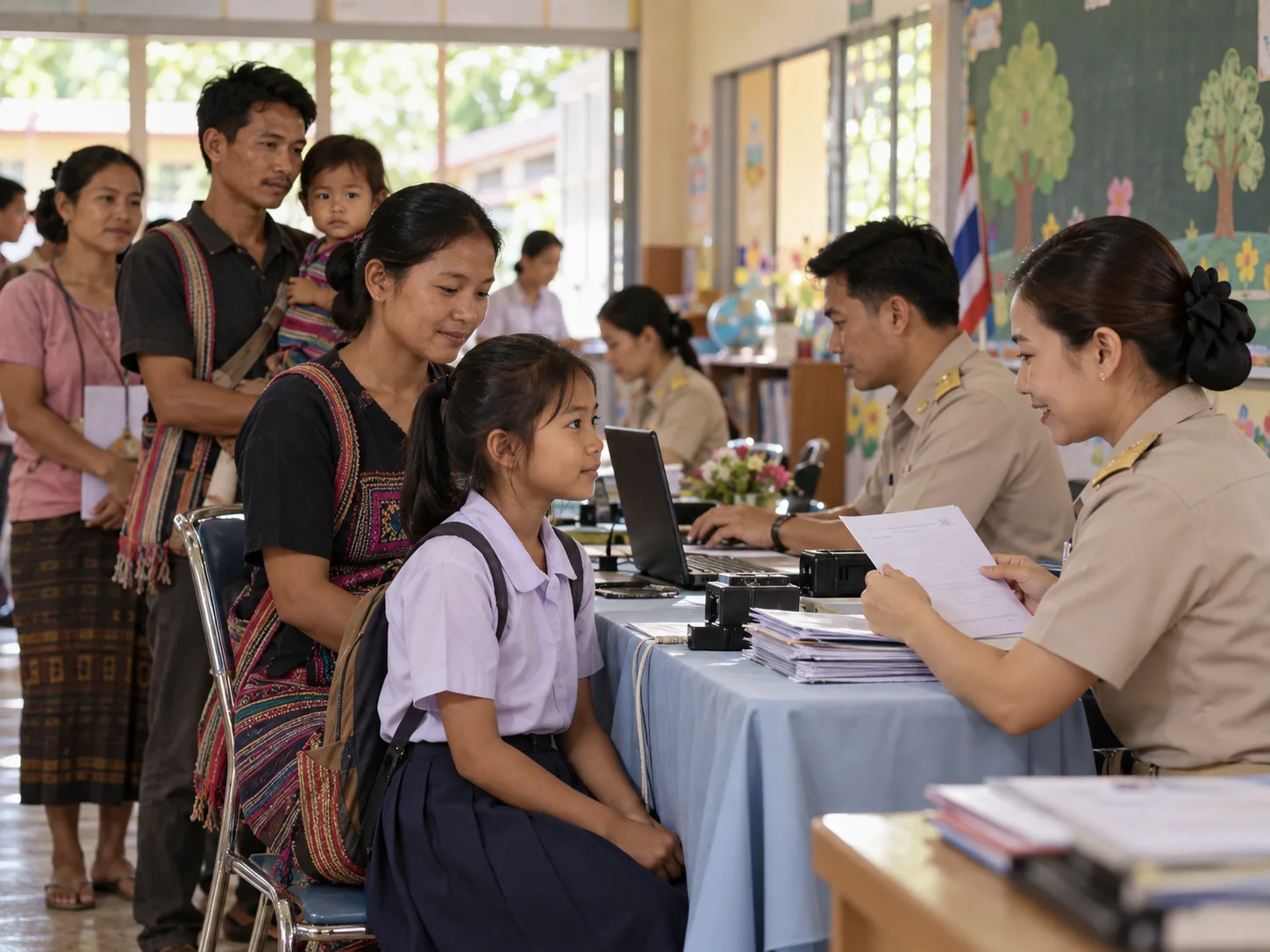
On 11 November 2021, a mobile civil-registration unit opened at Ban Ton Chok School in Chai Prakan district, Chiang Mai, northern Thailand. More than ten migrant-worker families, including fourteen-year-old Namfon (a pseudonym) and her mother, came to apply for identification as persons without registration status. While waiting in the queue with other children, Namfon wrote her ambitions on a sheet of paper.
Although she had a school number, she did not legally exist in Thailand's civil-registration system and feared arrest when travelling. From September 2021 to May 2022, the project planned visits to schools across Chiang Mai, Chiang Rai and Mae Hong Son, aiming to improve the legal status of about 32,000 children. Volunteers helped assemble documents and delivered applications to district officers.
Moving the administrative desk into a school shortened the distance children had to travel to the state. Yet convenience was not the main thing at the end of this line. Namfon was waiting for a thirteen-digit number that could prove her existence beyond the classroom.