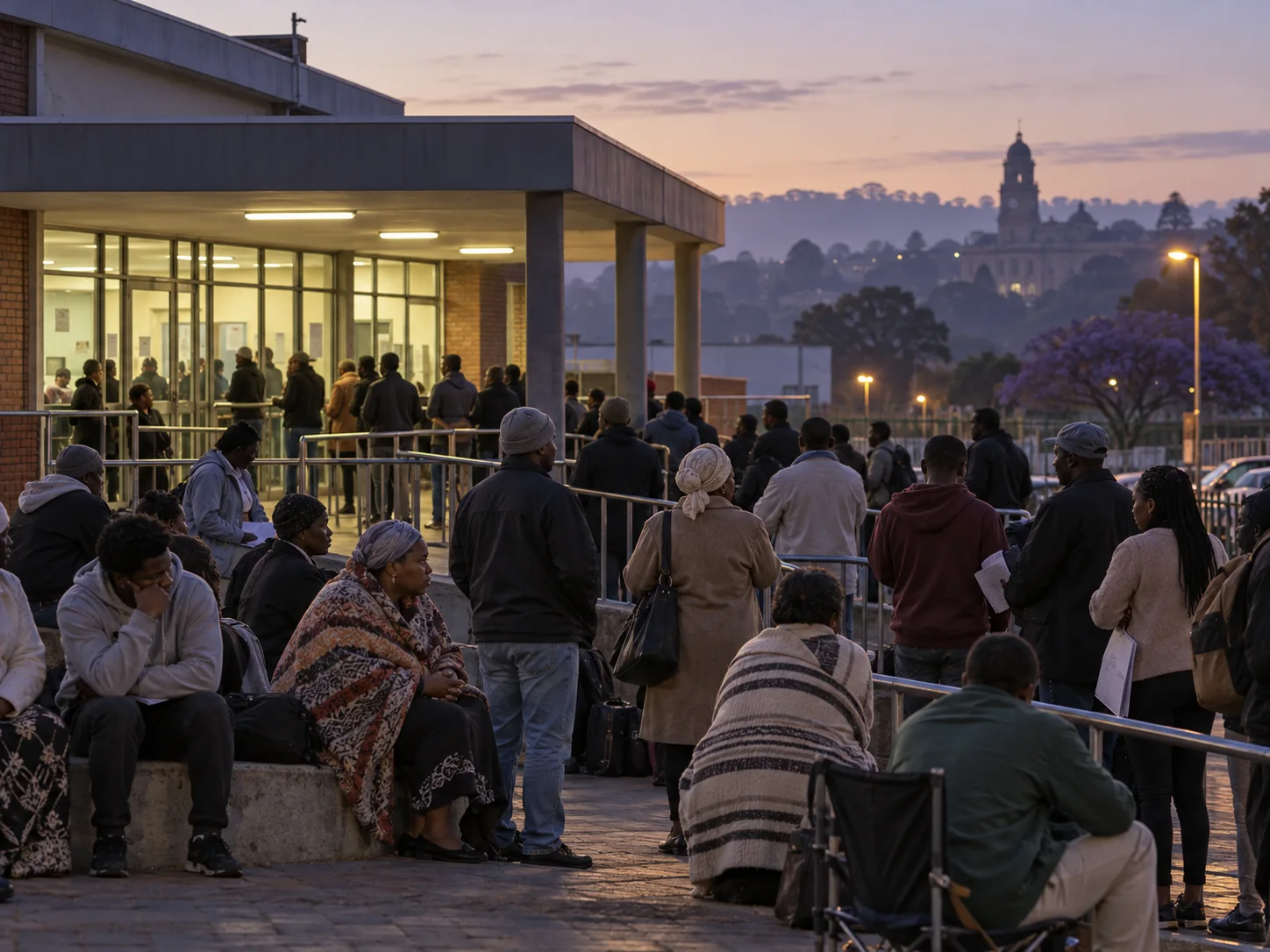
In August 2026, applicants at the Mkondeni driving licence testing centre in Pietermaritzburg, South Africa, began queuing at 2 a.m. in winter cold for gates opening at around 7. Even then, some people with bookings were turned away because the centre could not process everyone scheduled. Neither an appointment nor an early place in line guaranteed a test.
The Witness reported that the daily number of learner-licence tests had been reduced and special Saturday driving-test sessions discontinued. The centre was also moving from old enrolment machines to new Smart Enrollment Units while dealing with staffing problems. Applicants paid for repeated journeys or sought tests in neighbouring towns. For unemployed young people hoping a licence would improve their job prospects, a failed visit pushed employment further away.
The new equipment was intended to curb fraud, remove cash payments and eventually reduce queues. During the transition, however, booking capacity and on-site processing capacity did not match. The 2 a.m. line was a queue for service, but also a queue in which people might learn that their turn would have to begin again on another day.