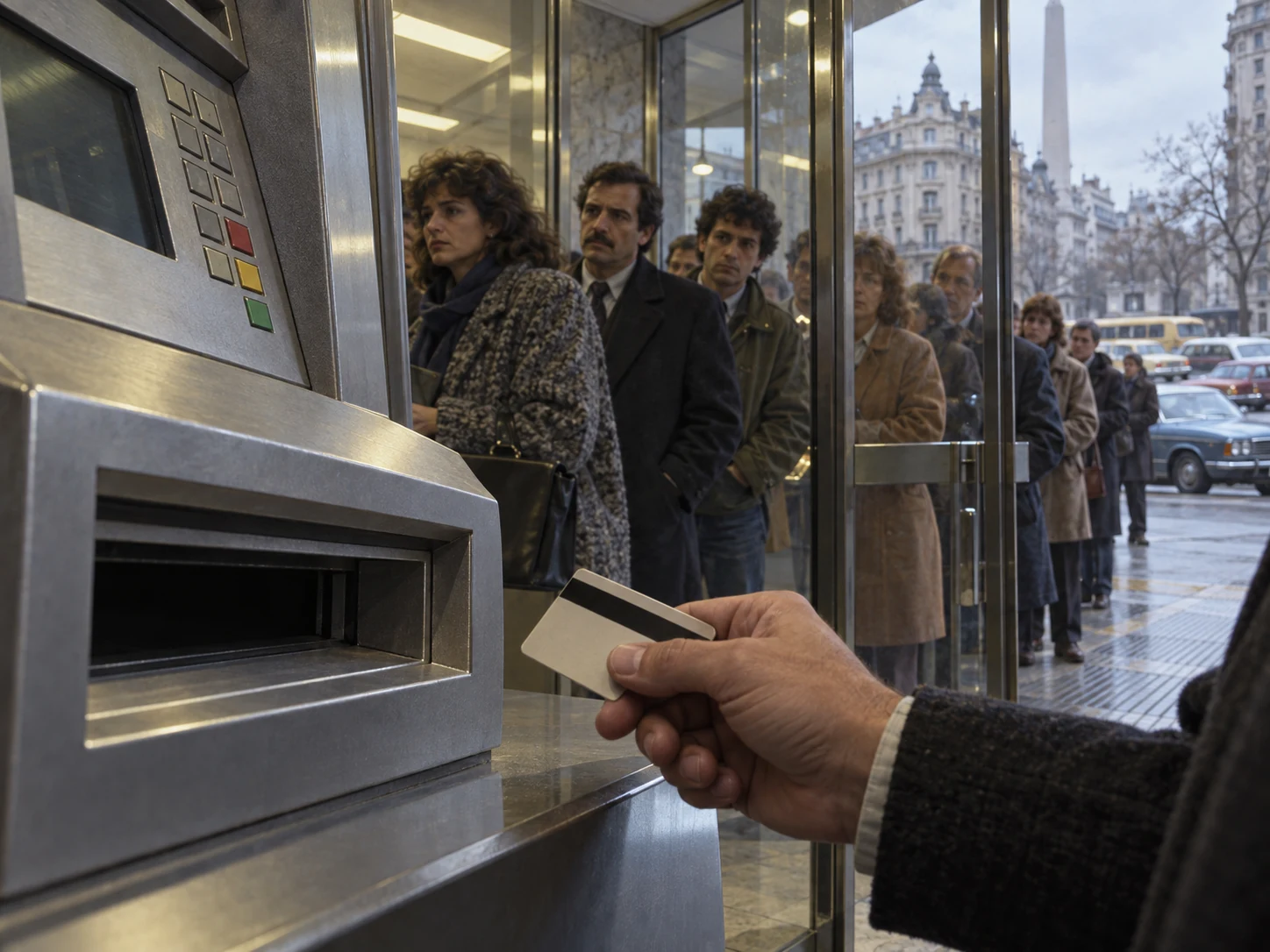
On 28 April 1989, Argentina declared a bank holiday and closed banks and currency exchanges because the country was running short of banknotes. Contemporary reporting described long lines forming at cash machines in Buenos Aires as people tried to obtain usable money. The problem was not simply whether an account held funds. Difficulty securing paper for new notes, a dock strike and a printers' strike had delayed production, while the austral was rapidly losing value against the dollar. In a period of accelerating inflation, the order in which people could obtain cash had immediate consequences for daily life. This was more than an ordinary bank queue: the banks were shut, currency itself was scarce, and demand was pushed toward the remaining ATMs.
Argentina · 1980 (period details in article)
The ATM Queues of Argentina's Currency Shortage